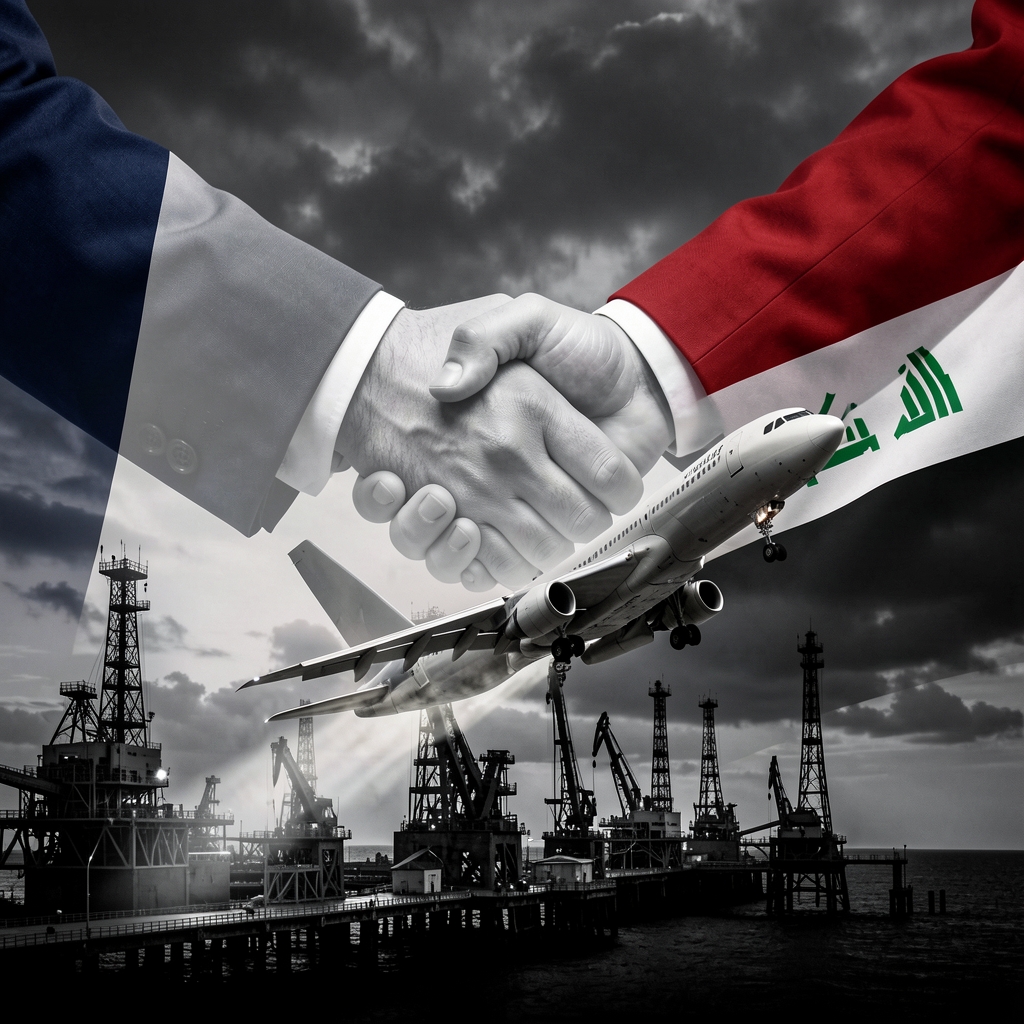
Macron’s Iraq Visit: A Strategic Pivot in Trade and Defense Relations
On a sun-drenched day in mid-July, the bustling streets of Baghdad awaited an important diplomatic visitor. French President Emmanuel Macron, amidst an intricate web of global politics, embarked on a journey to Iraq that would signal a notable pivot in the nation’s foreign policy—both for France and Iraq itself. What lies behind this significant engagement? Is it merely an act of goodwill, or does it signify a deeper commitment to shared interests amid regional instability?
The context of Macron’s visit is rooted in a history of Franco-Iraqi relations, which have ebbed and flowed over the decades. Following the 2003 invasion of Iraq led by coalition forces, France took a more cautious stance in the Middle East compared to its allies, often focusing on soft power strategies. Yet, in recent years, as Iraq has gradually stabilized following years of conflict, opportunities for economic collaboration have emerged. Trade has increased modestly; in 2020, France was Iraq’s fourth-largest trading partner within the European Union. As such, Macron’s visit could be interpreted as not just revisiting old ties but strategically harnessing new potential.
As the visit unfolded, several key issues came to light. French Minister for Trade Laurent Saint-Martin had initially planned to arrive weeks prior but delayed due to scheduling conflicts. However, upon Macron’s arrival on July 19th, discussions veered into urgent territory—economic cooperation and defense partnerships were front and center. Macron spoke publicly about reinforcing bilateral trade agreements while addressing critical areas such as energy security and technology transfers.
At a joint press conference with Iraqi Prime Minister Mohammed Shia al-Sudani, Macron emphasized France’s commitment to “supporting Iraq’s sovereignty” while promoting investments in various sectors—from infrastructure to renewable energy projects. The French government reportedly aims to establish itself as a key player in Iraq’s reconstruction efforts post-ISIS and build lasting economic ties that could bolster both nations’ security interests.
The implications of this visit extend beyond mere rhetoric; they resonate throughout various sectors. For instance, the military partnership between France and Iraq is becoming increasingly vital. France has provided military support against ISIS, training Iraqi forces as part of international coalitions aimed at stabilizing the region. Macron’s presence reinforced this commitment while signaling intent to deepen defense collaborations amid rising tensions involving neighboring Iran and ongoing geopolitical shifts.
The necessity for strategic realignment cannot be overstated. As global powers jockey for influence over natural resources and energy routes in a post-pandemic world, nations like France are seeking alliances that can withstand future shocks—whether they arise from economic disruptions or renewed conflict. Experts suggest that establishing stronger ties with Iraq may allow France to leverage its position in broader Middle Eastern politics while securing energy supplies critical for Europe’s transition toward greener solutions.
Diving deeper into the expert perspective reveals a nuanced understanding of these developments. Professor Claude Robert at Sciences Po argues that “the timing is crucial; with NATO’s focus shifting towards Eastern Europe due to Russia’s aggression, Middle Eastern partnerships must be recalibrated.” He asserts that strengthening relationships with nations like Iraq equips France with strategic depth that can provide leverage against adversarial actors in the region.
As we look ahead beyond this visit, several pivotal factors warrant attention. First is the response from other regional players—how will Iran react to what it may perceive as encroachment on its sphere of influence? Additionally, there is the question of domestic perception within Iraq; will citizens view these deals as an investment in their future or merely another chapter of foreign intervention? Furthermore, observers should monitor how evolving energy dynamics impact bilateral agreements between both nations.
This visit highlights a crossroads laden with potential yet fraught with risks. As negotiations unfold regarding trade frameworks and defense arrangements between France and Iraq, one must ponder: can trust be cultivated across borders where instability has often prevailed? Will diplomacy deliver tangible benefits for ordinary citizens caught amid grand strategies? Ultimately, it remains essential for leaders to tread carefully as they navigate these complexities while aiming for mutually beneficial outcomes.



