"[D]evelopment activity has already finished [and] we’re now in just operational checkout," Col. Jameson Locklear told reporters in Dayton, Ohio, a sentence that neatly summarizes a program two decades in the making and years behind schedule.
Col. Jameson Locklear and AFLCMC's revised timeline
Air Force Life Cycle Management Center (AFLCMC) officials now anticipate operational testing of chip cards that enable maritime and aviation platforms to receive the jam- and spoof-resistant M-code GPS signal will conclude in fiscal 2027. The Space Force and Air Force finalized the transition of the Military GPS User Equipment (MGUE) program’s management from Space Systems Command (SSC) to AFLCMC on July 17. Locklear said development is complete and the program is in "operational checkout," but he repeatedly noted that formal testing signoffs remain pending—specifically a Office of Test and Evaluation (DOT&E) report expected in fourth quarter FY26.
MGUE Increment 1: ground successes, maritime and aviation software shortfalls
MGUE Increment 1 splits into two card types: a ground-vehicle card and a maritime/aviation card. Testing for the ground-vehicle cards and receivers for Army and Marine Corps platforms has been completed. An Army Capability Program Executive Intelligence and Spectrum Warfare (CPE ISW) spokesperson told Breaking Defense the Army has fielded nearly 4,000 M-code receivers and is "postured" to field another 2,000 by the end of this fiscal year, covering mounted platforms such as the Stryker, medium tactical vehicles and Humvees, plus a TRX-developed dismounted system.
By contrast, the maritime and aviation application has seen programmatic overhauls and software shortfalls. The Government Accountability Office (GAO) reported accuracy and software glitches emerged during aviation testing on the Army’s Gray Eagle unmanned aerial vehicle. One signal-processing accuracy issue was resolved after the Army requested and received a Joint Requirements Oversight Council change. A separate navigation-precision software glitch affecting maritime and aviation was fixed for the Gray Eagle by a software update that Locklear said "has been stable for several months."

This site is the portfolio.
OSINTSights runs on Cloudflare Workers, D1, R2, and Vectorize, with an AI pipeline on Hetzner ARM. Nubivance designed, built, and operates it. We do the same for clients.
See what we buildNavy DDG-51 testing and the challenge of ship availability
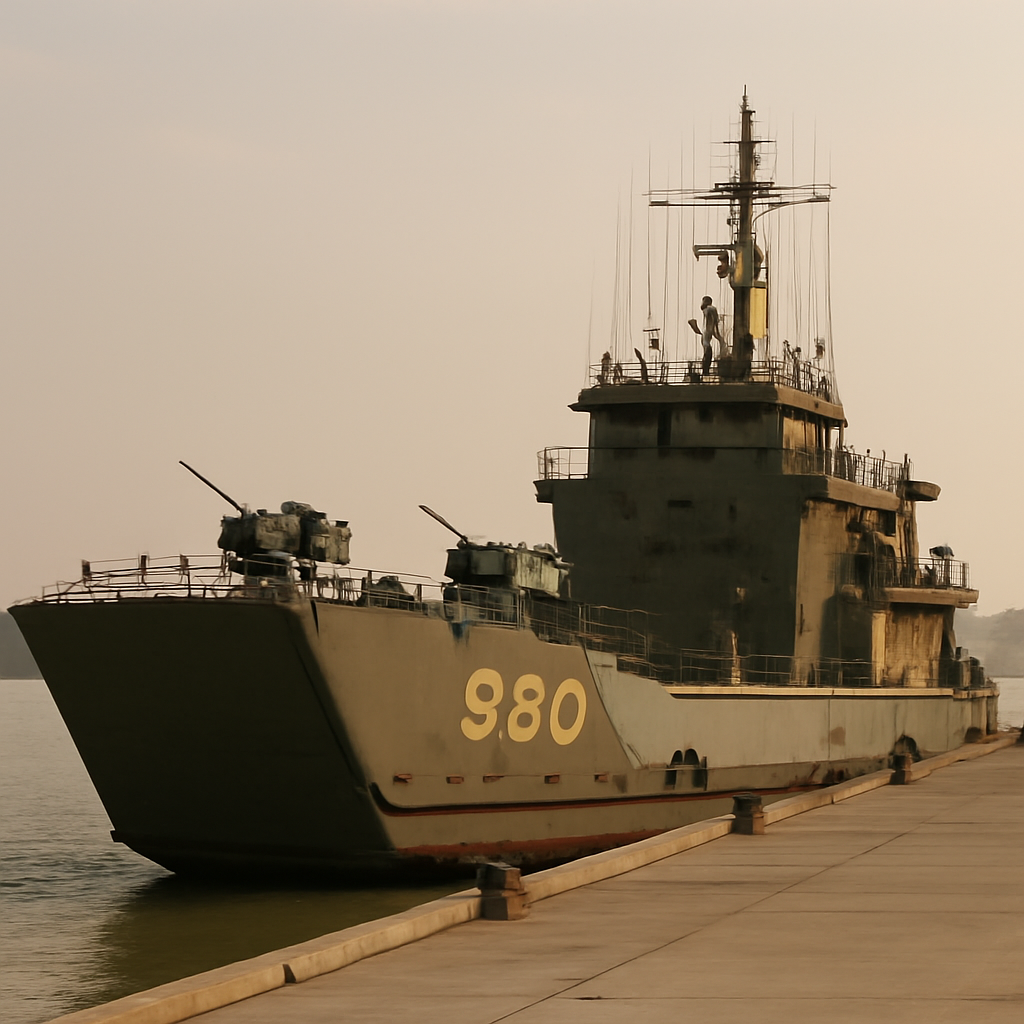
Operational testing on the Navy’s DDG-51 Arleigh Burke class destroyers has slipped to fiscal 2027 from a previous 2025 target. Locklear said AFLCMC recently met with Navy counterparts to secure a destroyer for remaining tests but noted uncertainty because of ongoing operations. A Navy spokesperson confirmed there are 75 DDGs in the fleet; the US Naval Institute News Fleet Tracker showed 16 DDGs at sea as of July 27. The Navy spokesperson did not provide a count of ships in maintenance or training rotation by press time.
Increment 2, the handheld effort, and vendors
Increment 2 aims for smaller, faster ASIC chip cards and a Miniaturized Serial Interface receiver for missiles and precision munitions, along with a handheld radio integrating a new receiver. SSC in 2020 awarded contracts worth $552 million with a 2026 delivery deadline; Locklear said only BAE and L3Harris remain actively involved and that Raytheon is no longer participating—SSC and Raytheon did not provide an explanation by press time.
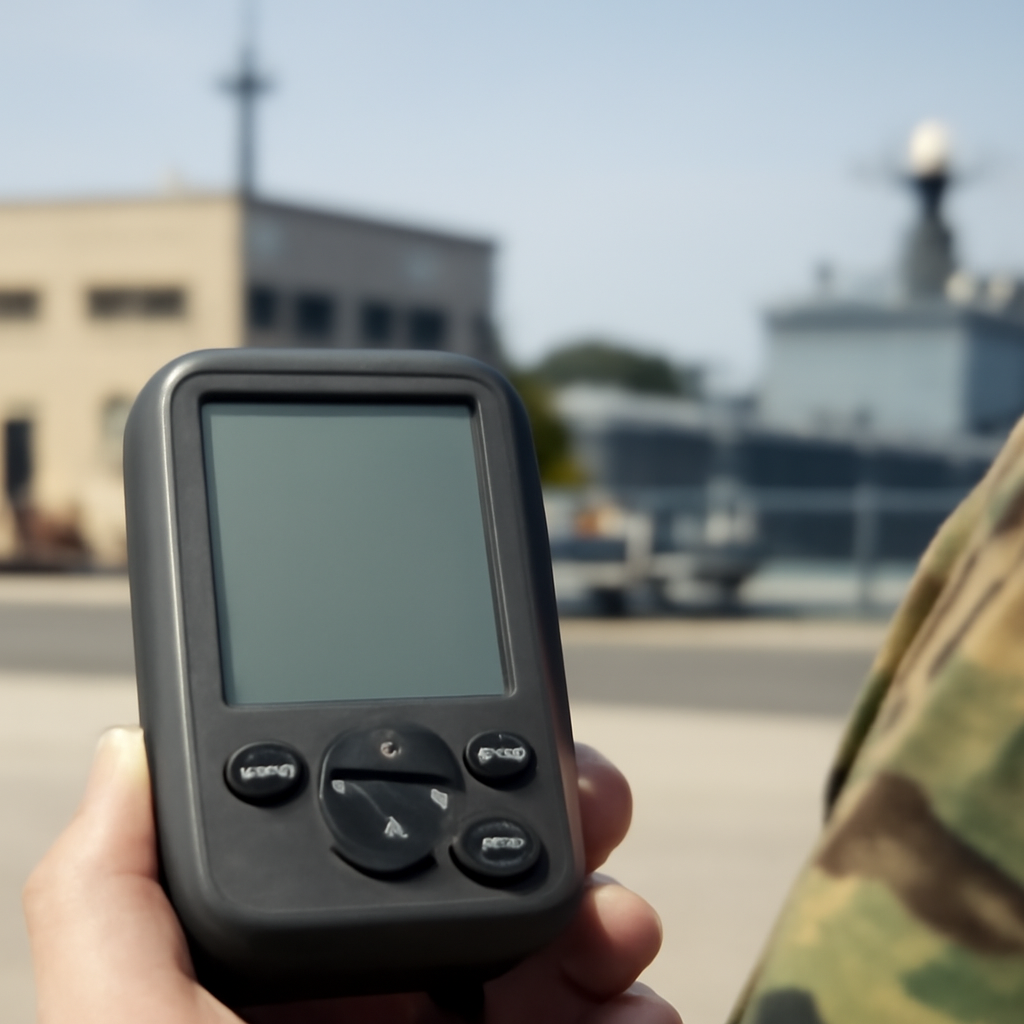
Increment 2’s first subprogram was originally estimated at $1.4 billion and completed preliminary design reviews for chips in mid-2021 and for cards in 2022. The second subprogram—estimated at $149.2 million in 2020—would produce a handheld M-code receiver. SSC awarded a contract to Technology Advancement Group for the handheld and tested a prototype, the Joint Modernized Handheld Next-Gen GPS receiver, in June 2025 with U.S. services and Norwegian and French participants. DOT&E’s 2025 review projected the MGUE Increment 2 handheld radio would become available only in 2028.
What this means for the Army, Navy, and Air Force
- Army: The service has already fielded thousands of ground receivers and is pushing forward on aviation and dismounted solutions; the Gray Eagle remains the first aviation testbed, and the Army sought a requirements change to accept a different accuracy standard.
- Navy: The service must provide a DDG-51 to complete maritime testing, but deployment schedules and ships in maintenance or training complicate timing; Navy integration into platforms like the KC-130J and F/A-18 is tied to broader AFLCMC efforts.
- Air Force: AFLCMC is managing cross-service integration programs—R-EGI, EGI-M and MAGR-2K-M—with MAGR-2K-M targeting Initial Operational Capability on two platforms in FY27, R-EGI and EGI-M slated to be "ready for install" in FY28 and to achieve IOC on one Air Force platform each in FY29, subject to acceleration efforts.
SSC on July 23 announced two agreements with BAE Systems and Trimble Military and Advanced Systems to support requirements development and risk reduction for a next-generation Maritime and Aviation Receiver Card (MAVRC). The agency did not provide the value of those agreements.
The MGUE story is a study in long timelines and trade-offs: satellites broadcasting M-code have been in orbit since 2005 and the M-code signal’s development began in 1999, yet getting the receiver cards into operational platforms has involved repeated technical fixes, vendor shifts, inter-service coordination and deferred testing. AFLCMC officials say the program is now in operational checkout and that "a lot of good learning is happening," but DOT&E signoff, ship availability for DDG trials, and Increment 2 development milestones will determine whether the 2027 finish line holds.