"So it isn’t just a one single seeker solution, but it will be a family of seekers that will operate across a number of regimes," Tim Cahill, president of Missiles and Fire Control for Lockheed Martin, told TWZ — a concise declaration of intent that accompanied the company’s public unveiling of the PAC-3 Edge.
Design changes: seeker, propulsion, and control
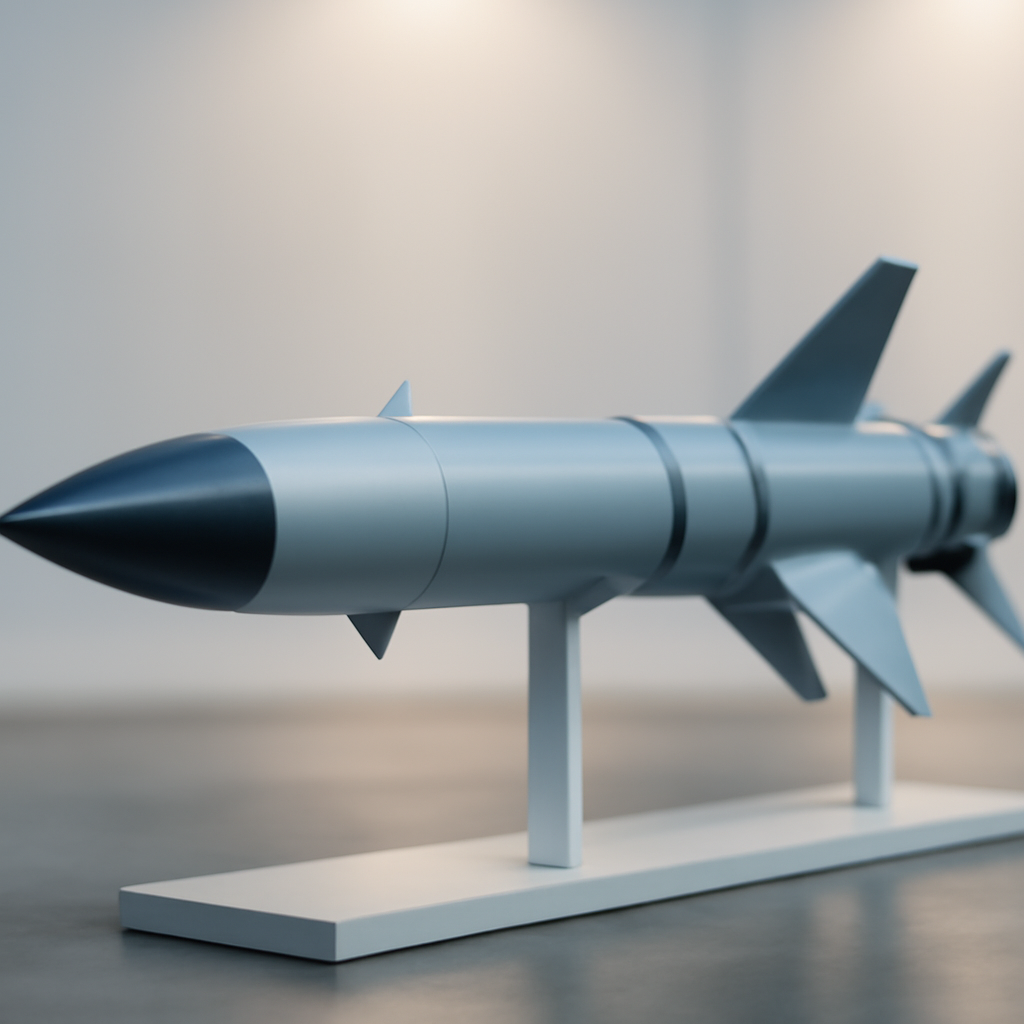
Lockheed Martin presented PAC-3 Edge as a substantial redesign of the PAC-3 Missile Segment Enhancement (MSE). Visually, the Edge dispenses with the PAC-3 MSE’s mid-body strakes and the MSE’s distinctive tapered forward-to-rear section. Functionally, Lockheed highlights three primary upgrades: a new seeker developed by its Strigo Product Center, an upgraded control system, and a more advanced solid rocket motor developed with Northrop Grumman.
The company has not disclosed technical seeker details; the reporting notes that one possibility is a dual-mode or multimode configuration to improve acquisition and tracking in challenging conditions. Lockheed said components of the seeker are being lab-tested and have been flown on aircraft testbeds, and Cahill described the seeker as a family of solutions that will appear across future systems.
The propulsion change is explicit: PAC-3 Edge will use a three-pulse solid rocket motor instead of the two-pulse motor used on the MSE. Lockheed explained that a multi-pulse design can deliver thrust at different points in flight, preserving energy for aggressive terminal maneuvers. Jason Reynolds, Lockheed’s vice president and general manager of Integrated Air and Missile Defense, said the missile also adds a greater number of more capable attitude control motors (ACMs) around the forward body to improve agility.
Lockheed has not yet demonstrated PAC-3 Edge’s performance in flight testing, and the company did not publish specific engagement figures such as maximum range or speed.
Program path: Future Interceptor competition and timeline
Lockheed announced on October 9 that it had been selected to advance to the next phase of the Army’s Future Interceptor competition; the company confirmed it is one of two firms continuing, while the identity of the other competitor has not been disclosed. The Army had previously canceled the Lower-Tier Future Interceptor (LTFI) program in 2024 — a decision Gen Lozano, PEO Missiles & Space, signaled in a tweet saying the service would instead upgrade PAC-3 MSE and pursue THAAD integration into IBCS.
Lockheed officials said testing for PAC-3 Edge is expected to begin in 2027, with initial deployment targeted for 2031. Between now and those milestones the program must demonstrate the seeker’s operational performance, validate the three-pulse propulsion, and prove the missile’s ability to engage representative targets across the wider engagement envelope the company claims to be addressing.

The cyber insurance questionnaire just landed. Now what?
SOC 2, HIPAA, insurance renewals - someone has to own security strategy. Nubivance provides fractional CISO leadership without the full-time salary.
Get a security leadProduction, cost, and manufacturing
Lockheed is developing PAC-3 Edge in parallel with expanded PAC-3 MSE production. In January the company announced a seven-year agreement intended to more than triple annual PAC-3 MSE production capacity — initially described as an increase from roughly 600 interceptors to 2,000 a year. That scaling effort received a major funding boost in July when the U.S. government awarded Lockheed a contract modification worth up to $53.86 billion, bringing the total multiyear contract value to $58.62 billion.
Lockheed says PAC-3 Edge would be manufactured on its existing PAC-3 production line in Camden, Arkansas, with factory modernization to support the transition. The company also cites significant internal investment in the seeker and calls the design increasingly modular, allowing for “mixing and matching pieces and parts” across offerings. Cahill suggested a phased production shift — with PAC-3 MSE output declining as Edge rises — and emphasized capacity in the Camden factory to handle surges.
Separately, Lockheed is developing a lower-cost interceptor, PAC-3 Adapted Capability Effector (ACE), which the company says will cost less than half as much as PAC-3 MSE — roughly $2.5 million — and preserve about two-thirds of the MSE’s capability, a product that has already attracted international interest.
What this means for the U.S. Army, Lockheed Martin, and partners such as Ukraine
- The U.S. Army: Gains a potential path to a higher-reaching Patriot interceptor that is designed to integrate with existing and future architecture (IBCS and M903 launcher) but must weigh development risk, demonstrable performance, and production timelines versus urgent operational demands.
- Lockheed Martin: Has put company capital and factory modernization behind a candidate that would leverage existing production lines and a seeker family strategy, while also relying on its multiyear production expansion to underpin any transition to Edge.
- Partners and recipients such as Ukraine: Would potentially benefit from an improved Patriot interceptor family, but any operational impact depends on demonstration, production scale-up, and the U.S. government’s procurement choices.
Performance overlap, integration, and open trade-offs
Lockheed positions PAC-3 Edge as extending engagement altitude and range compared with PAC-3 MSE, which raises the question of how the missile might overlap with or augment Terminal High Altitude Area Defense (THAAD). The company and the announcement did not clarify the boundary between an improved Patriot interceptor’s envelope and THAAD’s mission. Likewise, detailed operational metrics — ranges, speeds, and target sets — were not released, leaving production rate, per-unit cost, and battlefield utility as the practical trade-offs the Army must resolve if it chooses Edge.
For now, PAC-3 Edge sets a direction: a new seeker family, a three-pulse motor from Northrop Grumman, additional attitude control motors, and an intent to leverage existing infrastructure in Camden, Arkansas. Testing slated for 2027 and a deployment target of 2031 will be the timeline by which the program either validates that direction or reveals the limits of the promised leap.