"We need a common way to talk about military AI—across services, agencies, and indeed, the world," write Dr. Jason Warner and Sofia Romansky.
Why a shared lexicon matters for military AI
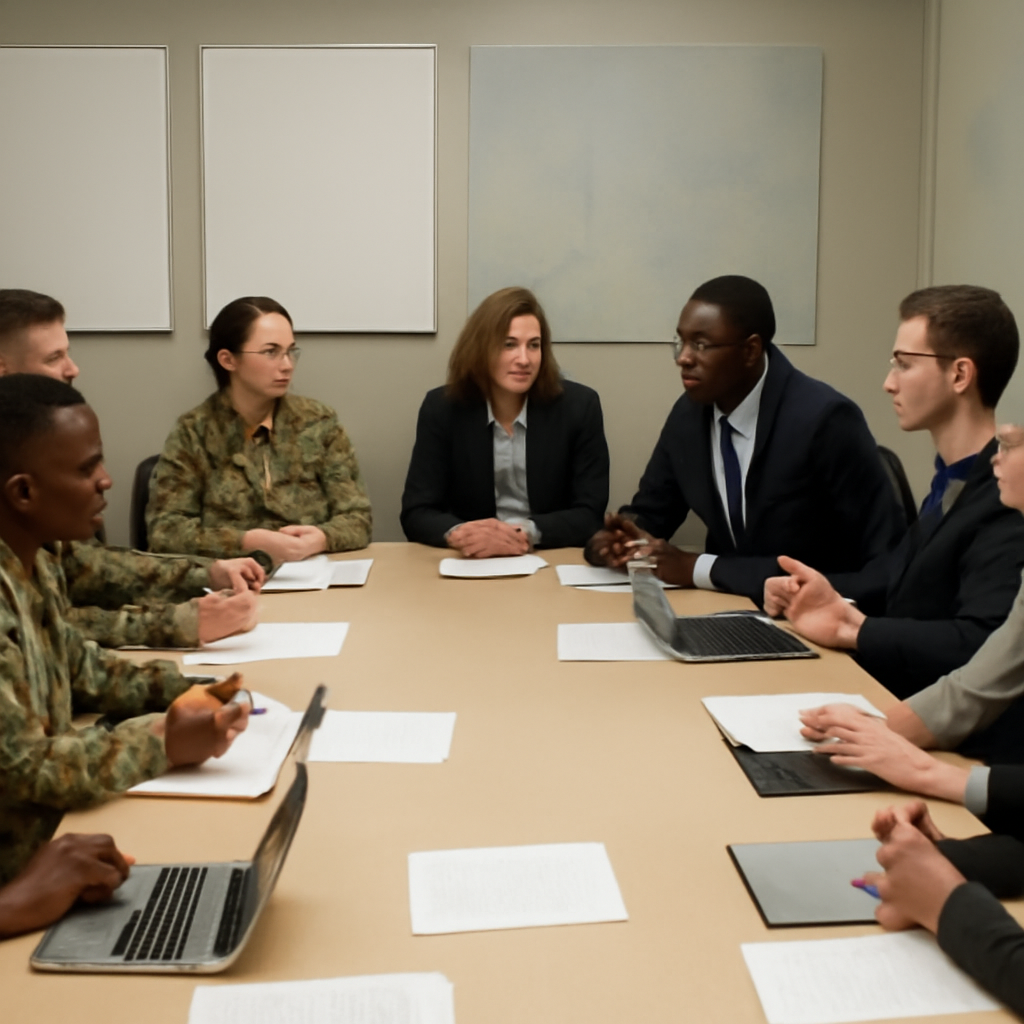
The central argument advanced by the authors is straightforward: disparate vocabularies and scattered data are actively undermining efforts to govern and integrate AI in military contexts. They observe that the term "autonomy," for example, carries different meanings for a general, an engineer, a lawyer, and a human-rights advocate, and that those differences are multiplied across roughly 200 countries. Without shared definitions and a common evidentiary base, conversations meant to produce responsible policy and interoperable systems risk talking past one another.
Data fragmentation: where the information lives and why it doesn't add up
According to the piece, relevant data about AI-military activity is dispersed across a vast array of sources—government contract announcements, legislation, news coverage, court documents, patent filings and more—in nearly every global language. That scatter makes it "impossible," the authors say, to track and compare developments within and across countries. The result is not only analytic friction but practical obstacles: humanitarian organizations, supply-chain experts, tech executives and academic researchers often operate on different facts and assumptions.

Audit-ready is a season. It shouldn't be.
Evidence in spreadsheets, controls drifting between audits, frameworks multiplying on flat headcount. Nubivance runs continuous compliance on Rapid7 Cyber GRC - SOC 2, HIPAA, ISO 27001, PCI, CMMC.
End the scrambleAIMID's AI-Military Integration Database: a proposed "ground truth"
One concrete effort highlighted in the commentary is the AI-Military Integration Database, run by AIMID, a private company whose CEO is one of the authors. The database performs a daily scan for news and information about AI-military integration in more than 20 languages, drawing from news reports, company announcements, academic articles, legislation, contracts, think-tank reports and other material. The output is described as an ever-growing knowledge graph: a structured, footnoted map of actors, technologies, events and relationships that aims to show "which countries are doing what, with what technologies, from what companies, and for what use cases."
The authors outline specific hoped-for benefits: enabling allies and partners to pool knowledge about testing, evaluation, verification and validation; supporting innovation and interoperability; and avoiding costly duplication of technical efforts. They also suggest a diplomatic benefit: empirical reference points could reduce interstate misperceptions and anchor security policy in evidence rather than ambiguity.
Existing multilateral calls for a shared knowledge base
The article places AIMID's work in the context of wider multilateral recommendations. It cites the 2024 Responsible AI in the Military Domain Summit (REAIM), which urged stakeholders to foster "a common understanding of…capabilities and limitations [of AI-military integration], and a shared understanding of the possible applications…and their potential impacts, including both benefits and risks." The authors also reference the United Nations Institute for Disarmament Research Roundtable for AI, Security, and Ethics, which identified building "a shared and solid knowledge base on AI in the military domain" as a governance priority. Finally, they point to "last year's report by the Global Commission REAIM," which urged states to "maintain international repositories of best practices, including AI concepts and definitions, AI capabilities in specific contexts of application…and military AI policies."
What this means for technologists, policymakers, and humanitarian organizations
- Technologists and security teams: The database model promises a single, verifiable picture of developments—supporting test and evaluation work and helping avoid redundant technical efforts.
- Policymakers and regulators: A consolidated, footnoted knowledge graph could provide empirical reference points to inform regulation and reduce risky misperceptions between rival states.
- Humanitarian organizations and rights advocates: Common definitions and accessible, multilingual data would make it easier to assess impacts and argue for or against specific uses of military AI on the basis of shared evidence rather than contested terminology.
The authors are candid about limits: organizations like AIMID cannot fully solve the fundamental problem of data fragmentation. Still, they argue such tools are among the best resources available and urge that "defense leaders around the world should next fund and adopt the tools necessary to fully understand the data and intelligence-gathering side of this new ecosystem."
The commentary was published in coordination with the 2026 Global Security Forum, and Defense One served as a media partner. The authors are identified in the piece: Dr. Jason Warner, CEO of AIMID, who holds a Ph.D. from Harvard University; and Sofia Romansky, Strategic Analyst at The Hague Centre for Strategic Studies and Subject Matter Expert for NATO's Defence Education Enhancement Program, who previously served as Project Coordinator of the Global Commission on Responsible Artificial Intelligence in the Military Domain.
If the aim is to make military-AI policy intelligible and actionable, the practical next step the authors leave on the table is clear: fund, adopt and connect the tools that turn dispersed reporting, contracts and filings into a shared, verifiable "ground truth" on which testing, governance and diplomacy can proceed.