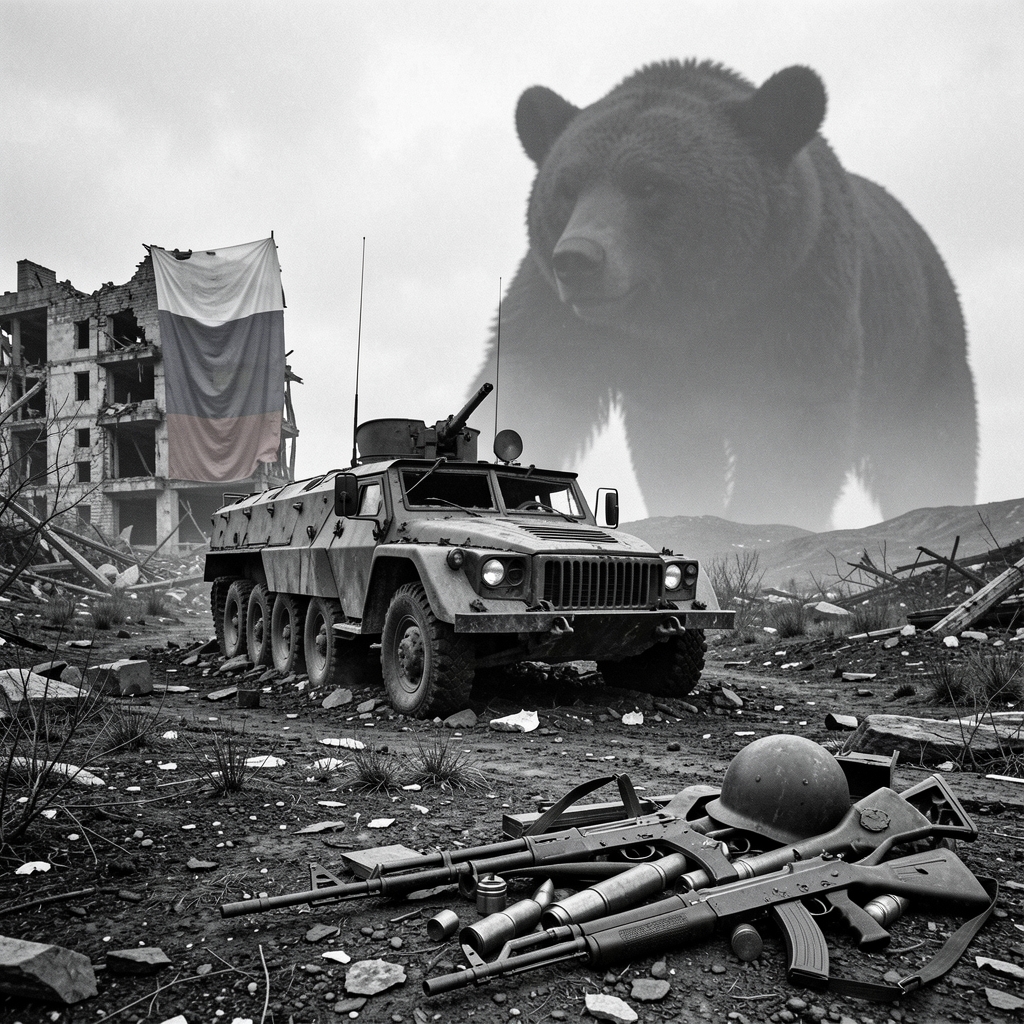
Kremlin’s Ultimatum: A Demand to Disarm Ukrainian Western Arsenal
In a move that has added an extra layer of tension to the already complex conflict in Ukraine, Russian Deputy Foreign Minister Alexander Grushko has declared that Ukraine must destroy all Western-supplied weapons if further negotiations are to proceed. The declaration, prominently featured in Russian state media, lays out a stark precondition: dismantle and dispose of the surplus arms as a necessary precursor for dialogue.
The dramatic pronouncement has rekindled debates about the contradictory roles weapons can play in conflict resolution and deterrence. While the Kremlin has framed the demand as a measure to ensure compliance with international protocols for disarmament, many experts see the move as an attempt to redefine the battlefield’s geopolitical and diplomatic contours.
Historically, the infusion of Western military support into Ukraine’s armed forces was designed not only to bolster the nation’s self-defense but also to signal a broader commitment by the West to Ukraine’s sovereignty. In recent years, as the conflict has polarized global opinion and strategic interests, the arms supplies have been both a tactical advantage for Ukraine and a lightning rod for criticism from Moscow. As news of the mandate circulates, geopolitical analysts are watching closely to see how this demand might affect a conflict that has already cost countless lives and shifted international alliances.
This announcement by Deputy Foreign Minister Grushko comes as a part of a broader pattern where disarmament and arms control are leveraged as bargaining chips. The rhetoric—“all international protocols are well known”—evokes a long-standing narrative in which adherence to certain disarmament measures is posited as a hallmark of legitimate state behavior. However, analysts note that such protocols have historically been selective both in application and interpretation, varying significantly depending on one’s perspective.
To better understand the implications of this statement, consider the following factual points:
- Historical Context: Western arms shipments have been a key element of Ukraine’s defense strategy since the outbreak of conflict in Eastern Ukraine. These supplies were not originally intended as offensive weapons but rather to enable the country to secure its borders against aggression.
- Diplomatic Leverage: The Kremlin’s demand aligns with a broader strategic trend, positioning disarmament as a precondition for broader peace talks—a tactic observed in previous Cold War-era negotiations.
- Security Concerns: Both adversaries and allies have repeatedly underscored that dismantling an operating arsenal could leave Ukraine vulnerable to renewed aggression, thereby heightening regional insecurity.
- International Protocols: Reference to “international protocols” suggests adherence to treaties and norms regarding the disposal and control of military hardware. Yet, this assertion is met with skepticism by many Western officials who argue that the current situation is uniquely politicized.
Presently, negotiations between Russia and Ukraine are stalling under a weighty blend of military and diplomatic challenges. For Ukraine, the prospect of dismantling Western-provided defense equipment carries significant risks—not only does it undermine the immediate capacity to counter hostile advances, but it also challenges the legitimacy of trusted international security guarantees.
On the international stage, reactions have been mixed. A spokesperson for the United States Department of State noted in a recent press briefing, “We continue to stand by Ukraine’s right to defend itself, and our support in the form of military and humanitarian aid remains steadfast.” European officials, while advocating for de-escalation, have voiced concerns that any disarmament under duress might destabilize the fragile equilibrium in Eastern Europe.
Experts on arms control, such as Dr. Michael Kofman of the Centre for Advanced Defense Studies at the Atlantic Council, point out that the Kremlin’s demand appears designed to force Ukraine into a corner. “It’s a high-risk maneuver,” Dr. Kofman explained in a recent public interview. “The idea of disarming against an adversary is not new. However, under current security uncertainties, asking Ukraine to eliminate key defense capabilities is tantamount to leaving it exposed to further escalation.”
This latest development also invites comparisons to previous diplomatic ultimatums. History shows that when disarmament measures become bargaining chips, the process can be exploited to renegotiate broader strategic advantages. The Kremlin’s assertion is therefore controversial, as it both challenges the existing security arrangements and hints at a recalibration of Moscow’s expectations for international conduct.
Meanwhile, Ukrainian officials have not formally agreed to Grushko’s demand. Instead, they maintain that negotiation efforts should focus on restoring full sovereignty and ensuring that any arms control regime does not compromise national security. In Kyiv, military advisors and policymakers argue that the retention of Western arms is vital for maintaining deterrence against further military incursions. These conflicting positions underline a critical dilemma: how to achieve meaningful peace without sacrificing security measures that serve as insurance against renewed conflict.
The broader international community is now compelled to watch carefully as these dynamics unfold. As talks continue and positions harden, several key factors warrant scrutiny in the coming months:
- Diplomatic Maneuvering: Whether negotiators on both sides can craft an arrangement that respects Ukraine’s security needs while satisfying disarmament protocols remains to be seen.
- Regional Stability: The potential disarmament of Ukraine could alter the strategic balance in Eastern Europe, a region already rife with tensions stemming from historical disputes and present-day rivalries.
- International Relations: The Kremlin’s proposal may force Western allies to reassess their own positions and support mechanisms, potentially leading to recalibrated arms-for-peace deals or refreshed security pacts.
Looking ahead, the Kremlin’s mandate sets the stage for a renewed international dialogue about the terms of engagement and the road to peace in Eastern Europe. The coming weeks are likely to see a series of high-level discussions where the principles of arms control, national sovereignty, and international security intersect with the ever-present calculus of realpolitik. The stakes are high—not just for Ukraine and Russia, but for the stability of the broader region and the integrity of international arms control regimes.
In the final analysis, as this modern saga of arms, diplomacy, and strategic posturing unfolds, one must ask: Can a balance ever be struck between disarmament and security in a conflict where trust is in short supply? The Kremlin’s demand challenges both policymakers and the public to consider whether dismantling a nation’s defensive capabilities can ever truly pave the way to lasting peace.



