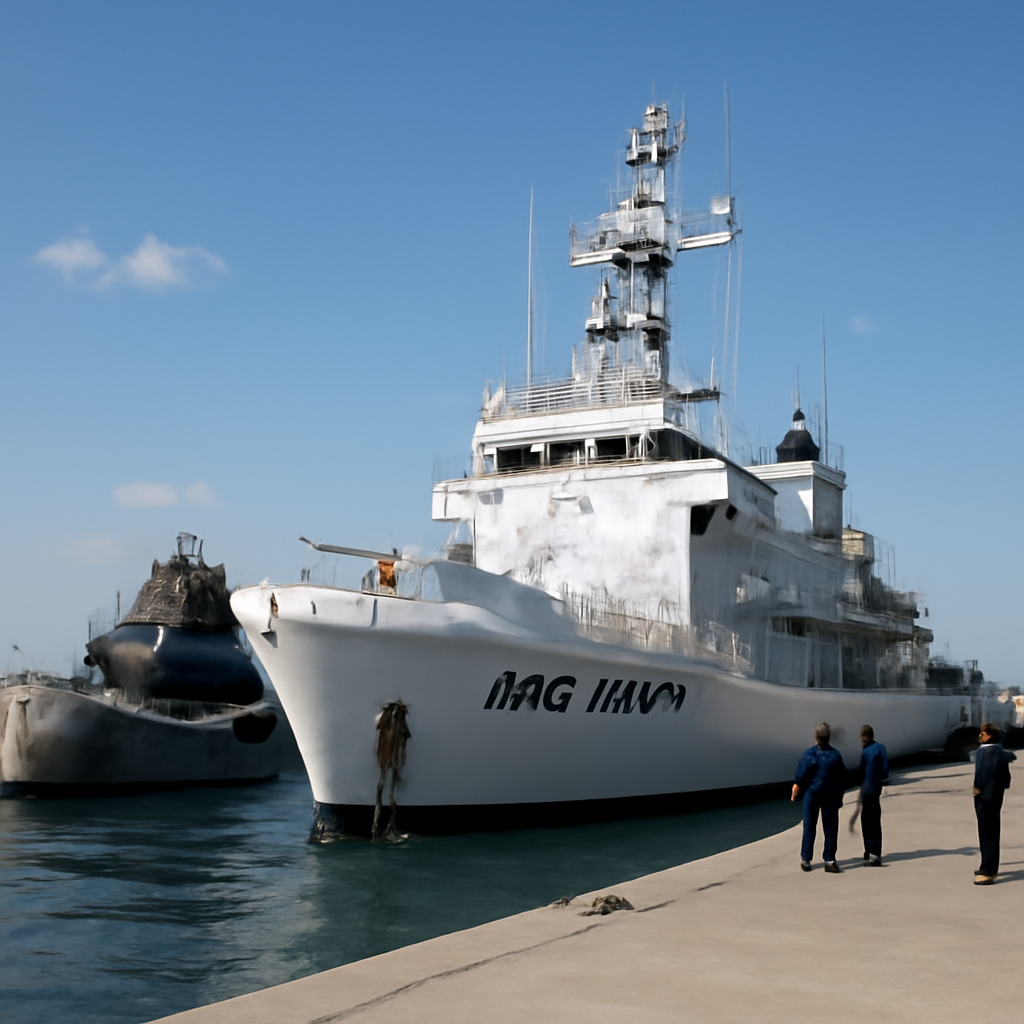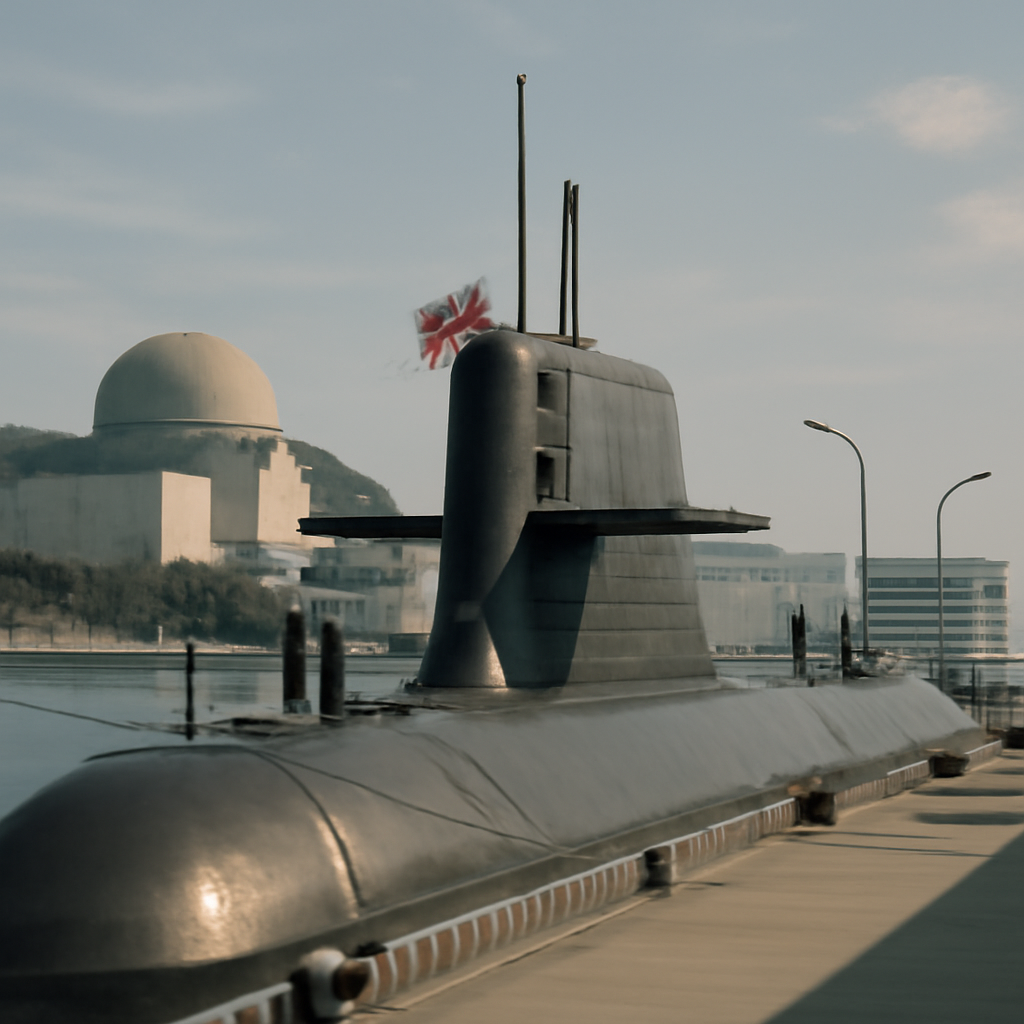
Japan operates 22 conventionally powered submarines, a fleet centered on advanced diesel-electric boats equipped with air-independent propulsion and lithium-ion batteries — and yet, Tokyo has now said it will not rule out nuclear-powered submarines as it considers the future of the Japan Maritime Self-Defense Force.
What Defense Minister Shinjirō Koizumi actually said
Defense Minister Shinjirō Koizumi confirmed recently that Tokyo is not ruling out nuclear-powered submarines as it considers the JMSDF’s future requirements. The statement does not represent a decision to acquire nuclear-powered submarines nor the start of a procurement program; rather, it marks a significant evolution in public debate and signals a willingness within the Japanese defense establishment to examine capabilities previously outside mainstream planning.
Japan’s current submarine force and industrial baseline
The JMSDF today fields one of the world’s most capable conventionally powered submarine forces. It operates 22 conventionally powered boats, progressively replacing older vessels with the Taigei class — five Taigei submarines are already in service, and more are in the pipeline. The Taigei program, whose first-of-class was launched on October 14, 2020 at Mitsubishi Heavy Industries in Kobe, builds on existing strengths in advanced propulsion: air-independent propulsion systems and advanced lithium-ion batteries.

This site is the portfolio.
OSINTSights runs on Cloudflare Workers, D1, R2, and Vectorize, with an AI pipeline on Hetzner ARM. Nubivance designed, built, and operates it. We do the same for clients.
See what we buildWhy nuclear propulsion is under consideration
Nuclear propulsion would deliver substantially greater endurance and sustained underwater speed, enabling submarines to operate at longer range across the broader Western Pacific with minimal external support. That capability is being weighed as Tokyo’s strategic focus expands beyond immediate maritime approaches amid a regional security environment that the source describes as involving China’s rapidly expanding naval force, including a growing submarine fleet and operations at greater distances from China’s shores. An SSN (nuclear-powered attack submarine) can remain submerged for extended periods, making it useful for long-range surveillance, tracking, and sea-denial missions — missions increasingly relevant to Japan’s stated concerns.
Regional dynamics: South Korea, Australia, and AUKUS
Japan’s debate coincides with notable moves by neighboring states. South Korea has confirmed plans to develop a new class of nuclear-powered submarines, and the South Korean Ministry of Defense published a rendering of its potential Jang Bogo N Project boats. Australia is acquiring conventionally armed, nuclear-powered submarines under AUKUS Pillar I, with U.S. and U.K. nuclear-powered submarines also scheduled to operate from Australia. The source notes Japan has been identified as a potential partner for AUKUS Pillar II (advanced capabilities and technology cooperation). A Japanese decision to pursue SSNs could expand cooperation with Australia and other AUKUS partners on interoperability, undersea warfare, workforce training, infrastructure, sustainment, and industrial aspects.
Technical, industrial and political hurdles
Pursuing nuclear propulsion would require Japan to build an entirely different industrial, regulatory, and training infrastructure. The source lists concrete requirements and obstacles: reactor technology, nuclear regulation, maintenance facilities, crew training, handling of nuclear material, and far higher costs and complexity than current conventional submarines. The move would also carry political weight: while naval nuclear propulsion is technically different from nuclear weapons, any such step would draw scrutiny in a country whose postwar security policy has been shaped by its experience with nuclear weapons and longstanding non-nuclear principles.
What this means for the JMSDF, Japanese defense policymakers, and AUKUS partners
- Japan Maritime Self-Defense Force: Faces a strategic choice between continuing to optimize conventionally powered boats for operations near Japanese waters and building a far more logistically and technologically demanding SSN fleet for long-range missions.
- Japanese defense policymakers and regulators: Will need to weigh industrial investment, nuclear regulatory frameworks, and political acceptability — and decide whether to move from keeping the option open to commissioning detailed studies of design, propulsion technologies, and acquisition pathways.
- AUKUS partners and regional navies: Could see new opportunities for interoperability and technology cooperation if Japan pursues SSNs; conversely, a Japanese SSN capability could also alter regional undersea balances between Japan, China, and other U.S. allies according to the source.
Koizumi’s remarks are less a program start than a signal that a long-standing taboo has eased: the political barrier to publicly discussing naval nuclear propulsion in Japan is coming down. The next concrete step the source identifies would be a formal move to study submarine designs, propulsion technologies and acquisition pathways in detail — a decision that, if taken, could reshape Tokyo’s ability to operate across the Western Pacific and the undersea balance in Northeast Asia.