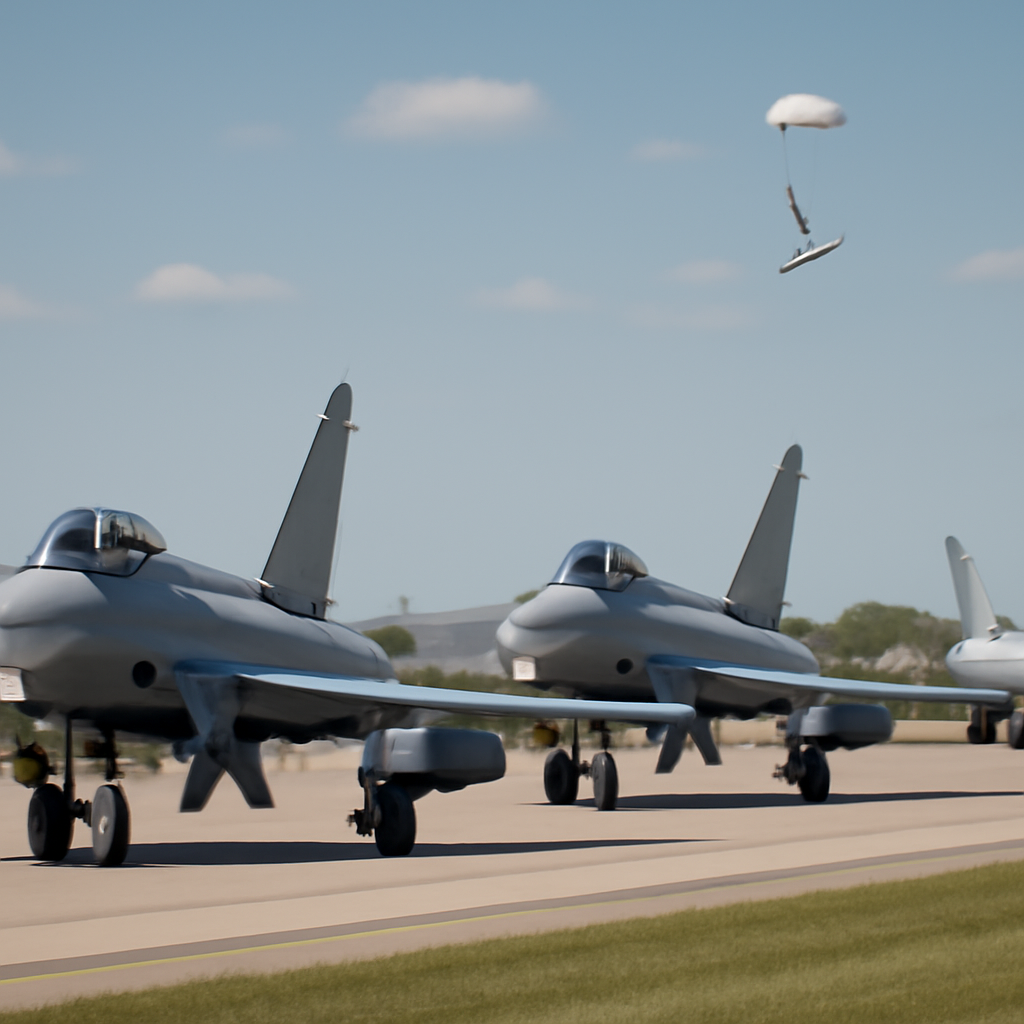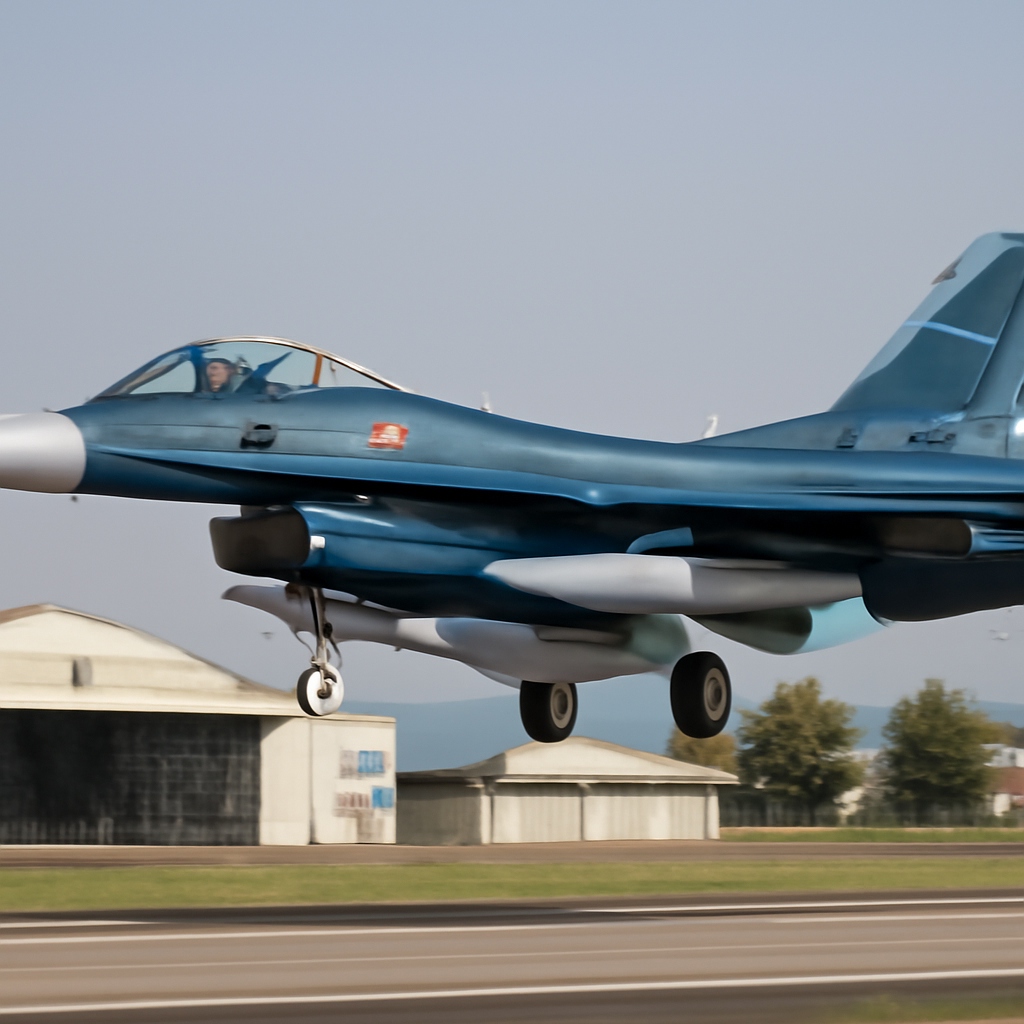
Photographer @bibabibabibary on X was one of many to capture the new missiles during what was apparently the first test flight from Gifu Air Base on July 30, 2026.
Gifu Air Base: an F-2B test flight and public sightings
On July 30, 2026, images and video circulated showing a Mitsubishi F-2B — described in the reporting as the two-seat F‑2B serial 68-8101, operated by the Japan Air Self‑Defense Force’s (JASDF) Air Development and Test Wing (ADTW) — carrying a pair of previously unseen missiles on its inboard wing pylons. The first F‑2A prototype also flew as a chase plane for the sortie, and multiple photographers and X (Twitter) users posted shots and commentary from Gifu Air Base.
Observed design details of the new weapon
The weapon carried under the F‑2’s wings is visibly larger than the familiar ASM‑2 and the newer ramjet-powered ASM‑3. Photographers and analysts described a gray-painted, relatively long and slender fuselage with folding wings mounted in the upper part of the body and four cruciform tailfins. The missile’s boxier cross-section includes prominent chines similar to those used on other low-observable missiles. Observers also note an underslung engine intake with a protective cap near the rear and no obvious optical window on its nose.
Those visual cues led analysts in the reporting to conclude the weapon appears optimized as a subsonic, radar‑evading cruise missile designed for long‑endurance flight rather than high‑speed dash performance. The lack of an optical window was taken as an indication the weapon likely relies on GPS/INS navigation with a radar seeker for terminal guidance.

Audit-ready is a season. It shouldn't be.
Evidence in spreadsheets, controls drifting between audits, frameworks multiplying on flat headcount. Nubivance runs continuous compliance on Rapid7 Cyber GRC - SOC 2, HIPAA, ISO 27001, PCI, CMMC.
End the scrambleLink to the Upgraded Type 12 / Type 25 family
The missile’s shape and size show many similarities with the Upgraded Type 12 — which the Ministry of Defense redesignated at the end of March as the Type 25 Surface‑to‑Ship Guided Missile (25SSM); the “25” reflects fiscal year 2025, when the coastal defense weapon was formally inducted. Reporting notes the Upgraded Type 12/Type 25 family has been described as a heavily upgraded evolution of the legacy Type 12 with range reportedly increased to around 1,000 kilometers (about 620 miles).
By contrast, the original Type 12 (as used by the Japan Ground Self‑Defense Force) has a stated range of 200 kilometers (124 miles), while the JASDF’s ASM‑2 can reach targets at 180 kilometers (112 miles). The new 25SSM family is presented in the reporting as a multirole strike system capable of engaging maritime and land targets, including missile launch sites and fixed infrastructure, at many hundreds of miles’ distance.
Japan Ministry of Defense plans and parallel programs
The Japan Ministry of Defense told reporters it plans to deploy ship‑ and air‑launched variants of the 25SSM on Japan Maritime Self‑Defense Force (JMSDF) destroyers and JASDF fighters in fiscal year 2027. The weapon seen on the F‑2 has not been officially identified, and the reporting cautions that an official designation for an air‑launched variant is unknown — “ASM‑4” has been suggested by some commentators.
The reporting places this test alongside several parallel developments: the JMSDF recently fired a U.S.‑made Tomahawk land‑attack cruise missile from the Aegis destroyer Chōkai; the JASDF has procured the Joint Strike Missile (JSM) for its F‑35As and the longer‑range JASSM has been cleared for sale to Japan; the F‑2 is also being used to test an improved ASM‑3 Kai; and Japan is testing a New Surface‑to‑Ship Missile powered by a turbofan and demonstrated executing barrel‑roll maneuvers intended to complicate terminal defenses.
What this means for the JASDF, JGSDF, and JMSDF
- JASDF / ADTW: Flight‑test activity with F‑2 prototypes suggests the Air Development and Test Wing is working to qualify an air‑launched variant for operational use, integrating a new long‑range cruise capability onto legacy F‑2 platforms while F‑35 and other air‑launched weapons are fielded.
- JGSDF: The ground‑launched Upgraded Type 12 was redesignated the Type 25 and has already been deployed; the ground forces will retain a coastal defense baseline while coordinated air‑ and sea‑launched variants expand operational options.
- JMSDF: Ship‑launched variants of the 25SSM, together with the recent Tomahawk firing from the destroyer Chōkai, indicate naval planners will be integrating new standoff strike options into fleet operations and surface‑strike doctrine in fiscal year 2027.
Images from Gifu make clear Japan is actively testing an air‑launched weapon that visually aligns with the Upgraded Type 12 / Type 25 family. The new missile’s size, low‑observable features, and likely GPS/INS plus radar terminal guidance would extend the reach of Japan’s maritime‑strike options well beyond legacy systems, but official identification and formal designation remain outstanding. The Ministry of Defense’s planned fiscal‑2027 rollouts, further F‑2 flight tests, and any subsequent public confirmations are the concrete next facts to watch.