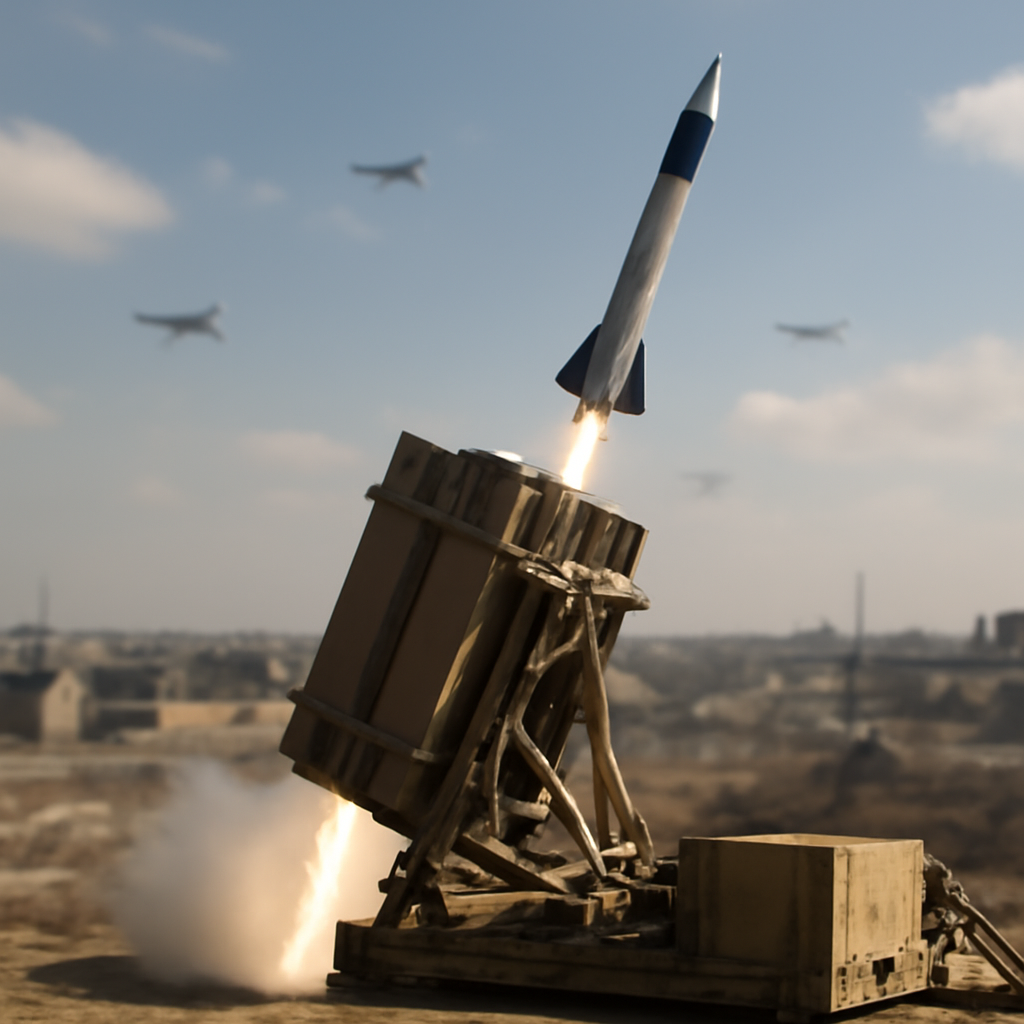
Under the Radar: Israel’s Bold Strike Against Iranian Ballistic Threats
In a calculated move that underscores the enduring tensions in the Middle East, the Israeli Air Force has executed a precision strike against an Iranian Emad ballistic missile launcher, marking a significant escalation in the ongoing conflict between Israel and Iran. The operation, captured on video and publicly released by Israeli officials, reveals not only a clear military objective but also raises critical questions about the future of regional security dynamics.
The footage shows an Israeli fighter jet engaging a concealed ballistic missile launcher designed to mimic a civilian truck, revealing a sophisticated tactic employed by Iran to hide its military capabilities. This operation comes amidst escalating tensions following a series of confrontations over Iran’s missile program and its military activities in neighboring countries, particularly Syria.
This strike is not an isolated incident but part of a broader pattern. Over the years, Israel has engaged in numerous air operations aimed at undermining Iranian military entrenchment in Syria and curbing its ability to project power throughout the region. The Emad missile system itself represents a substantial threat due to its precision targeting capabilities, which could potentially reach deep into Israeli territory.
The historical backdrop for this conflict is complex, woven into decades of geopolitical rivalry and conflict. Following the 1979 Islamic Revolution in Iran, relations between Tehran and Jerusalem have deteriorated sharply. The introduction of advanced missile systems into the equation exacerbates these tensions significantly. For Israel, neutralizing such threats is not merely a strategic imperative; it is essential for national survival.
As recent developments unfold, it is important to assess how this latest airstrike fits within both immediate military objectives and long-term strategic goals. On one hand, it demonstrates Israel’s ongoing commitment to preemptive action against perceived threats. On the other hand, it may provoke retaliatory responses from Iran or its proxies in Lebanon or Syria, potentially leading to a wider regional confrontation.
Statements from Israeli military officials indicate that this strike was carefully planned after extensive intelligence gathering. According to Brigadier General Amit Sagi, head of operations for the Israel Defense Forces (IDF), “Our capability to reach targets deep inside enemy territory reflects our commitment to protect our homeland.” This statement not only emphasizes operational readiness but also highlights Israel’s doctrine of proactive defense.
The implications of this strike are profound. For one, it reinforces Israel’s deterrence posture while simultaneously challenging Iranian ambitions in Syria and beyond. Furthermore, it raises questions about international responses—specifically regarding U.S.-Iran relations—and how allies may react to increased hostilities in an already volatile region.
Looking ahead, observers should monitor several key factors: potential Iranian retaliation through asymmetric warfare tactics, escalated air operations by Israel against additional Iranian assets across the region, and any shifts in U.S. policy that may influence either party’s actions. Additionally, public opinion within Iran regarding their government’s military expenditures versus domestic needs could play a crucial role in shaping future conflicts.
This most recent development serves as a stark reminder of the precarious balance of power within the Middle East—a region where military engagements are often cloaked in secrecy and ambiguity. As history has shown repeatedly, even seemingly isolated incidents can spiral into broader conflicts with far-reaching consequences for all stakeholders involved.