“היום בשעות אחר הצהריים, יתקיים מעבר של טייסת 'מגע הקסם' (190) מבסיס רמון לבסיס רמת דוד. במסגרת המעבר תורגש תנועה ערה של כלי טיס בשמי המדינה. המטס תוכנן מראש כחלק מתוכניות חיל האוויר לשנת 2026, אין חשש לאירוע ביטחוני.” — Israeli Air Force (@IAFsite)
IAF orders a permanent northward shift for 190 “Magic Touch” Squadron
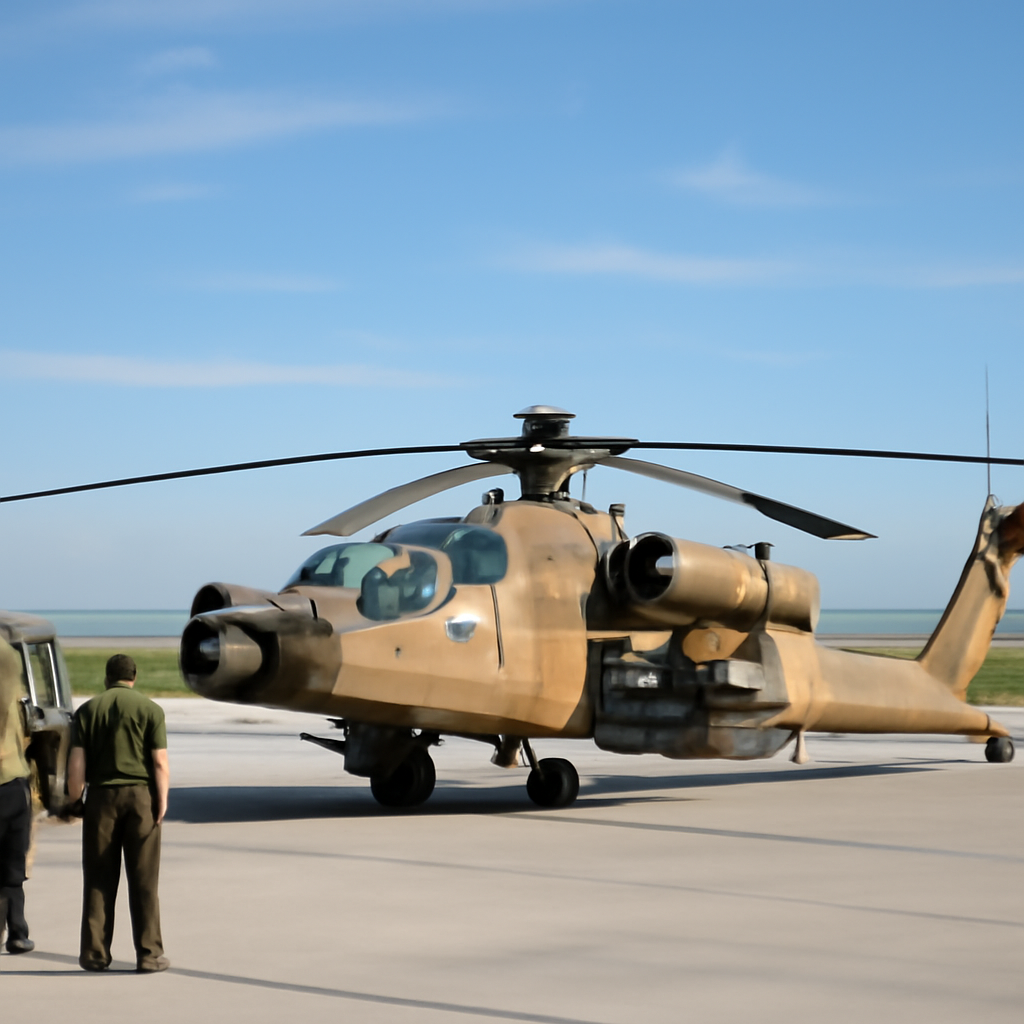
The Israeli Air Force announced on August 18, 2026, that 190 “Magic Touch” Squadron is relocating from Ramon Air Base in the Negev to Ramat David Air Base in northern Israel. The unit operates the older AH-64A aircraft, known within the IAF as the Peten (python). The service said the transfer was planned in advance as part of the IAF’s 2026 programs, that heightened air activity would be noticeable, and that there was no security concern tied to the movement.
What the AH-64 fleet brings: sensors, survivability, and endurance
The IAF has used the Apache family as a central element of its attack helicopter force for decades. The more modern AH-64D Saraf combined the U.S. Army AH-64D Longbow mission system — including the mast-mounted AN/APG-78 Longbow radar — with Israeli avionics: Rafael’s RAVNET 300 voice and data suite, Elta 1891 satellite communications with prominent stub-wing antennas, and a locally developed Elbit HELICOM mission-management suite providing a real-time battlefield overview. Self-protection comes from an Elisra Seraph package that includes an SPS-65 missile-warning receiver, an SPJ-40 radar jammer and Elbit Rokar countermeasure dispensers.
The IAF has also upgraded older AH-64A airframes to much of the same standard, with an optional under-fuselage avionics pod and external fuel tanks such as the Reduced Size Crashworthy External Fuel System (RCEFS) to extend endurance. Israeli Apaches have been used in precision strikes, close air support and, notably, counter-drone missions, with Hellfire missiles sometimes employed in an unconventional air-to-air role against unmanned aircraft.

Audit-ready is a season. It shouldn't be.
Evidence in spreadsheets, controls drifting between audits, frameworks multiplying on flat headcount. Nubivance runs continuous compliance on Rapid7 Cyber GRC - SOC 2, HIPAA, ISO 27001, PCI, CMMC.
End the scrambleRamat David and Ramon: geography, history, and basing trade-offs
Ramat David, near Haifa, is Israel’s northernmost IAF base and has a long operational pedigree: units from the airfield have flown in every major post-independence conflict and have been active on the Syrian and Lebanese fronts. Before the arrival of the “Magic Touch” Squadron, Ramat David was primarily an F-16 hub hosting three F-16C/D squadrons that have been central to northern-front air operations.
Ramon Air Base in the south—established after the Sinai withdrawal—has hosted fighters and attack jets including F-16s and A-4s and became a principal base for advanced combat aircraft. Ramon is also home to several F-16I Sufa squadrons and to the AH-64D Saraf fleet. The relocation disperses the IAF’s relatively small Apache force between north and south, improving readiness in the north while leaving fewer helicopters concentrated at Ramon.
Operational implications: shorter transit, greater persistence, and counter-drone posture
Moving an AH-64 squadron to Ramat David reduces transit times to Lebanon and Syria, allowing more of the helicopters’ limited endurance to be spent over the battlefield — a clear benefit for rapid-response missions and close air support. Given the Apaches’ use in counter-drone roles and the reported threat of drones launched from Lebanon and Syria, proximity to the northern front likely increases the helicopters’ effectiveness in that mission set as well.
The transfer also mirrors historical practice: the 190 Squadron moved north ahead of the June 1982 Lebanon War to shorten distances to its primary theater, and between 1990 and 1995 it again operated from Ramat David. The decision balances responsiveness against concentration; only a small national fleet exists — the IAF operates around 48 AH-64s in total, and at the time of the October 7, 2023 attack there were only four Apaches on standby across the country (two on short standby and two on long standby).
What this means for the Israeli Air Force, the IDF’s northern forces, and procurement planners
- The Israeli Air Force: Gains improved forward positioning and persistence over the northern theater, enhancing rapid-response and counter-drone options but committing a portion of a limited fleet to a northern basing posture.
- IDF ground forces on the northern front: Can expect faster close air support and air cover options from AH-64s operating out of Ramat David, which may translate into shorter reaction times against emergent threats along the Lebanese and Syrian borders.
- Procurement planners and the U.S. State Department: The United States approved a possible Foreign Military Sale earlier in 2026 for 30 AH-64E Apaches and related equipment at an estimated cost of $3.8 billion; Israel may not purchase the full package. The IAF has also pushed for another 40 AH-64E aircraft after concluding an earlier plan to replace older AH-64As with armed drones was not feasible.
The permanent repositioning of 190 “Magic Touch” Squadron to Ramat David is both symbolic and practical: it signals a clear peacetime prioritization of the northern front and recalibrates how Israel’s limited Apache force will be used — closer to Lebanon and Syria, with more of each sortie spent over the area of operations. The move leaves open how the IAF will balance persistence, survivability and force concentration as it modernizes a fleet that remains central to its attack-helicopter plans.
Source: TWZ — Israel Moves AH-64 Apaches Closer To Critical Northern Front