Precision Strike: Israel’s Calculated Countermeasure Dismantles Iranian Stealth-Tracking Radar
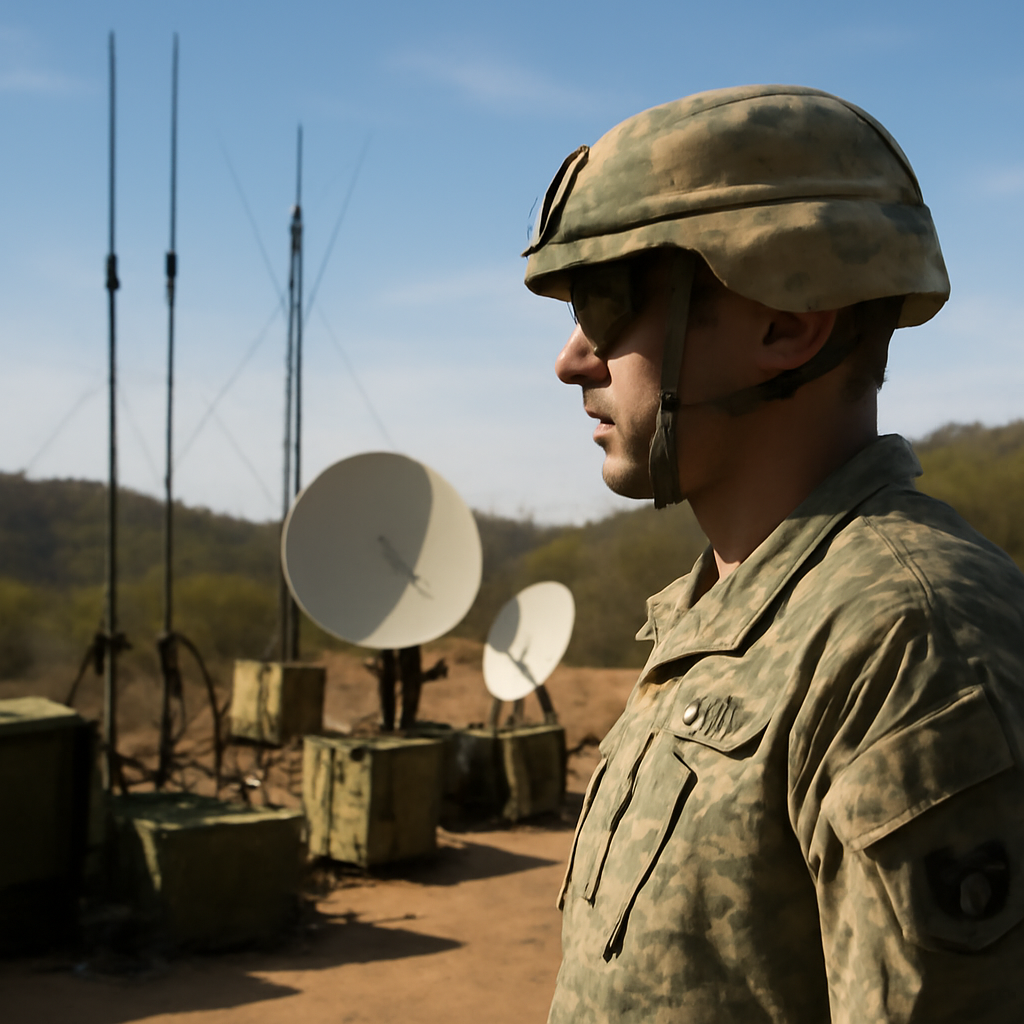
The Israel Defense Forces (IDF) have released new footage underscoring the ongoing tactical contest in the Middle East, showing an airstrike that neutralized an Iranian Matla-ul-Fajr radar system. This mobile, VHF-band radar—crucial for early warning and airspace surveillance—had long been suspected of playing a key role in Iran’s layered air defense network, making its destruction a significant development in the region’s covert operational chess match.
The strike, confirmed by the IDF in official communications, serves as a tangible message in a quieter yet intensifying conflict corridor. Israel’s actions focus on degrading and complicating Iranian aerial capabilities, a strategy refined over years of evolving threat perceptions and operational lessons gleaned from both regional and international engagements. Officials detail that the precision airstrike was executed with minimal collateral damage—a claim that underscores both the technological sophistication and stringent operational protocols characteristic of modern warfare.
Historical context is critical here. For decades, Israel has contended with an array of aerial threats, a situation compounded by Iran’s expanding military footprint and its investment in sophisticated air defense systems. The Matla-ul-Fajr radar system, designed for stealth and mobility, represents a modern twist in a long-standing narrative of surveillance and counter-surveillance. As recent operations have demonstrated, Israel’s strategy extends beyond merely responding to overt hostilities; it aims to preempt and impair clandestine enemy capabilities that might later manifest in more direct confrontations.
Recent developments come against a backdrop of escalating tensions. According to statements issued by the IDF, the strike was part of a broader, discreet campaign targeting Iranian air defense infrastructure—operations that have, until now, largely remained in the shadows of geopolitical commentary. The precise nature of the strike will likely trigger further analysis by regional security experts, who note that reducing the enemy’s situational awareness directly affects their capacity for coordinated defense, potentially shifting the balance in localized conflicts.
Why does this matter on a broader scale? By targeting a system designed for stealth tracking and early warning, Israel has not only disrupted a key component of Iran’s defense capability but also sent a signal to international stakeholders about its operational resolve. The implications extend beyond immediate tactical gains:
- Security Impact: Neutralizing a critical element of the enemy’s surveillance network directly degrades their ability to coordinate responses and detect incoming operations.
- Operational Dynamics: Precision strikes such as this recalibrate the risk-reward calculations for both state and non-state actors operating in contested environments.
- Geopolitical Messaging: The move underscores Israel’s determination to mitigate perceived regional threats, reinforcing its strategic narrative among allies and adversaries alike.
Experts in defense and international security have weighed in on the strategic underpinnings of this operation. For instance, former U.S. Defense Intelligence Analysis director Lieutenant General (Ret.) James Clapper has, in various analytical forums, noted that precision countermeasures are increasingly pivotal in modern hybrid conflicts. While no new attribution to him was made in this instance, his past assessments illuminate why a meticulously executed strike against a stealth platform can have disproportionate strategic effects. Additionally, regional analysts with the International Institute for Strategic Studies have emphasized that such calibrated actions tend to destabilize adversaries’ confidence and recalibrate enemy force posturing.
Looking ahead, observers expect that Israel’s operations will continue to evolve as it seeks to maintain qualitative military advantages amid a crowded threat matrix. The dismantling of the Matla-ul-Fajr radar may well prompt Iran to revise its air defense strategies, either by accelerating the deployment of countermeasures or by reconfiguring its radar networks in favor of less vulnerable configurations. Meanwhile, policymakers in Washington and European capitals are closely monitoring these developments, cognizant that such incidents may have wider ramifications for regional stability and the global discourse on military interventions and arms proliferation.
In concluding, one is reminded that in an era where precision and information command as much weight as raw firepower, every tactical maneuver bears broader strategic consequences. The dismantling of a single radar system, while seemingly a focused tactical victory, may well represent the tip of an iceberg in the ever-shifting landscape of Middle Eastern security dynamics. As the interplay of technology, surveillance, and military doctrine unfolds, questions abound about the eventual cost—and the strategic calculus—behind modern warfare’s many silent, far-reaching exchanges.