How does a large military tanker, scarred by a battlefield strike, make it across continents? A single, stark image — an aircraft patched with shrapnel plates — raises questions about damage, repair, and the limits of resilience in a conflict environment.
What we know
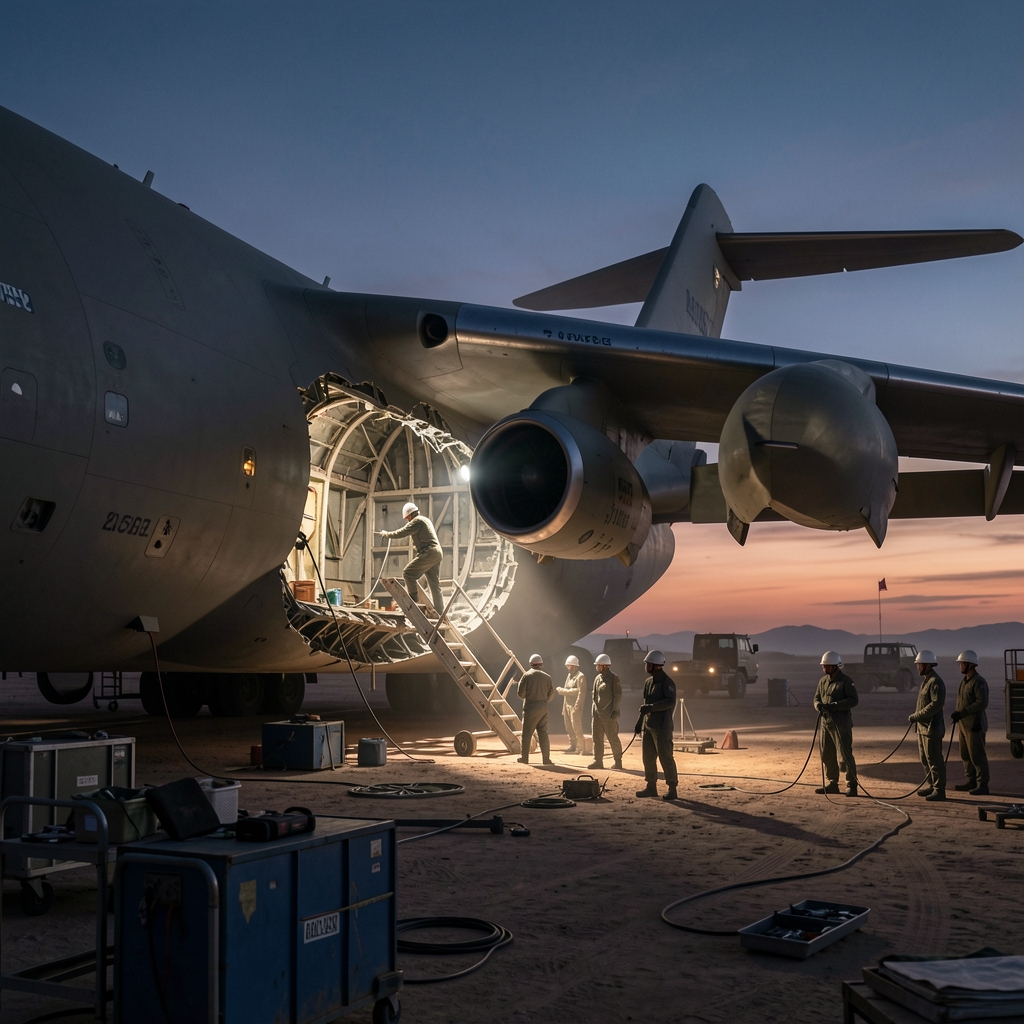
A KC-135 that was damaged in an Iranian strike has arrived at RAF Mildenhall in the United Kingdom. The aircraft reached that location after field repairs, and observers noted it was covered in shrapnel patches. These are the reported facts about this specific aircraft’s journey and condition.
Context and immediate significance
That a battle-damaged aircraft was able to leave its theater and reach a major overseas base after on-site repairs suggests a capacity to stabilize and move damaged platforms. The visible shrapnel patches indicate localized repairs addressing fragmentation hits. Those two facts — damage from an Iranian strike and subsequent field repairs enabling movement to RAF Mildenhall — are the central elements of the report.

Audit-ready is a season. It shouldn't be.
Evidence in spreadsheets, controls drifting between audits, frameworks multiplying on flat headcount. Nubivance runs continuous compliance on Rapid7 Cyber GRC - SOC 2, HIPAA, ISO 27001, PCI, CMMC.
End the scrambleWhy this matters — perspectives to consider
- Technologists: Visible shrapnel patches highlight repair techniques used in the field to restore structural integrity or at least airworthiness enough to reposition the aircraft. Such repairs can be informative about rapid-repair practices and the limits of temporary fixes.
- Policymakers and planners: The transfer of a damaged asset to RAF Mildenhall after field repairs raises logistical and maintenance questions about where final repairs or further assessments will occur, and what that movement signals about basing, sustainment, and force posture.
- Operators and maintenance crews: The fact that field repairs were sufficient for the aircraft to transit to a major base underscores both the skill of maintenance teams and the operational trade-offs in returning damaged aircraft to safer maintenance hubs for more comprehensive work.
- Adversaries and analysts: The public sighting of a patched, damaged aircraft communicates information about survivability, repair timelines, and the capability to recover and reposition assets even after being struck.
What to watch next
Further reporting or official statements would clarify the scope of the damage, the nature of the field repairs, and the aircraft’s next steps at RAF Mildenhall. For now, the image of shrapnel patches on a KC-135 — damaged in an Iranian strike and moved after field repairs — is a compact story about damage, improvisation, and the vulnerabilities and resilience of military aviation.