“further degrading Iranian military capabilities,” CENTCOM said, announcing the end of a weekend wave of air strikes and the start of a new, tenth round of precision strikes today.
CENTCOM and Blockade 2.0
CENTCOM has reinstated a maritime blockade on July 14 and, as of July 20, reported a sustained campaign of night-time strikes against Iranian military targets. The command said yesterday it had completed the ninth consecutive night of precision strikes and began a tenth round today. Since the blockade resumed, U.S. forces have redirected seven commercial vessels and disabled one vessel kinetically, firing AGM-114 Hellfire missiles into the smokestack of an unladen oil tanker that was heading toward Kharg Island.
Carrier Strike Groups and surface escorts supporting the campaign
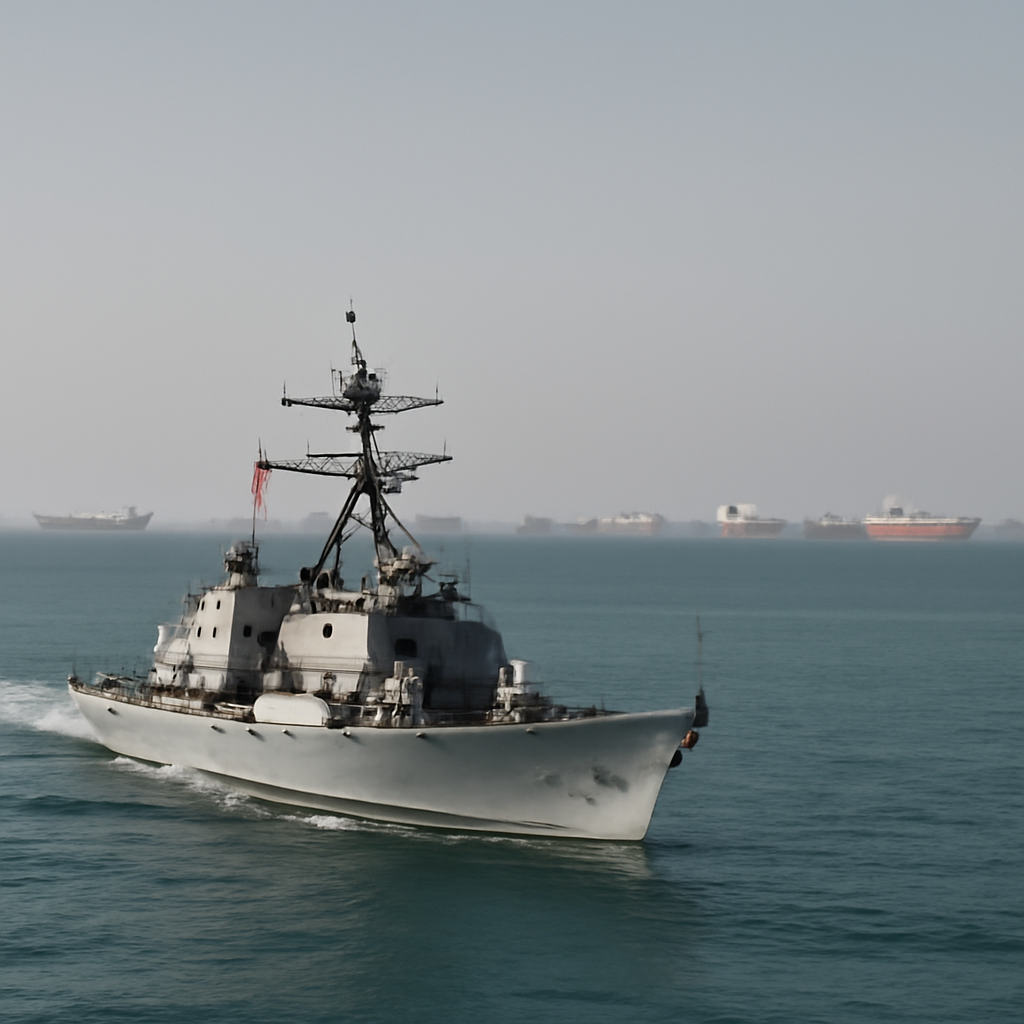
More than 20 U.S. Navy warships are operating in the Arabian Sea and the broader Indian Ocean, a posture that has not changed since last week. Two Carrier Strike Groups (CSGs), led by USS Abraham Lincoln and USS George H.W. Bush, plus an Amphibious Ready Group centered on USS Boxer, are identified as the primary naval assets supporting Blockade 2.0 and the renewed strike campaign. Those flattops operate alongside roughly 14 guided-missile destroyers and a mix of other surface ships. CENTCOM footage released during the campaign shows F/A-18 Super Hornets launching armed with AIM-9X, GBU-31, and GBU-54 munitions.

Audit-ready is a season. It shouldn't be.
Evidence in spreadsheets, controls drifting between audits, frameworks multiplying on flat headcount. Nubivance runs continuous compliance on Rapid7 Cyber GRC - SOC 2, HIPAA, ISO 27001, PCI, CMMC.
End the scrambleUSS George Washington: fueling evolution in the Philippine Sea
USS George Washington is operating in the Western Pacific. Last week the carrier conducted a complex fueling-at-sea with USNS Earl Warren and a replenishment-at-sea with USNS Charles Drew in the Philippine Sea. 1st Lt. Arren Halfacre, serving aboard Washington, described the Warren evolution as involving three fuel lines simultaneously and called it a “rarely done evolution” that included roughly 150 Sailors and Merchant Mariners.
USS Theodore Roosevelt and RIMPAC 2026
USS Theodore Roosevelt is in the sea phase of Exercise Rim of the Pacific (RIMPAC) 2026 and underway in the Hawaiian Islands Operating Area. RIMPAC 2026 is the 30th iteration of the series and the world’s largest international maritime exercise, with participating units operating south of Oahu and to the west of the Big Island. Ships involved in the exercise have been broadcasting AIS transponders publicly. On July 18, Roosevelt hosted the acting Secretary of the Navy, Hung Cao, who observed flight operations, met with senior brass, and took photos with the crew.
U.S. homeports, maintenance, and force posture summary
At U.S. homeports, USS Nimitz is at Naval Station Norfolk, moored at Pier 14N; the carrier’s deactivation was delayed until next year. Nearby, USS Dwight D. Eisenhower is berthed at Pier 11S, and USS Gerald R. Ford moved to Pier 5N at Norfolk Naval Shipyard in advance of her first Planned Incremental Availability. On the West Coast, USS Carl Vinson is the only carrier currently in San Diego, mooring at Kilo Pier on July 17 after a weeklong underway that completed flight deck certifications and carrier qualifications with Carrier Air Wing 2.
Overall fleet posture listed in the tracker shows three U.S. carriers deployed, three training or in port in various states of readiness, four in maintenance, and one being used primarily for training. Amphibious readiness tallies show two Amphibious Ready Groups deployed, four training or in port, and three in maintenance. Positions are described as general approximations.
What this means for CENTCOM, Pacific commanders, and naval planners
- CENTCOM: Will continue to coordinate blockade enforcement and precision strike sorties while managing vessel redirections and kinetic interdictions, as evidenced by the seven redirected merchant vessels and the single kinetic disabling of an unladen tanker.
- Pacific commanders: Are conducting sustainment and interoperability activities—USS George Washington’s complex underway replenishments and USS Theodore Roosevelt’s RIMPAC participation underscore logistics and multinational exercise priorities in the Western Pacific and Hawaiian operating areas.
- Naval planners at homeports and shipyards: Are balancing forward deployments with maintenance and availability schedules—Nimitz’s postponed deactivation, Gerald R. Ford’s move into Planned Incremental Availability, and multiple carriers in maintenance shape the distribution of operational carriers and training assets.
The U.S. carrier force remains dispersed: forward-deployed strike groups and amphibious assets are actively supporting CENTCOM’s blockade and strike campaign in the Arabian Sea and Indian Ocean, while other carriers sustain presence and training across the Pacific and at homeports. CENTCOM’s announcement of a tenth round of strikes and the track record of vessel redirections and a kinetic interdiction make the coming days a key period for naval operations and logistics across two oceans.
Original TWZ carrier tracker: Where Are The Aircraft Carriers: July 20, 2026