“The basic physics of the MV250 enable significantly longer range, higher speed, and a lower cost of operations when compared to tiltrotor and legacy platforms,” said Kyle Clark, founder and CEO of BETA Technologies.
What the MV250 is and where it debuted
BETA Technologies debuted the MV250, a hybrid‑electric vertical takeoff and landing (VTOL) combat cargo drone, in a static display at the Farnborough International Airshow 2026 in England. The vehicle shown at the airshow has not flown, though BETA said it was built using “all‑flyable components.” TWZ and other journalists spoke with BETA officials at Farnborough about the prototype and the company’s approach to adapting its commercial Alia 250 eVTOL into a military logistics platform.
Design, propulsion and payload specifics
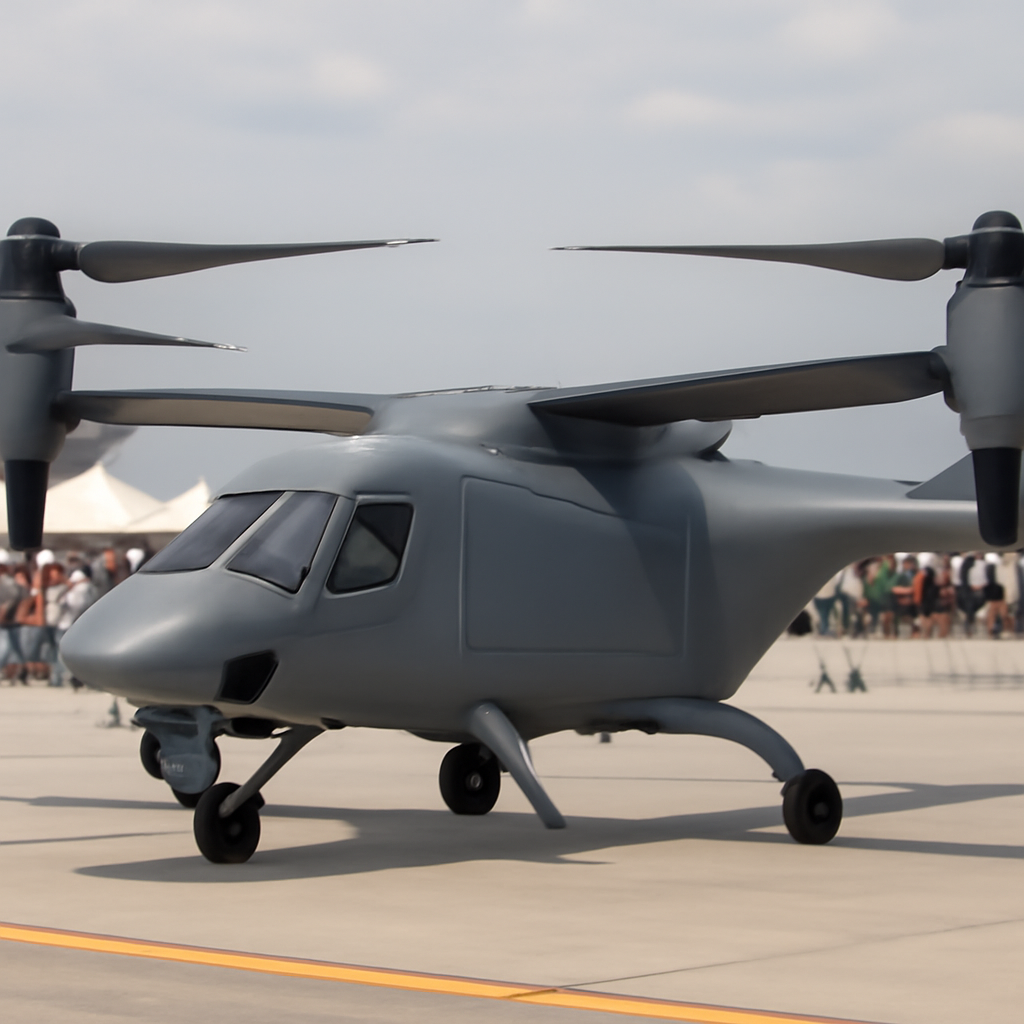
The MV250 is a military adaptation of BETA’s ALIA 250 and is uncrewed and primarily intended for cargo transport. Cargo is loaded and unloaded through an upward‑opening nose visor; the cabin provides 250 cubic feet of volume and is rated for a 2,000‑pound payload. Published performance figures from BETA list an operational radius of more than 250 nautical miles, a cruising speed in excess of 170 knots, and a ferry endurance of 12 hours at 20,000 feet.
Propulsion combines electric motors and a turbogenerator. Four fixed‑pitch propellers mounted on long booms connecting the 50‑foot‑span wings to a V‑shaped tail provide VTOL lift, while a single variable‑pitch pusher propeller at the rear provides forward thrust. The turbine engine, mounted above the rear fuselage, feeds a high‑voltage bus to recharge batteries and power the electric motors rather than mechanically driving the propellers; the engine can be stopped while batteries provide power. BETA said the MV250’s turbogenerator was developed with GE Aerospace and is compatible with a range of NATO‑compatible fuels.

Audit-ready is a season. It shouldn't be.
Evidence in spreadsheets, controls drifting between audits, frameworks multiplying on flat headcount. Nubivance runs continuous compliance on Rapid7 Cyber GRC - SOC 2, HIPAA, ISO 27001, PCI, CMMC.
End the scrambleAutonomy, mission roles, and signature advantages
The MV250 relies on Sikorsky’s MATRIX system to provide full autonomy. At a minimum, BETA expects the platform to autonomously navigate predetermined routes using programmed waypoints; the company noted that more advanced autonomy—dynamic replanning and real‑time responses—would materially enhance resupply missions in contested or high‑risk environments.
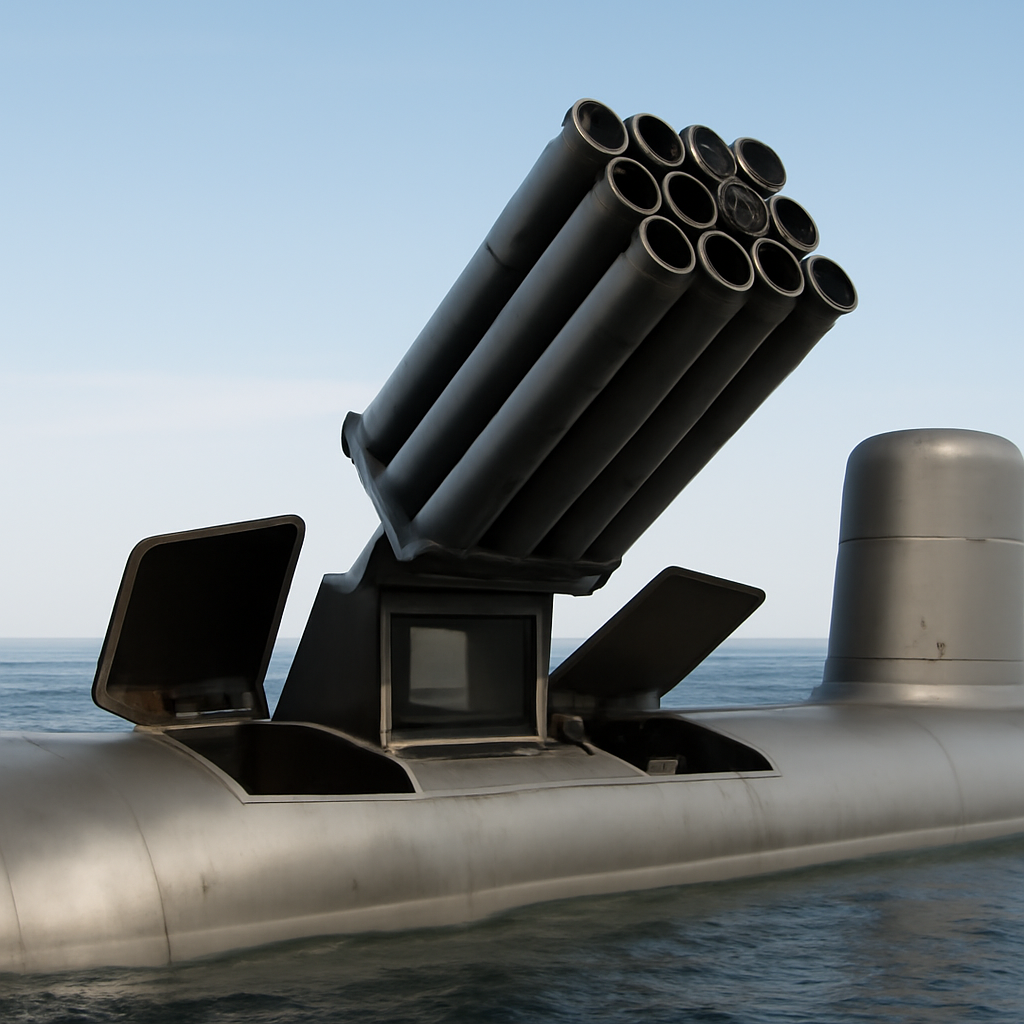
BETA positions the MV250 for multiple roles beyond cargo: casualty and medical evacuation, intelligence‑surveillance‑reconnaissance (ISR), and deployment of air‑launched effects (ALEs) from side‑mounted launch tubes. The company also proposes using the drone as a forward‑located tactical power source capable of providing up to 500 kilowatts to ground forces for command and control, counter‑drone, electronic warfare, or directed energy applications. BETA highlighted hybrid‑electric benefits such as reduced moving parts, lower maintenance burdens, and reduced infrared and acoustic signatures.
Manufacturing claims and production pitch
BETA executives emphasized manufacturing and production speed as a differentiator. Kyle Clark described “a really thoughtful composites integration” in which components are bonded with a process likened to “a big panini press,” producing a fuselage with no fasteners. The company said it reduced a wing’s build from 14,000 fasteners and 580 parts to fewer than 300 parts and zero fasteners, cutting manufacturing from six weeks to “a matter of hours.” Larry Smith of BETA framed this approach as using internal funding to rapidly create viable prototypes from commercial core technologies rather than long bespoke defense procurement cycles.
How the MV250 fits the VTOL cargo landscape
The MV250 joins a crowded field of VTOL cargo drones and uncrewed conversions. TWZ compared the MV250’s published figures against other platforms: the MQ‑72C Lakota Connector carries a maximum around 4,000 pounds (including slung loads), the Airbus U145 (an uncrewed variant of the H145) lists up to 2,600 pounds, the R66 Turbinetruck carries 1,300 pounds internally, and the Uncrewed 505 is a development of the Bell 505. The Turbinetruck uses the same MATRIX autonomy system as the MV250. Based on published numbers, TWZ placed the MV250 between the heavier Lakota Connector and U145 at one end, and the smaller Turbinetruck and Uncrewed 505 at the other.
What this means for the U.S. Marines, the U.S. Army, and civilian operators
- U.S. Marines: The Marine Corps has been exploring uncrewed rotary‑wing “connectors” for expeditionary and distributed operations; an MV250‑class platform could contribute to contested resupply concepts being developed by the service.
- U.S. Army: The Army is pursuing optionally crewed and uncrewed H‑60 derivatives and larger logistics concepts; the MV250 represents a commercially derived candidate at a different point on the size and endurance spectrum.
- Civilian operators and disaster response agencies: BETA suggested civilian missions including disaster response, firefighting, remote resupply for offshore platforms, and support to isolated inland locations—applications that leverage the MV250’s payload, range, and hybrid‑electric flexibility.
The MV250 is a prototype that brings hybrid‑electric propulsion, full autonomy, and a compact production pitch into a contested market of rotorcraft conversions and purpose‑built uncrewed cargo vehicles. BETA’s published performance numbers and manufacturing claims set concrete expectations; whether the company’s static demonstrator will translate into flight test results, service evaluations, and procurement remains the central question as the program moves beyond Farnborough.