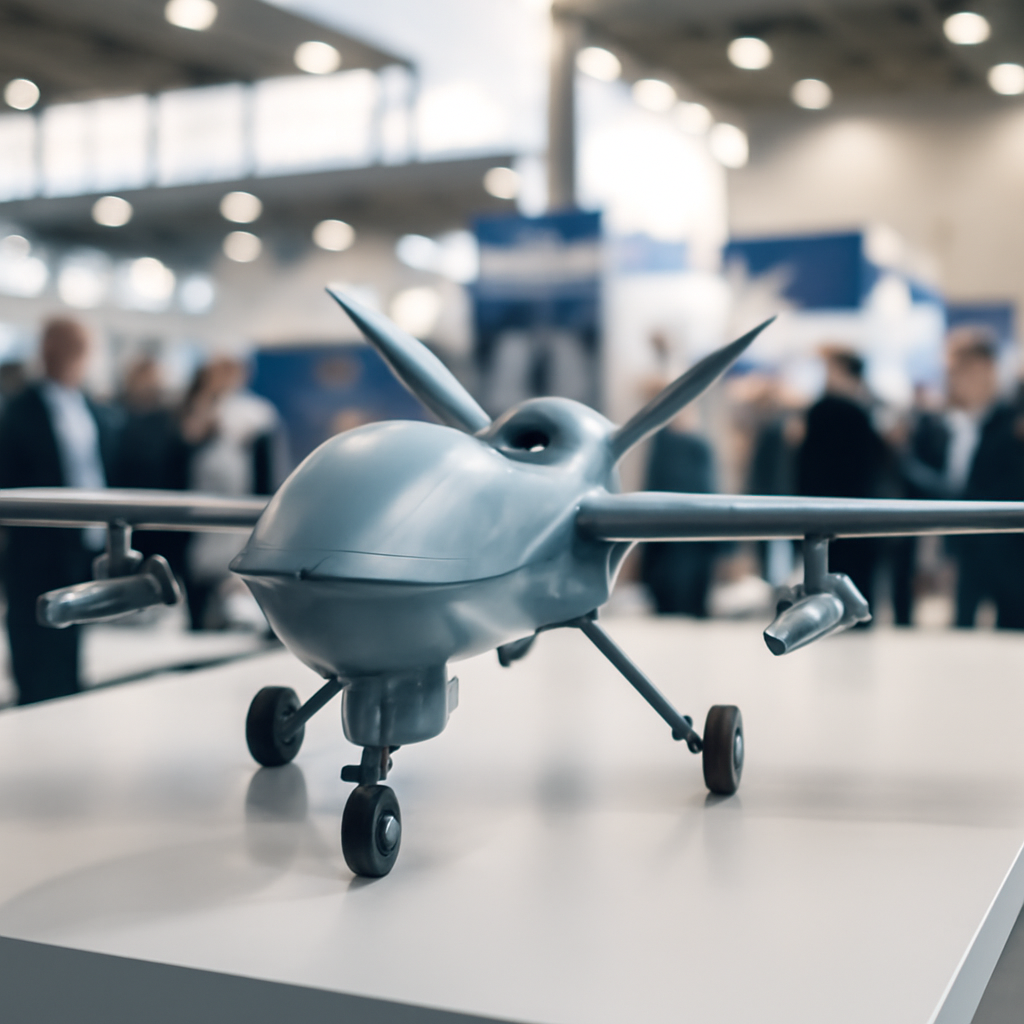
"I believe they put a silly goal in here for a low-end [cost]," Dave Alexander, the CEO of General Atomics' aeronautics division, told Breaking Defense at the Farnborough Airshow. The remark set the tone for a blunt assessment of the Defense Innovation Unit's price expectations for the Pentagon's Massed Modular Aircraft effort.
Dave Alexander on DIU's low-end cost goal
Alexander said he was "1,000 percent confident" that General Atomics could meet a price within the range DIU specified, but warned that the solicitation's lowest cost target is unrealistic for most bidders under the contract's certified-pricing rules. "Anybody that bids that number is very suspicious," he said, and added a procedural caveat: "If you want a commercial product, then don't put certified bid requirements on the product. Don't, if you want commercial pricing."
DIU's Massed Modular Aircraft solicitation: payload, range, timeline
The Defense Innovation Unit's public solicitation seeks a drone capable of performing the MQ-9 Reaper's surveillance and strike missions but at a price "significantly lower than the $30 million per aircraft cost associated with the Reaper." The notice specifies minimum performance requirements: a payload capacity of at least 2,800 pounds and a range of at least 2,300 nautical miles while carrying that load. For one-way operations, the required range extends to 8,000 nautical miles. The solicitation asks that winning firms build a full-scale prototype for flight testing within 21 months of award, with the intent to initially field the aircraft in fiscal 2031. The public notice does not list the exact low-end price target.

This site is the portfolio.
OSINTSights runs on Cloudflare Workers, D1, R2, and Vectorize, with an AI pipeline on Hetzner ARM. Nubivance designed, built, and operates it. We do the same for clients.
See what we buildGeneral Atomics' response: a clean-sheet aircraft and cost posture
General Atomics will propose a new, clean-sheet design for DIU's MMA project, Alexander said, but declined to discuss design details. On cost parameters he was emphatic: "We'll address them [the cost parameters], and I think we'll be just fine." He framed the MMA requirements as unusual: "Nobody else has done what they're asking for, and we've been doing it for 30 years, and it's crazy." In short, General Atomics signaled it will bid and believes it can meet DIU's range of targets, while questioning whether the solicitation's certified-bid rules are compatible with the solicitation's lowest price objective.
Collaborative Combat Aircraft (FQ-42A) production and automation
The company is simultaneously ramping another program: the Air Force in June awarded General Atomics and Anduril production contracts to build collaborative combat aircraft, marking the Pentagon's first venture into acquiring autonomous drone wingmen. Alexander said General Atomics does not expect the Pentagon to execute funding for the first contract option until October, yet the company has already begun manufacturing FQ-42As — "about 30 aircraft in some stage of build," he said.
- General Atomics aims to scale production to six FQ-42As per month by mid-2029, though Alexander declined to say whether that pace is supported by the Air Force contract or would require foreign customers.
- General Atomics has embedded robotics into its CCA production line. "We're leaning hard in on automation. Really, most of our automation is in place right now," Alexander said. By contrast, Anduril is "waiting to introduce automation until the company understands where it can be most useful," according to the account.
- Alexander said orders for "about 25 to 30 CCAs for other US or international customers are 'in the works.'"
The Air Force has declined to comment on how many aircraft it will buy under the CCA contracts and has kept production-rate details under wraps.
What this means for the Pentagon, the Air Force, and international customers
- The Pentagon: DIU has set high-performance targets and a compressed prototype timeline (21 months), but faces internal tension between certified-pricing rules and the solicitation's low-cost aspiration — a tension Alexander flagged as likely to shape bids.
- The Air Force: The service will manage both the MMA competition and CCA production ramps; its decision on executing initial CCA contract funding and on production quantities will influence General Atomics' ability to reach the six-per-month target by mid-2029.
- International customers: General Atomics said orders for roughly 25–30 CCAs for other U.S. or international customers are "in the works," indicating potential demand beyond the immediate Air Force buys that could affect production planning.
Taken together, the public solicitation's technical reach and DIU's unnamed low-end price point have prompted a public debate over how procurement rules and certified bid requirements interact with commercial pricing expectations. General Atomics is signaling it will compete on both fronts — offering a clean-sheet MMA design while expanding production of the FQ-42A with automation already integrated into its line — even as it questions whether the solicitation as written will yield credible low-cost bids.