"They fed critical pieces of information to Iranian commanders that helped them target the F-15E," an unnamed senior U.S. military official told The New York Times — a terse finding that reshapes how analysts are now reconstructing the April air engagement over southern Iran.
Pentagon assessment: drones provided GPS location, speed and direction
According to reporting in The New York Times cited by this account, U.S. military analysts concluded that multiple Iranian drones relayed "critical pieces of information" — specifically the F-15E's GPS location, speed and direction — to Iranian commanders before a shoulder‑launched missile struck the jet. The Times' characterization drives the central claim: drones were not merely present in the sky, they provided targeting data that materially aided the strike.
Pilot's account: a "jellyfish-like" swarm and a "minefield of drones"
The Strike Eagle's pilot, after ejecting, reportedly described a visual phenomenon CNN summarized as a "jellyfish-like" swarm of drones. CNN, citing four unnamed sources familiar with the matter, quoted the pilot saying the drones were "interconnected and moving as one with smaller drones below the bigger drones like legs." A separate source told CNN the pilot had described seeing a "minefield of drones" in the air. Those descriptions — whether literal, impressionistic, or affected by concussion — have become a focal point for analysts trying to link what the aircrew observed to the broader targeting claim.

This site is the portfolio.
OSINTSights runs on Cloudflare Workers, D1, R2, and Vectorize, with an AI pipeline on Hetzner ARM. Nubivance designed, built, and operates it. We do the same for clients.
See what we buildDrones as ad-hoc airborne sensor networks
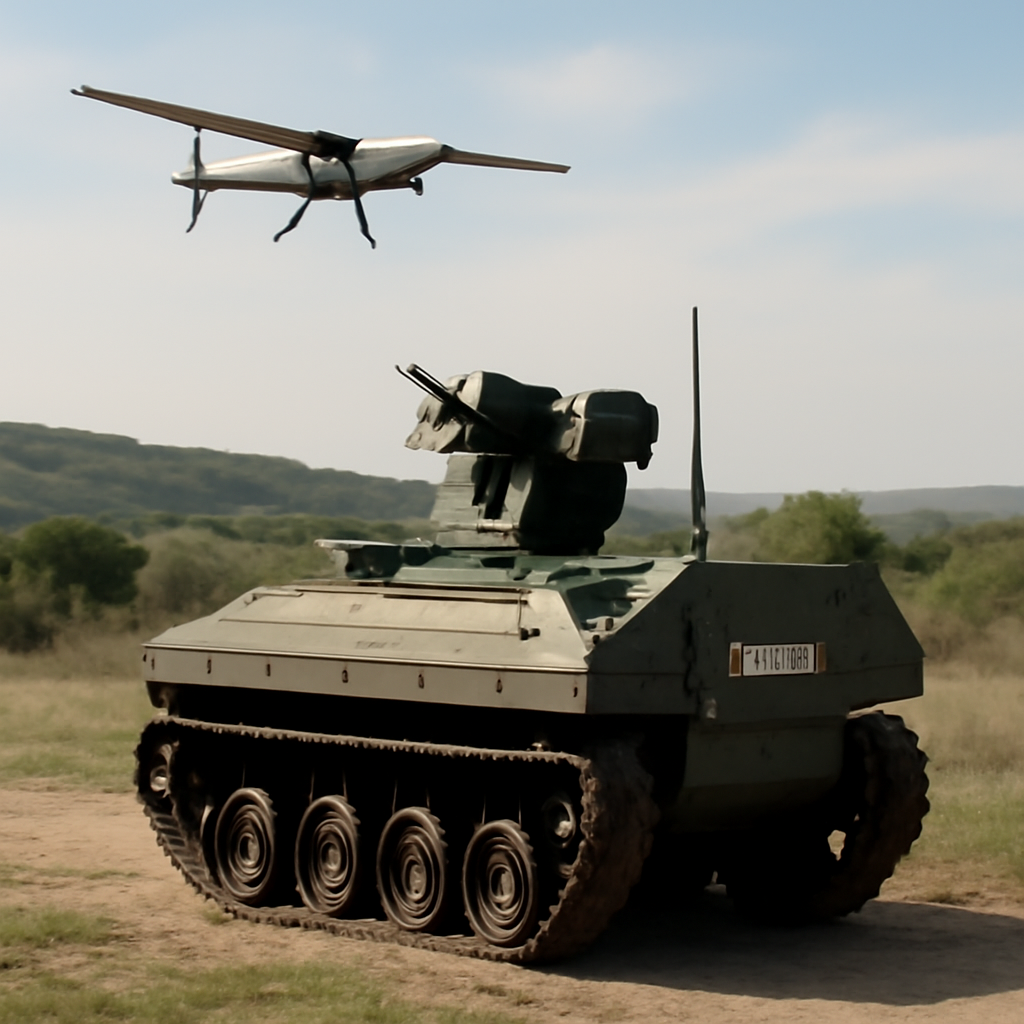
The reporting lays out plausible mechanisms by which relatively simple drones could have assisted Iranian forces. Even a single camera-equipped drone can alert a defender to an aircraft's heading and speed; multiple sensor-equipped drones can form a distributed, expendable network that increases the odds of spotting a penetrating jet. Drones can also carry payloads to detect radar and other radio-frequency emissions and, when networked over an area, could be used to geolocate emitters or cue shooters. Ground stations can do some of this work too, but airborne platforms benefit from altitude, line-of-sight, and mobility — and can be paired with decoys to stimulate radar emissions and reveal locations.
The missile, Iranian preparations, and the battered conventional air defenses
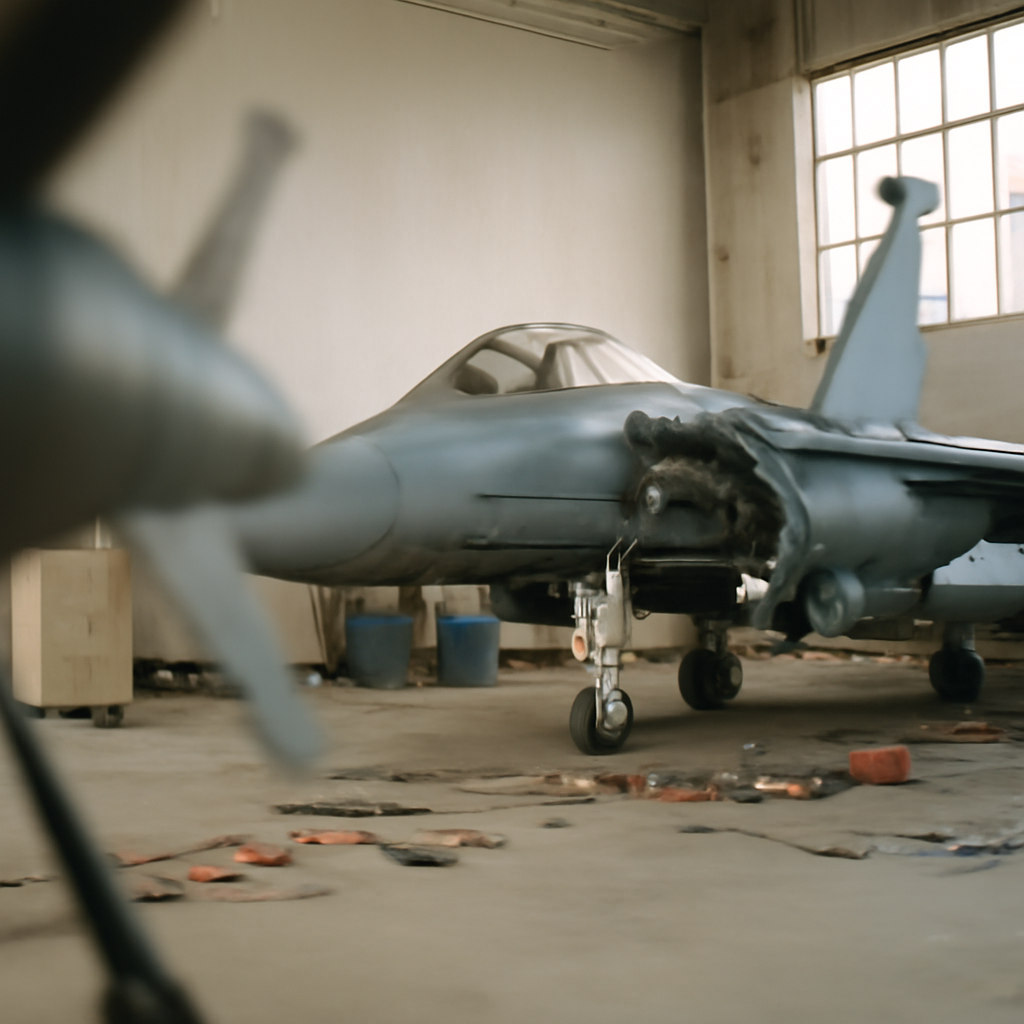
The projectile that hit the F-15E is described in reporting as a shoulder‑launched missile, "thought to be Chinese-made." The account notes that Iran had widely dispersed such weapons and likely pre‑placed them in areas where U.S. and Israeli aircraft were expected to penetrate, particularly because Iran's conventional air‑defense architecture had been "largely taken down" after "extensive U.S. and Israeli attacks." The loss of the F-15E triggered a massive recovery effort: the pilot was recovered shortly after ejecting, but the Weapon Systems Officer (WSO) became the focus of a rescue operation that involved hundreds of troops, scores of aircraft and diversion operations across more than a half dozen parts of Iran. That effort itself incurred losses — a second aircraft, an A‑10 attack jet, was lost in the air, while two MC‑130J Commando II special operations cargo planes and several H‑6 Little Bird special operations helicopters were destroyed on the ground, according to the reporting.
What this means for Ukraine, the U.S. military, and Iranian forces
- Ukraine: The report links Iran's tactics to lessons drawn from Ukraine, where drones have been used to reconnoitre, detect movement, track targets, identify air‑defense activity, cue weapons, and pioneer interceptor drones and loitering anti‑air concepts. The reporting suggests those operational lessons informed Iranian thinking about low‑cost sensor networks and airborne intercept tactics.
- The U.S. military: Analysts will weigh how distributed, inexpensive sensor nodes — whether single camera drones or more sophisticated RF‑detecting platforms — can degrade the advantages of high-end aircraft when layered air‑defense networks are otherwise compromised. The Times' report that the F-15E's defensive countermeasures suite provided only "half a second" of warning before the strike is followed in this account by a corrective: the F-15E is not equipped with missile approach warning systems (MAWS) to detect incoming infrared‑guided threats, meaning that such a warning would not have been available in the first place.
- Iranian forces: The narrative here emphasizes planning for a fallback posture — pre‑positioning shoulder‑launched missiles and employing drone spotting networks — after their traditional, radar‑centric defenses were degraded by prior strikes. The combination of dispersed shooters and airborne sensors is presented as a deliberately asymmetric approach.
The evolving picture in these reports binds together a visual account from the cockpit, an operational assessment from U.S. analysts, and a tactical explanation grounded in inexpensive, distributed sensing and pre‑placed shooters. Yet the core technical questions remain concrete and specific: what sensors were mounted on which drones, how was tracking data transmitted and fused, and which element ultimately cued the shoulder‑launched missile that struck the Strike Eagle? Those are the questions the reporting raises — and the answers will determine whether this episode is a case study in low‑cost sensor warfare or a more contingent set of events amplified by circumstance and luck.
https://www.twz.com/air/did-sensors-on-iranian-drones-help-shoot-down-f-15e