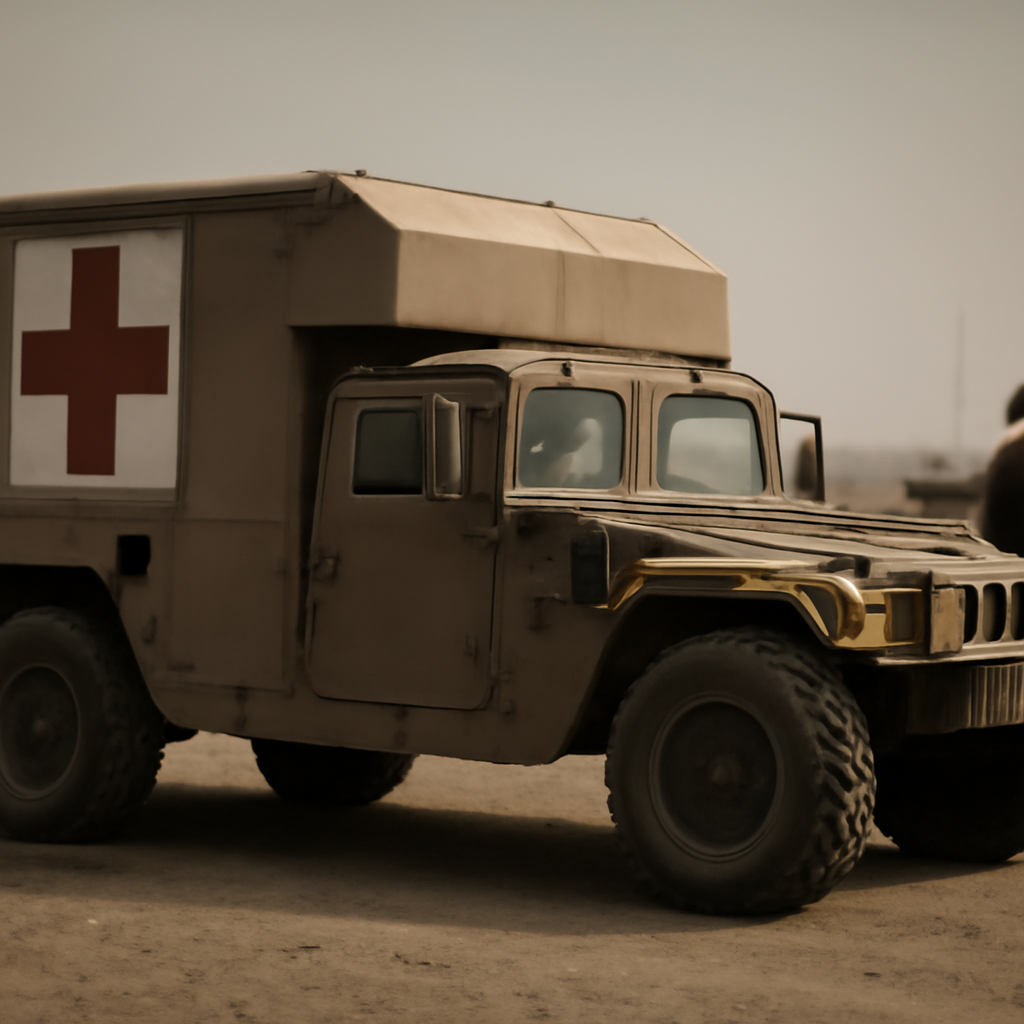
"Most evacuations during [Operation Epic Fury] were ultimately conducted by ground," according to a Defense Department Office of the Inspector General report released Monday.
Ground evacuations replaced planned Army helicopter MEDEVACs
The Office of the Inspector General (OIG) found that the military abandoned plans to use Army helicopters to evacuate wounded troops involved in operations with Iran and instead relied largely on slower, ground-based evacuations. The report says the initial use of Army helicopters in Kuwait and Iraq was curtailed as commanders moved aircraft and personnel because of concern about Iranian drone and missile strikes. That change in plans left most casualty movements to ground transport during Operation Epic Fury.
Drone and missile threat shaped medical logistics and movement
The OIG links the shift away from airborne medical evacuation directly to the threat posed by Iranian drones and missiles. Medical professionals and military analysts had warned that those kinds of emerging capabilities would complicate casualty care; a 2022 Army University Press article by Lt. Col. Matthew Marsh and Capt. Ryan Hampton presaged the problem, writing that “Medical personnel will experience intermittent air and ground evacuation with medical logistics constraints.” An April U.S. Naval Institute report similarly observed that “Drone warfare [in Ukraine] has disrupted casualty movement from the point of injury throughout the combat casualty continuum of care.”

Audit-ready is a season. It shouldn't be.
Evidence in spreadsheets, controls drifting between audits, frameworks multiplying on flat headcount. Nubivance runs continuous compliance on Rapid7 Cyber GRC - SOC 2, HIPAA, ISO 27001, PCI, CMMC.
End the scrambleLimited in-theater hospital capability increased reliance on host-nation care
The OIG report notes a second constraint: the United States relied on host country hospitals to provide “advanced, hospital level care” for severe injuries. The report says establishing comparable hospital-level facilities on U.S. bases would have required a larger, more targetable footprint. That calculus—balancing the benefits of forward hospital capability against the risk of creating more attractive targets—helped drive the decision to lean on local medical infrastructure.
Personnel and resource shortfalls across CENTCOM compounded risks
Separate domestic sources cited in the OIG report describe chronic medical shortfalls across U.S. Central Command. Sgt. Maj. Sandra Johnson wrote in a July 2025 Pulse of Army Medicine piece that, “Due to competing requirements, many of these bases only have one medic on post and no medical provider. A medic may have to care for a patient for several hours until they arrive at a local national hospital.” She singled out the lack of evacuation options, noting “no Medical Evacuation (MEDEVAC) by flight or ground capability, or only ground Casualty Evacuation (CASEVAC) options,” across CENTCOM. The convergence of personnel shortages, restricted MEDEVAC air options, and reliance on host-nation hospitals lengthened timelines for advanced care.
Recommendation: fix counter-drone interoperability and standardize defenses
The inspector general concluded with a clear corrective focus. The report strongly recommended that the Department of Defense find and fix “the gaps in [Department of Defense counter-drone] interoperability, and the corrective actions needed to standardize” those capabilities. CENTCOM officials, the report notes, did attempt rapid adjustments—“During OEF, USCENTCOM shifted personnel, assets, and storage facilities as locations came under Iranian and proxy attacks,”—but the OIG framed those steps as stopgap measures rather than a standardized solution.
What this means for medical personnel, CENTCOM, and procurement leaders
- Medical personnel: Expect more frequent periods of intermittent evacuation options and longer reliance on local hospitals for advanced care, consistent with the Marsh and Hampton forecast that evacuation will be intermittent and constrained by medical logistics.
- CENTCOM commanders and operators: Will have to continue shifting personnel, assets, and storage locations to manage threat exposure while coping with limited MEDEVAC air options, as the OIG observed during Operation Epic Fury.
- Procurement and DoD planners: Face a narrow, direct charge from the OIG to address interoperability gaps in counter-drone systems and standardize corrective actions to restore more robust, survivable casualty evacuation options.
The OIG report ties a specific operational outcome—abandoning planned helicopter MEDEVACs for ground transport—to an identified technical and organizational deficiency: counter-drone gaps that make airborne evacuation too risky. Commanders improvised by moving forces and depending on host-nation hospitals, but the inspector general’s recommendation is unambiguous: fix interoperability and standardize defenses before the next operation creates the same trade-offs. Will the Department of Defense move from ad hoc mitigations to the standardized counter-drone posture the report calls for? The OIG has left that as the immediate task for policymakers and planners.