“Any attack on Iran from our enemies, including Israel, will see a response from our many air force bases including Eagle 44.”
What Eagle 44 is and where it sits
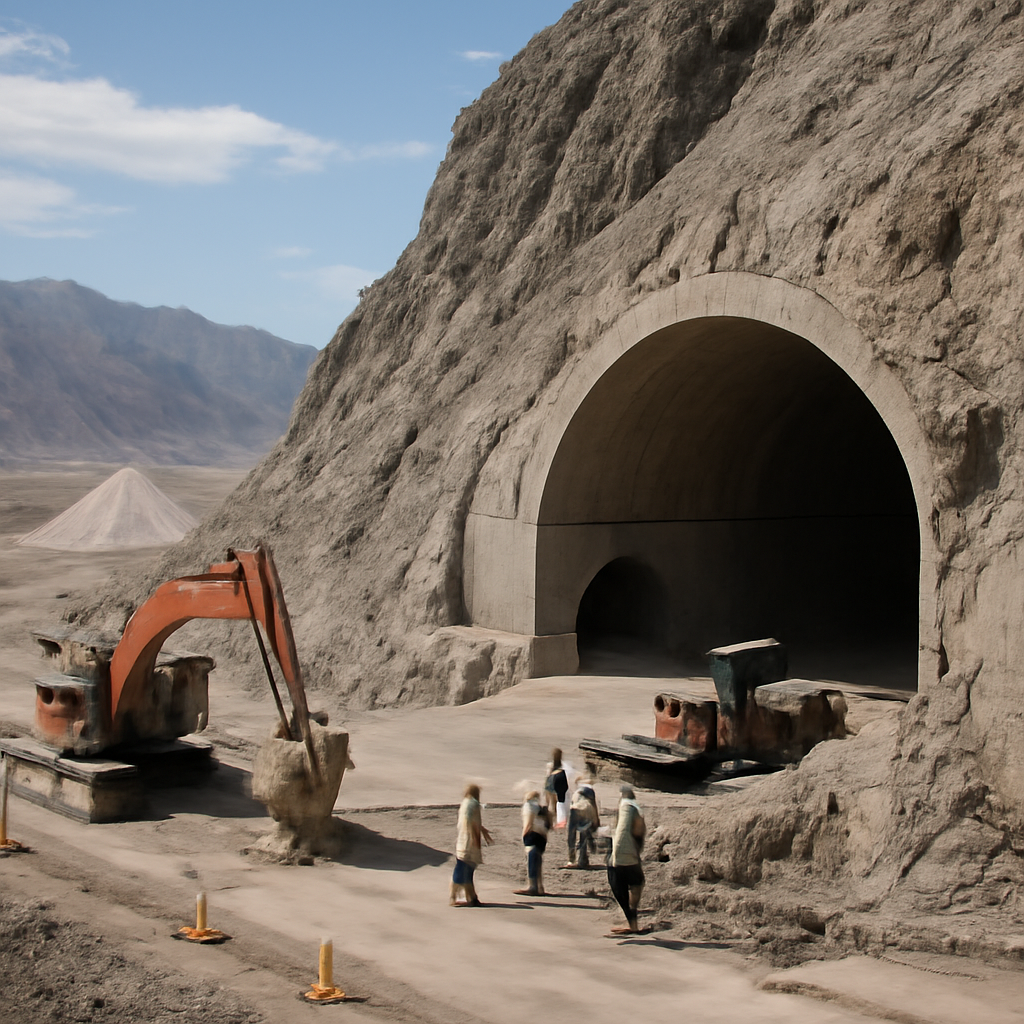
Eagle 44 — also called Oghab 44 — is a hardened underground airbase cut into the side of a mountain in Hormozgan province, in the Zagros foothills roughly 100 miles northwest of the Strait of Hormuz. Construction began in 2013, and a 2.7-mile main runway on a valley floor was started about eight years later. The Islamic Republic of Iran Air Force (IRIAF), not the Islamic Revolutionary Guard Corps Aerospace Force, operates the complex.
Imagery shows repair work after multiple strikes
High-resolution Planet Labs imagery from September 29, reviewed by TWZ, shows reconstruction continuing after at least three rounds of airstrikes in 2026. The satellite pictures reveal a newly completed section of taxiway, cleared obstacles on the main runway, cleared wreckage pushed off pavement on the eastern taxiway, and ongoing paving work where a subgrade layer of compacted dirt has been laid but not finished. Impact craters remain in front of the western tunnel entrances and two buildings in the main support compound are destroyed with a third damaged.

Audit-ready is a season. It shouldn't be.
Evidence in spreadsheets, controls drifting between audits, frameworks multiplying on flat headcount. Nubivance runs continuous compliance on Rapid7 Cyber GRC - SOC 2, HIPAA, ISO 27001, PCI, CMMC.
End the scrambleHow Eagle 44 has been fought — and why it matters
The base was first unveiled by Iranian state media in February 2023, which showed IRIAF F-4D/E Phantom IIs and one-way attack drones inside the facility. During Operation Epic Fury, the United States and Israel launched waves of strikes beginning February 28, 2026. According to reporting cited in the record, strikes in late March cratered taxiways, leveled at least one building, and left mounds placed along the runway to prevent landings, with analysts suggesting the aim was to sever access between the underground caverns and the runway.
CENTCOM then conducted further strikes on July 15, 2026; imagery and analysis from July identified cratered taxiways and damage to construction-related infrastructure. Iran has not acknowledged strikes on Eagle 44, and U.S. military briefings have not specifically named the base.
Capabilities and limits visible from the imagery
The promotional footage and imagery make clear Eagle 44 has internal blast doors, branch tunnels to revetments for fighters and drones, and a western support compound of buildings used during construction and sustainment. What remains unclear from imagery is what sits inside the mountain and how many fighters — the IRIAF had roughly 60 F-4 Phantoms in service when the base was shown in 2023 — remain operational across the country today.
Satellite analysis in the reporting highlights tactical risks and defensive options: the tunnel entrances are choke points that pass-through tunnels would make vulnerable to follow-up strikes, and the U.S. and Israel possess bunker-buster ordnance. The report names the GBU-57 Massive Ordnance Penetrator as an example of a deep-penetration weapon that could threaten inner caverns, but notes such munitions are very limited and require B-2 delivery — a resource decision the U.S. would weigh against other targets.
What this means for CENTCOM, Tehran, and the IRIAF
- CENTCOM and the Pentagon: imagery of cleared runways and restored taxiway access indicates Iran is restoring sortie infrastructure, which could influence future targeting priorities and assessments of whether underground facilities remain operational or reconstitutable.
- Tehran (regime leadership): continued reconstruction amid blockade and sanctions suggests the regime prioritizes Eagle 44 as strategically important and willing to allocate resources to restore access between tunnels and the runway.
- The IRIAF: repair of taxiways and removal of runway obstacles would, if completed, reduce a critical bottleneck to sortie generation by restoring a second taxiway and redundancy between hangars and the runway — though support buildings remain damaged and the interior status of tunnel caverns is unknown.
By the end of May, separate reporting cited Iran had cleared 50 of 69 tunnel entrances struck at 18 underground facilities; analysts quoted in the record say Iran has “very impressive industrialization and reconstruction capabilities” and that stockpiles have been refilled. Those assessments stand in contrast with statements from U.S. officials quoted in the record who have described the Iranian air force and missile capabilities as severely degraded or non-operational.
What is visible is a working construction effort at a remote, battered hard point: taxiways being repaved, runway obstacles removed, and wreckage cleared. What is not visible — whether fighters, drones, cruise or ballistic missiles remain inside the mountain caverns — determines whether the repairs restore a meaningful strike or storage capability. As the reporting notes, the fact Iran is repairing Eagle 44 “alone could put it back on the target list” in any renewed campaign — and the open question of what sits within the mountain remains the decisive uncertainty.