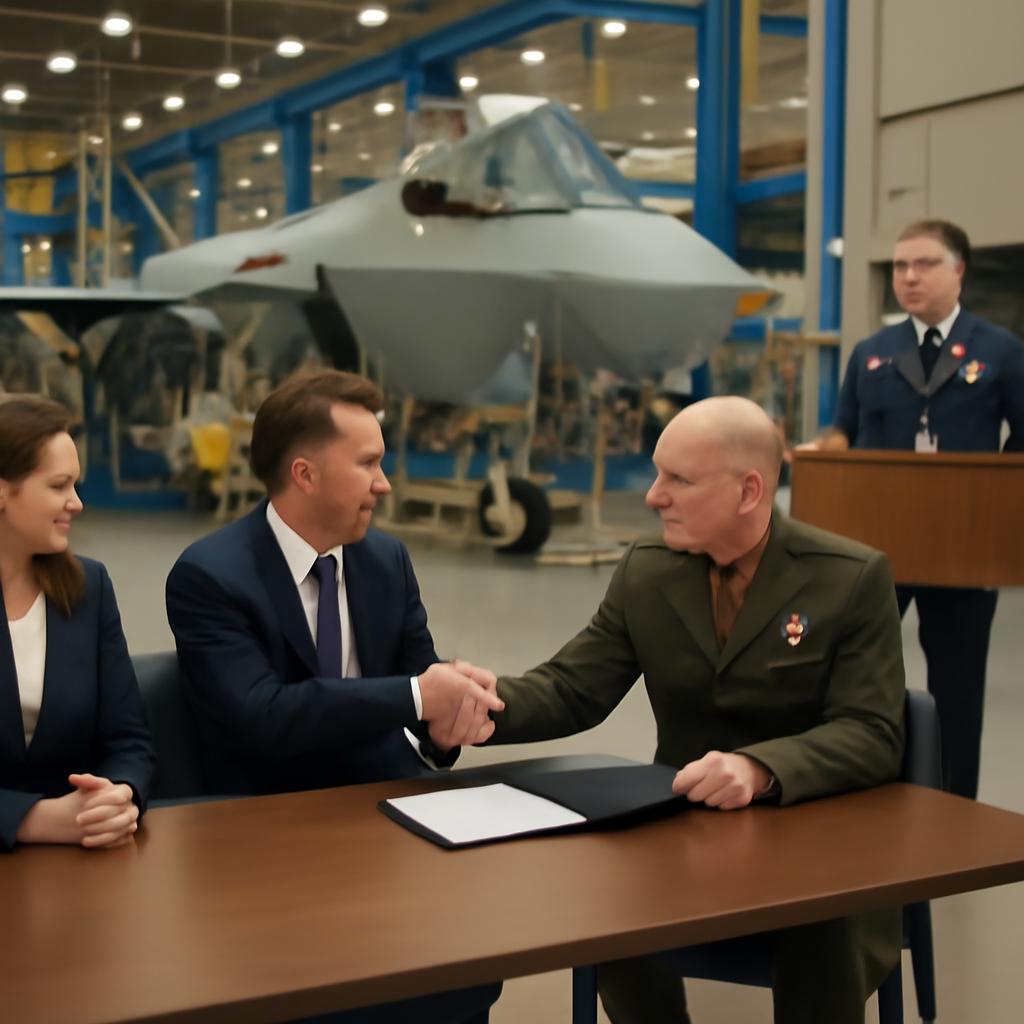
"The framework covers at least 850 US aircraft over 10 production lots," the Pentagon and Lockheed Martin said, bringing a decade-long package of production, sustainment and modification work into view for the F-35 enterprise.
What the framework would include
According to simultaneous Pentagon and Lockheed press releases, the agreement spans 10 production lots and includes at least 850 U.S. aircraft plus initial spares, together with 10 years of sustainment and modification kits. Lockheed said it would hold the tri-variant fighter's production rate steady at 156 aircraft annually. The companies and the F-35 Joint Program Office will "work to finalize contract terms, pricing and schedules through a formal contract award" if lawmakers grant the requisite authority and appropriations.
Financial commitments and incentives built into the deal
The Pentagon's release states Lockheed will fund $7 billion worth of unspecified initiatives for the F-35 program as part of the framework. Lockheed CEO Jim Taiclet said the framework "strengthens the way we can plan and invest in the F-35 enterprise" and gives "greater certainty" to make upfront investments to expand capacity, improve efficiency and build a more resilient supply chain.
Taiclet told investors the deal would let suppliers invest in hiring and software and reduce late or low-quality deliveries to Lockheed's Fort Worth production line. He added that suppliers and Lockheed could benefit from a "fixed-price escalation model" that would allow higher profits if they perform well. Lockheed also said F-35 parts "will be pooled between sustainment or aftermarket and production" to obtain better pricing.

The cyber insurance questionnaire just landed. Now what?
SOC 2, HIPAA, insurance renewals - someone has to own security strategy. Nubivance provides fractional CISO leadership without the full-time salary.
Get a security leadWhat Congress must decide
Lawmakers must grant multi-year procurement authority and provide accompanying appropriations before the agreement can be finalized. The fiscal 2027 defense authorization bill from the Senate Armed Services Committee would permit the Pentagon to enter multi-year procurement contracts for the F-35; the House version includes a similar provision but with additional guardrails. The House bill would delay authorization until the defense secretary certifies the contract includes "the full complement of initial spare parts and alternate mission equipment for each aircraft" and would require the Pentagon to demonstrate at least 5 percent cost savings from the multi-year contract.
Neither the Senate nor House language explicitly authorizes a multi-year sustainment agreement, a distinct and potentially contentious piece of the package. The F-35 program previously explored a five-year performance-based logistics sustainment deal but officials could not satisfy a congressional requirement to demonstrate that the PBL would either reduce costs or increase readiness.
How the framework intersects with international buyers and program longevity
A Lockheed spokesperson said the agreement "will not change the process for production slot allocation" among buyers and that the Joint Program Office will "maintain ownership of the production order for all F-35 customers." The spokesperson added the framework should, in time, save foreign customers money through economies of scale.
The F-35 program is projected to last until the 2080s, and sustainment represents a vast portion of the program's nearly $2 trillion lifecycle cost estimate, the releases note. Over 1,300 F-35s have been delivered to date, but the announcements also acknowledge recent practical challenges: many newly delivered jets have been held for training as officials work to clear a new upgrade for combat.
What this means for Congress, Lockheed and international operators
- Congress: Members will weigh whether the multi-year procurement authority includes the statutory certifications the House seeks — full initial spares and alternate mission equipment — and whether the Pentagon can credibly show at least 5 percent savings.
- Lockheed and suppliers: They gain planning certainty and new capital commitments — Lockheed says it will fund $7 billion of initiatives — but stand to see profits tied to a performance-based "fixed-price escalation model" and are expected to invest in capacity, hiring and software to reduce production interruptions.
- International buyers and the Joint Program Office: The Joint Program Office retains control of production slots, and the framework aims to pool parts across sustainment and production to reduce costs for both U.S. and foreign customers.
Any decade-long deal would likely be worth tens of billions of dollars: a recent two-lot agreement covering nearly 300 aircraft cost $24.3 billion. Lockheed executives said Lot 20's agreement is not expected to be finalized until next year, and both sides still must settle contract terms, pricing and schedules — contingent on congressional authority and appropriations. The framework promises industrial stability and pooled logistics, but it leaves central questions — demonstrable taxpayer savings, the treatment of sustainment in law, and the timetable to finalize Lot 20 — to be resolved in the months ahead.