"We have all the cards," President Donald Trump told Fox News on Sunday, a phrase that underlines why a fresh Iranian offer to reopen the Strait of Hormuz and end the war faces long odds.
What Iran offered — and how it reached Washington
According to reporting cited by the source, Iran passed a new proposal to the United States via Pakistan that would prioritize reopening the Strait of Hormuz and lifting the naval blockade, postponing nuclear negotiations to a later stage. Axios, citing a U.S. official and two sources with knowledge, described the package as one in which "the ceasefire would be extended for a long period or the parties would agree on a permanent end to the war" while nuclear talks would start only after the strait was open and the blockade lifted.
White House response and U.S. posture
White House Press Secretary Karoline Leavitt confirmed President Trump met with top national security officials to discuss the proposal. Assistant White House Press Secretary Olivia Wales told reporters, "These are sensitive diplomatic discussions and the U.S. will not negotiate through the press," adding that "the United States holds the cards and will only make a deal that puts the American people first, never allowing Iran to have a nuclear weapon."
President Trump has repeatedly said he wants a final end to Iran's nuclear program as part of any overall deal. On Fox News he said "we have to take their nuclear dust. We're gonna take it," and elsewhere signaled interest in maintaining the blockade of Iranian ports — a measure the article frames as designed to exert sustained economic pressure on Iran.
The president also called off a planned trip to Pakistan by envoy Steve Witkoff and Jared Kushner after Iran signaled it would not meet with the U.S. delegation there.

The cyber insurance questionnaire just landed. Now what?
SOC 2, HIPAA, insurance renewals - someone has to own security strategy. Nubivance provides fractional CISO leadership without the full-time salary.
Get a security leadEbrahim Azizi and Iran’s proposed domestic law for the Strait
On state television, Ebrahim Azizi, head of the national security commission in Iran’s parliament, said the country's armed forces already control the Strait of Hormuz and that a proposed law would give them authority to prohibit passage by "hostile vessels." Azizi added the draft law would require that financial gains from the strait be paid in Iranian rials.
On-the-water indicators: transit counts, tankers, and odd transits
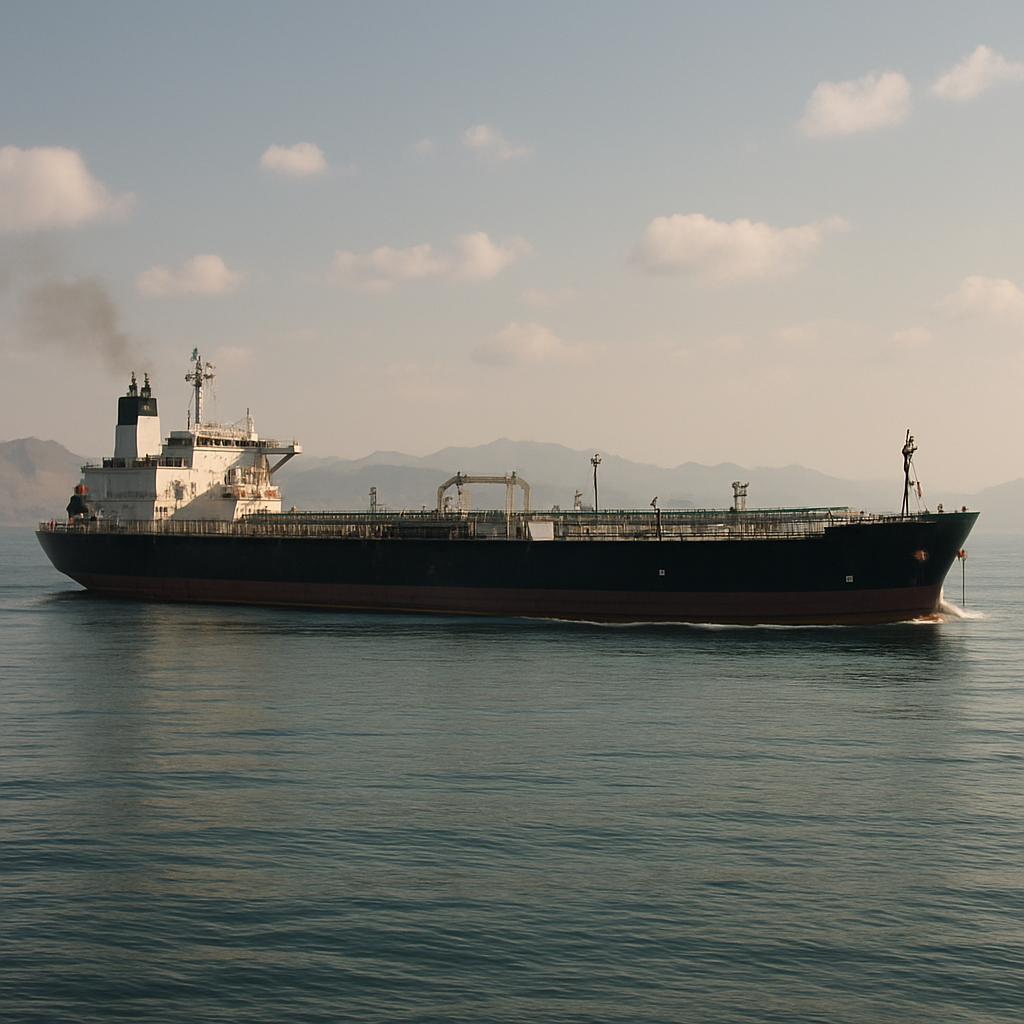
Maritime data show sharp changes in traffic and activity. Windward reported transit volume through the Strait of Hormuz fell to eight crossings on Sunday — four inbound and four outbound, all transmitting AIS. Windward also confirmed the continued presence of a seven-tanker dark cluster (six VLCCs, one Suezmax) idling off Chabahar, indicating deliberate loitering rather than transient traffic.
- A satellite image cited in the article showed Iran still loading oil onto tankers at Kharg Island as of April 26.
- Reuters and MarineTraffic data showed the 142-meter superyacht Nord, linked in reporting to sanctioned Russian billionaire Alexey Mordashov, transited the Strait of Hormuz from Dubai to Muscat over April 24–26.
- The Tifani and Majestic X, two Iran-linked tankers interdicted by U.S. forces near Sri Lanka, are now sailing west across the Indian Ocean; Bloomberg reported U.S. officials have given no formal indication of their intended disposition.
What this means for Gulf shippers, U.S. forces, and American consumers
Gulf shippers: Transit counts and the presence of dark tanker clusters signal increased risk and adaptation. Windward named specific vessels routing through northern and southern corridors, and reported increased AIS-visible traffic even as dark-activity events eased slightly.
U.S. forces: NBC reported an Iranian F-5 combat jet flew through U.S. air defenses and struck Camp Buehring in Kuwait during the opening days of the war; the report said the attack occurred despite Iranian fighters and air infrastructures being heavily targeted. The article also noted U.S. Marine Corps F/A-18C/D Hornets pushed to the Middle East bring enhanced drone-hunting capability, and noted Israel sent an Iron Dome system and troops to the UAE early in the war, per Axios.
American consumers and industries: GasBuddy data cited in the article show U.S. average gasoline rose 7 cents over the past week to $4.04 per gallon; Patrick De Haan of GasBuddy told CBS News markets are reacting to renewed geopolitical tensions and cancelled U.S.–Iran talks. NBC reported Texas shrimp boat captains said a diesel price surge is making profitability nearly impossible for their industry.
Diplomacy beyond Washington: Pakistan, Russia, and Gulf commentaries
Iranian Foreign Minister Abbas Araghchi traveled to St. Petersburg and met with Russian President Vladimir Putin to discuss the war and mediation efforts; Araghchi outlined Pakistan's mediation and criticized the U.S. for "insistence on unreasonable demands, frequent changes in positions, threatening rhetoric, and continuous breaches of agreements." Putin said he hopes peace will come quickly and stressed Russia intends to maintain strategic relations with Iran, according to TASS.
German Chancellor Friedrich Merz said the Strait had been partially mined and questioned the U.S. exit strategy. Dr. Anwar Gargash, diplomatic adviser to the UAE president, said the Gulf's containment strategy toward Iran had "failed miserably" and described Iranian aggression as "premeditated" in comments reported by The National.
The Iranian proposal to open the Strait and defer nuclear talks arrived as diplomatic momentum stalled: U.S. officials have emphasized a broader nuclear settlement, Iran's parliament is moving legislation to assert armed control over the waterway, maritime traffic datapoints show minimal visible transits amid dark clusters, and allied diplomacy is shifting toward Moscow and regional capitals. The fate of U.S.-interdicted tankers and whether Washington will accept a phased deal remain open — and central — questions.