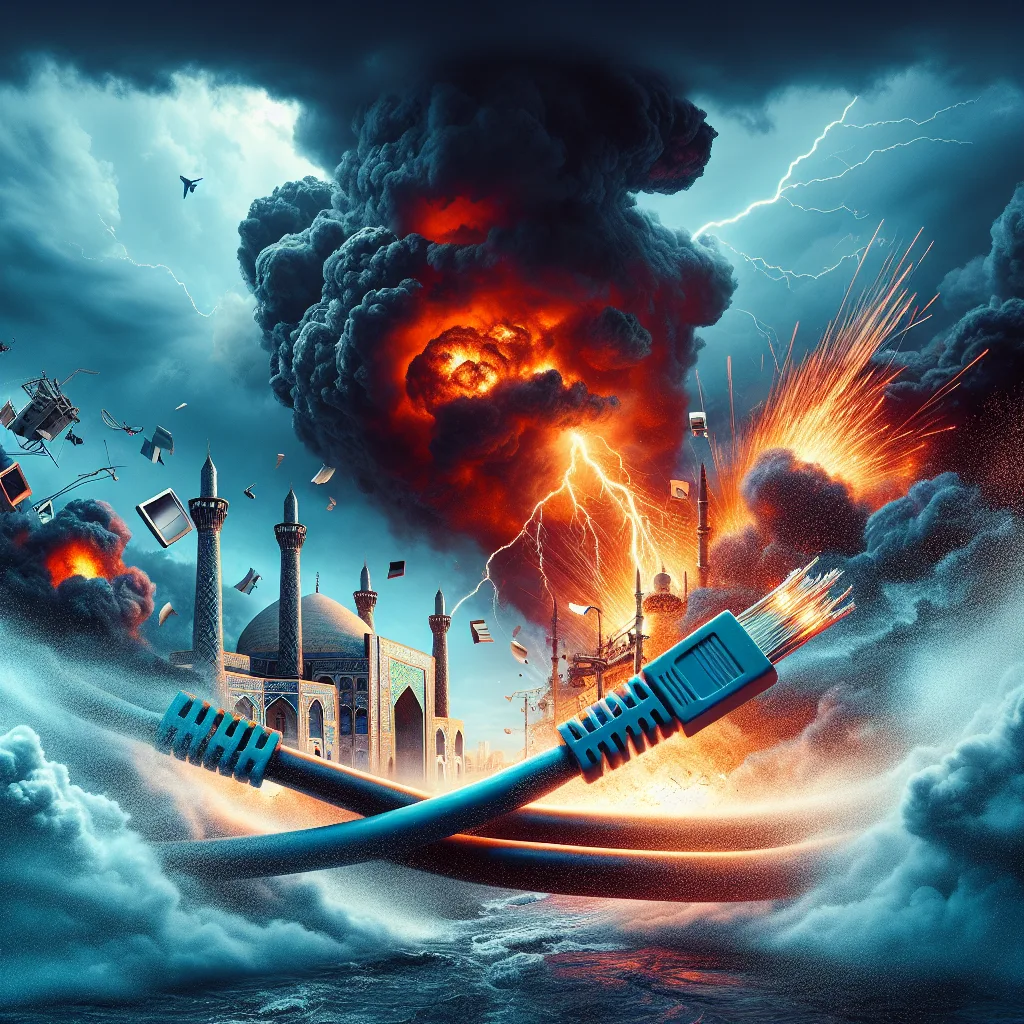
Iran’s Internet Blackout: A Digital Curtain Amid Escalating Conflict
As the regional tensions between Israel and Iran reach a fever pitch, the Iranian government has taken a decisive step that resonates far beyond the realm of conventional warfare: cutting internet access across large swaths of the nation. This move, which Iranian officials describe as a calculated effort to disrupt Israeli intelligence operations, underscores the intricate interplay between digital infrastructure and national security in an age where information is both weapon and shield.
The internet outages, described as intentional by Iranian authorities, follow a series of missile strikes attributed to Israel targeting Iranian assets. The situation places civilians in an increasingly precarious position, caught between political machinations and military strategies. What are the implications of this digital blackout for ordinary Iranians and for international relations? And how might these decisions affect broader cybersecurity dynamics?
To understand this current crisis, one must first consider the broader context of Iran-Israel relations—a rivalry steeped in decades of geopolitical tension. Since the 1979 Islamic Revolution, Iran has positioned itself as a counterweight to U.S. influence in the Middle East, often aligning with groups hostile to Israel. In response, Israel has employed various tactics, including covert operations aimed at thwarting Iranian advancements in military technology and nuclear capabilities. The recent escalation marks another chapter in this protracted conflict, wherein traditional military operations meld with modern cyber warfare strategies.
The events leading up to the internet outages highlight a delicate balance of power marked by retaliatory actions on both sides. Following several missile attacks from Israel targeting Iranian infrastructure and military sites, Iranian officials declared that their response would not merely be conventional but would also extend into cyberspace. An intentional disruption of internet access serves as both a tactical maneuver against perceived Israeli intrusions and a method to control narratives within Iran’s borders—an effort to prevent dissent from swelling amid chaos.
The immediate repercussions of these outages are profound. With significant portions of the population cut off from information and communication networks, Iranians find themselves facing challenges not only in accessing news but also in coordinating responses to unfolding events. Activists have expressed concerns that this blackout may extend beyond mere military strategy; it also poses a threat to civic engagement and human rights within an already repressive digital landscape. Reports suggest that users relying on VPNs or other circumvention tools have also faced increased scrutiny from authorities attempting to enforce these restrictions.
While much attention is focused on Iranian motives behind these internet outages, experts warn that this move could precipitate a dangerous cycle of cyber retaliation. The International Cyber Security Index indicates that critical infrastructure—such as energy grids and financial systems—remains vulnerable to sophisticated cyberattacks that can escalate conflicts into unpredictable territories. As tensions rise, analysts speculate about possible retaliation not only from state-sponsored actors but also from opportunistic hacker groups emboldened by state conflicts.
In framing this issue through multiple lenses—political, social, and technological—several stakeholders emerge with distinct perspectives:
- Iranian Government: For officials in Tehran, the internet cuts serve dual purposes: protecting sensitive military operations while simultaneously consolidating control over domestic narratives amidst conflict.
- Civilians: Everyday Iranians are now stripped of basic communication tools during an already tumultuous period—a situation that risks further alienating them from their government while inciting frustration at home.
- <b)International Community: Governments watching from afar face increasing pressure to respond diplomatically or through sanctions, yet remain cautious about escalating tensions further.
- <b)Cybersecurity Experts: Analysts express concern over the potential for inadvertent cyber warfare spilling beyond national borders if states become embroiled in retaliatory actions without appropriate checks.
The path forward remains uncertain. As Iran grapples with its internal strife and external threats, observers will want to monitor several key developments: how long these internet cuts last; whether they incite protests or unrest domestically; if Israel ramps up its cyber operations; and how foreign nations position themselves regarding this increasingly fraught situation.
The question remains: as we enter an era defined by technological entanglement in conflict resolution (or escalation), what lessons will be drawn about the relationship between sovereignty and cyberspace? The stakes could not be higher—not just for Iran or Israel but for global security frameworks grappling with unprecedented challenges associated with digital warfare.