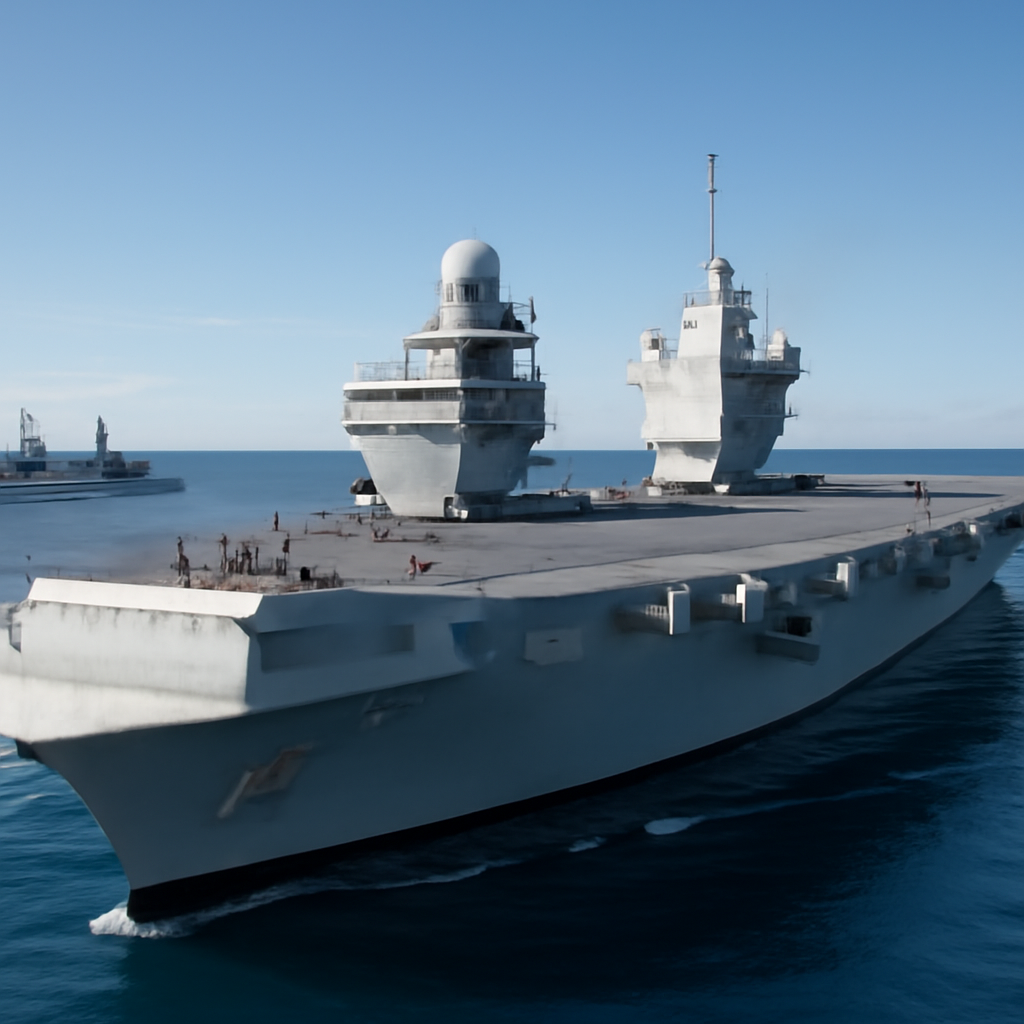
The Italian aircraft carrier Giuseppe Garibaldi will spend "more than 20 days" at sea en route to Indonesia, transiting the Suez Canal and Red Sea with Italian frigates in escort, and is expected to reach Indonesian waters between September 15 and 20, Indonesian Navy Chief of Staff Admiral Muhammad Ali confirmed.
Voyage timeline, flag status, and formal transfer
The ship is making a long, deliberate transit from Italy to Indonesia. During the voyage the vessel will retain its Italian identity and sail under the Italian flag as Giuseppe Garibaldi until a formal transfer and renaming. Indonesian authorities have scheduled a commissioning and flag-changing ceremony for September 25, when the carrier will become KRI Gajah Mada. President Prabowo Subianto is expected to attend and officiate the ceremony. The navy plans to include the ship in celebrations marking the 81st anniversary of the Indonesian National Defense Forces (TNI) in October.
Giuseppe Garibaldi: history, size, and armament
Commissioned in 1985, Garibaldi was first described as a "helicopter cruiser" and in 1989 was redesignated as an aircraft-carrying cruiser when it received AV-8B Harrier II jump jets. At around 13,850 tons full load, the ship blends a compact aviation facility with a multirole weapon and sensor fit. Historically its armament included two Mk 29 octuple launchers for Sea Sparrow/Aspide surface-to-air missiles, four Otomat Mk 2 anti-ship missiles, two triple torpedo tubes, and three twin Oto Melara 40mm guns. The ship later shifted toward amphibious operations and command-and-control tasks after the larger carrier Cavour entered Italian service.

This site is the portfolio.
OSINTSights runs on Cloudflare Workers, D1, R2, and Vectorize, with an AI pipeline on Hetzner ARM. Nubivance designed, built, and operates it. We do the same for clients.
See what we buildHow Jakarta plans to use the ship
Indonesia is receiving the vessel through an intergovernmental grant arrangement rather than a conventional commercial purchase. Jakarta says it plans to use the ship primarily as a helicopter-capable aviation platform. Aircraft from the Indonesian Navy, Air Force, and Army are expected to operate from its deck, making the ship a mobile aviation base able to project helicopters for transport, surveillance, logistics, search and rescue, disaster relief, and potentially anti-submarine warfare and amphibious support over far greater distances than land bases permit.
Training, basing, and sustainment work under way
Preparations ashore are already visible. At Juanda Naval Air Station/International Airport in Sidoarjo, East Java, authorities painted a large outline of a carrier flight deck on an apron/helipad to familiarize naval pilots and deck crews with carrier flight‑deck procedures. The Indonesian Navy is also constructing the carrier’s future base in Lampung, at the southern tip of Sumatra; that facility is expected to be finished around the time the ship arrives and operational by the end of September. Those steps aim to create the aviation infrastructure and human expertise necessary to operate a large maritime aviation platform.
What this means for the Indonesian Navy, the Air Force and Army, and regional partners
- The Indonesian Navy: Gains a dedicated maritime aviation platform that can host helicopters from multiple services and serve as a command-and-support ship; but the navy will face the longstanding challenge of sustaining a carrier-capable force over time.
- The Indonesian Air Force and Army: Will be able to operate aircraft from the ship’s deck, expanding reach for transport, logistics, and surveillance missions that cross Indonesia’s thousands of islands.
- Regional partners and multilateral exercises: The carrier is likely to participate in multinational training exercises and maritime security deployments, while also providing a platform for disaster response across the region.
There is also potential to adapt the ship for uncrewed aviation: Italian shipbuilder Fincantieri has proposed drone adaptations, Indonesia has acquired Turkish-made Bayraktar TB3 drones that have demonstrated carrier-deck operations, and photos document a TB3 on the deck of the Turkish carrier Anadolu during an April 2026 exercise. While Indonesia has not announced drone operations as part of the initial configuration, such a mix of helicopters and drones would provide persistent surveillance and additional options without building a conventional fixed‑wing carrier air wing.
Thailand’s experience with HTMS Chakri Naruebet — which entered service in 1997 configured for AV-8S Harriers and helicopters, later retired its Harriers, and shifted into a broad mix of helicopter, disaster-response, and training roles — is a cautionary parallel. Acquiring a carrier is relatively straightforward; building the logistics, maintenance, training, and sustained operational tempo around it is the harder work. Indonesia will take formal command of a capable platform on September 25; whether KRI Gajah Mada becomes a routinely sea‑going force multiplier or a rarely deployed symbol will depend on the follow‑through now under way at Juanda and Lampung and on Jakarta’s long‑term sustainment choices.
Source: TWZ — Indonesia’s First Aircraft Carrier Is On Its Way From Italy



