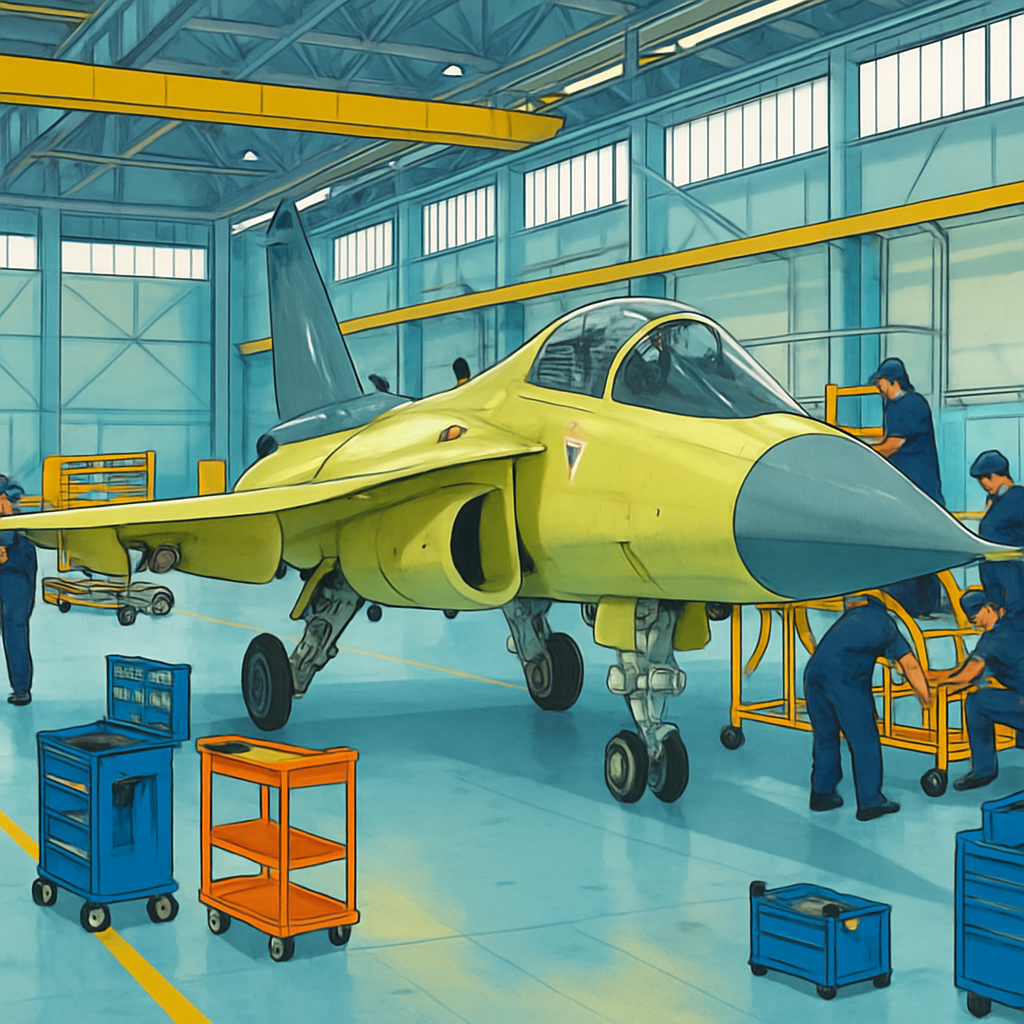
The Indian Air Force has placed purchase orders for only 40 Tejas light combat aircraft since the Indian fighter’s inaugural flight in 2001.
The scale of the shortfall: squadrons, crashes, and pilots lost
Defense planners assess the IAF needs roughly 42 combat squadrons—about 900 fighters, bombers, electronic‑warfare and command-and-control aircraft—to meet likely contingencies. By contrast, the service currently operates with a shortfall of 10–12 combat squadrons, roughly 220–250 aircraft. A major driver of that gap is an “unacceptably high” accident rate that has eroded the fleet and removed experienced aviators from service.
Across seven decades (1952–2021) the IAF has lost 2,374 aircraft to crashes: 1,126 fighters and 1,248 non‑combat aircraft, plus 229 trainers and 196 helicopters. Those accidents have cost the lives of 1,305 skilled pilots and have reduced the bank of combat aircraft by an amount the source describes as “exceed[ing] 50 squadrons.”
The Tejas program: orders, timelines, and production math
The Tejas light combat aircraft program has moved from a 40‑aircraft start to significantly larger orders. Once current orders are delivered, the IAF will be operating 220 Tejas fighters in combat squadrons and on order with Hindustan Aeronautics Ltd (HAL), equal to about 10–11 squadrons—helpful but short of the 42‑squadron target.
The Ministry of Defense (MoD) ordered 180 Tejas Mark 1A fighters. Production of the Mark 1A began in 2024–25, with an initial annual delivery rate of 16 fighters; the first order for 83 fighters is likely to be completed by the end of 2028–29. If production ramps to an annual output of 24 fighters, the MoD expects the second order of 97 fighters to be delivered by 2035–36.

Audit-ready is a season. It shouldn't be.
Evidence in spreadsheets, controls drifting between audits, frameworks multiplying on flat headcount. Nubivance runs continuous compliance on Rapid7 Cyber GRC - SOC 2, HIPAA, ISO 27001, PCI, CMMC.
End the scrambleAMCA, the projected indigenous fleet, and foreign sales
The Defense Research and Development Organization (DRDO) is slated to begin production of the 5th‑generation Advanced Medium Combat Aircraft (AMCA) by 2033–34, and within four years—by 2035–36—the IAF’s planned fleet of 96 AMCAs would be in operational service, per the timeline in the source.
Combining AMCA and Tejas projections, the MoD’s planning yields an indigenous combat fleet of 454 aircraft: 96 AMCAs, 138 Tejas Mark 2s, 180 Tejas Mark 1As and 40 Tejas Mark 1 fighters. The MoD also anticipates an indeterminate number of foreign sales that could “further swell” this total.
Pricing, taxation, and export competitiveness
The contract history is explicit. On January 13, 2021, the Union Cabinet led by Prime Minister Narendra Modi approved procurement of 73 Tejas Mark 1A fighters and 10 twin‑seat trainer aircraft for a combined cost of 456.96 billion Indian rupees (Rs). A separate design, development and infrastructure sanction of Rs 12.02 billion took the total contract value to almost Rs 480 billion. The MoD handed HAL its first major contract for 83 Tejas Mark 1As on February 3, 2021.
The Cabinet’s headline per‑unit figure was about Rs 5.5 billion per Mark 1A. Senior government sources cited in the reporting counter that each Mark 1A will cost no more than Rs 3.15 billion to build, putting total manufacturing cost for the batch at Rs 261.45 billion. The balance of the Cabinet clearance includes taxes, and maintenance and support infrastructure for two operational air bases.
Taxes and levies account for roughly 20 percent—about Rs 90 billion—of the Cabinet allocation, raising the effective price and, the source warns, weakening export competitiveness. At Rs 3.15 billion per fighter the Tejas Mark 1A is presented as a viable international competitor; if taxes push the price toward Rs 3.78 billion, that competitiveness is reduced versus cheaper rivals such as the Sino‑Pakistan JF‑17 Thunder, even though the reporting states the Tejas “outperforms them in avionics and weaponry.”
Operational effects: training, avionics, and indigenous content
The initial tranche of 40 Tejas served primarily for test flying and pilot familiarization. The Mark 1A is described as a 4+ generation fighter equipped with an active electronically scanned array (AESA) radar, a beyond‑visual‑range (BVR) missile, an electronic warfare suite, and air‑to‑air refueling capability—capabilities the IAF regards as operationally significant.
The Mark 1A is also the first procurement in the “Buy (Indian‑Indigenously Designed, Developed and Manufactured)” or IDDM category for combat aircraft, with an indigenous content target of 50 percent that the MoD says will rise to 60 percent as the program matures. The program expects 250 of the 344 systems fitted in the aircraft to be indigenous by the end of the program.
What this means for policymakers, HAL/DRDO, and IAF training commands
- Policymakers and procurement leaders: will need to reconcile per‑unit costing differences, taxation policy and export ambitions—since taxes of about Rs 90 billion materially alter the aircraft’s price and export attractiveness.
- HAL and DRDO engineers and planners: must meet stepped production rates (16 to 24 aircraft per year) and deliver Mark 1A avionics and AMCA timelines (production beginning 2033–34) if projected fleet numbers are to materialize.
- IAF training commands and operational units: must absorb new platforms while addressing the high historical accident rate that reduced skilled pilots and erased capacity; the first 40 Tejas were explicitly used for test and pilot familiarization work.
Conclusion: the Tejas Mark 1A and the AMCA form a clear strategy to indigenize combat aviation and to replenish squadrons lost to decades of accidents. Yet the numbers in the source show a stark arithmetic problem: even the MoD’s projected indigenous fleet of 454 combat aircraft falls well short of the roughly 900 aircraft equated with a 42‑squadron force. Whether production ramps, timelines, tax policy and foreign sales together can close that gap remains the central question embedded in these projections.