"We have only paused Operation Sindoor," said Indian Prime Minister Narendra Modi, adding that "Operation Sindoor is India’s new policy." Those sentences, delivered in the wake of the four-day May 2025 crisis that ended with a U.S.-brokered ceasefire, now read less like rhetoric and more like a strategic template for how New Delhi intends to wage coercion short of full-scale war.
How the May 2025 crisis changed the character of conflict
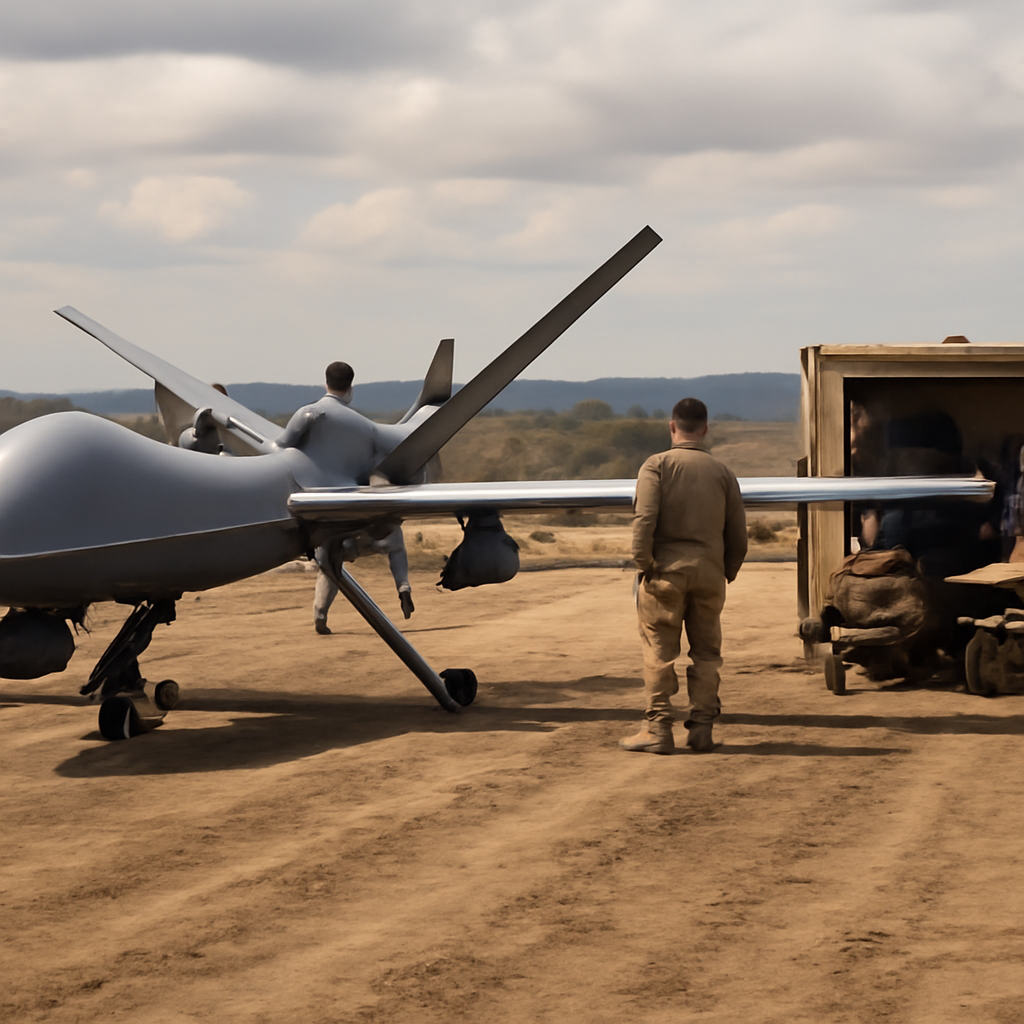
The four-day confrontation—called “Marka-e-Haq” by Pakistan and “Operation Sindoor” by India—accelerated a structural shift toward multi-domain, non-contact warfare across South Asia. The record from the year since the crisis shows both states investing in precision-strike standoff weapons, drones and loitering munitions, advanced missile capabilities and integrated missile forces. The region now sits in a condition the source terms "fluid instability"—a no-war, no-peace environment where deterrence still functions but the probability of crisis remains persistently present.
India’s drive for standoff speed, precision, and strategic reach
India has emphasized achieving escalation dominance through speed, precision and long-range conventional options. In December 2025 New Delhi test-launched a salvo of quasi-ballistic Paraly missiles from the same launcher in quick succession; the Paraly has a 500 km range, can carry multiple warhead configurations—including high explosive pre-formed fragmentation, penetration-cum-blast and runway-denial payloads—and is reported to have a circular error probable (CEP) of less than 10 meters. India is also planning to expand the dual-capable BrahMos range to around 800 km and in May 2026 announced improvements in hypersonic propulsion, reporting a full-scale scramjet combustor run-time of 1,200 seconds. At the strategic level, India conducted a May 2026 test of its MIRV-capable Agni V missile system and the Indian DRDO chair stated that the organization is technically prepared to develop an Agni-VI ICBM with a range up to 12,000 km, pending government approval.

Audit-ready is a season. It shouldn't be.
Evidence in spreadsheets, controls drifting between audits, frameworks multiplying on flat headcount. Nubivance runs continuous compliance on Rapid7 Cyber GRC - SOC 2, HIPAA, ISO 27001, PCI, CMMC.
End the scramblePakistan’s emphasis on deterrence by denial and survivability
Pakistan’s response over the past year has focused on centralizing and improving survivability and stand-off response. In August 2025 Islamabad institutionalized the Army Rocket Force Command (ARFC) to integrate conventional missile forces under centralized command. Pakistan tested the Fatah-II missile in April 2026 (reported range 400 km, with avionics and maneuverability improvements) and conducted a flight test of the Fatah-IV ground-launched cruise missile in May 2026 with a 750 km range and a conventional airburst warhead. Reports also suggest Pakistan is developing a supersonic cruise missile, Fateh-III, and has tested the Taimor air-launched cruise missile and the P282 SMASH anti-ship ballistic missile. These developments are described as deterrence-by-denial measures designed to complicate conventional operations and impose costs on an adversary rather than replicate India’s rapid-punitive Dynamic Response Strategy.
Crisis stability: compressed timelines, ambiguity, and escalation risk
The source frames the central danger plainly: multi-domain non-contact capabilities compress decision times, increase ambiguity and narrow margins for error in a nuclearized theater. The expansion of standoff and hypersonic capabilities shortens warning timelines further; dual-capable systems such as BrahMos can create payload ambiguity; and precision strikes against airbases, command-and-control nodes, radar, missile sites and logistics can be read as attempts to degrade strategic survivability—prompting retaliatory pressures. The account concludes that the lesson of May 2025 should be read not as validation of the feasibility of limited war under a nuclear overhang, but as a warning about growing fragility of crisis stability.
What this means for the DRDO, Pakistan’s ARFC, and regional policymakers
- DRDO and Indian planners: Expect continued prioritization of propulsion, guidance and MIRV technologies—efforts described as extending beyond immediate regional deterrence toward longer-range strategic capability. Technical tests (Paraly salvo, BrahMos range plans, scramjet run-time, Agni V MIRV test) signal a programmatic push that will shape operational concepts.
- Pakistan Army Rocket Force Command (ARFC): Institutionalization of the ARFC and recent Fatah-series tests indicate a focus on centralized conventional missile command, survivability and stand-off depth—measures designed to complicate an adversary’s calculus and impose costs rather than mirror punitive rapid-strike doctrines.
- Regional policymakers and crisis managers: With bilateral communications described as absent and strategic signaling taking on coercive undertones, the account implies a growing imperative for mechanisms that reduce ambiguity, manage decision timelines and limit incentives for rapid retaliation during exchanges below the nuclear threshold.
The past year’s trajectory—salvos, scramjet runs, MIRV-capable tests, centralized missile commands and expanded cruise- and ballistic-missile inventories—points to a central paradox: advances intended to provide calibrated coercive options may instead erode the very stability they are meant to secure. The source’s clear admonition stands: in nuclearized South Asia, there is very little room for a prolonged or carefully managed conventional escalation. The unresolved question left by these facts is simple and stark: if both sides continue to believe that standoff precision can be contained, who will draw the line when speed and ambiguity make containment operationally untenable?
Source: The Diplomat — Lesson From the May 2025 India-Pakistan Crisis: No Space for Limited War