“The program is expected to be cleared before 15 August 2026,” Hindustan Times reported on 3 August — a deadline that would place final Cabinet Committee on Security (CCS) clearance squarely inside India’s independence-week calendar.
Cabinet Committee on Security and an unusual acquisition route
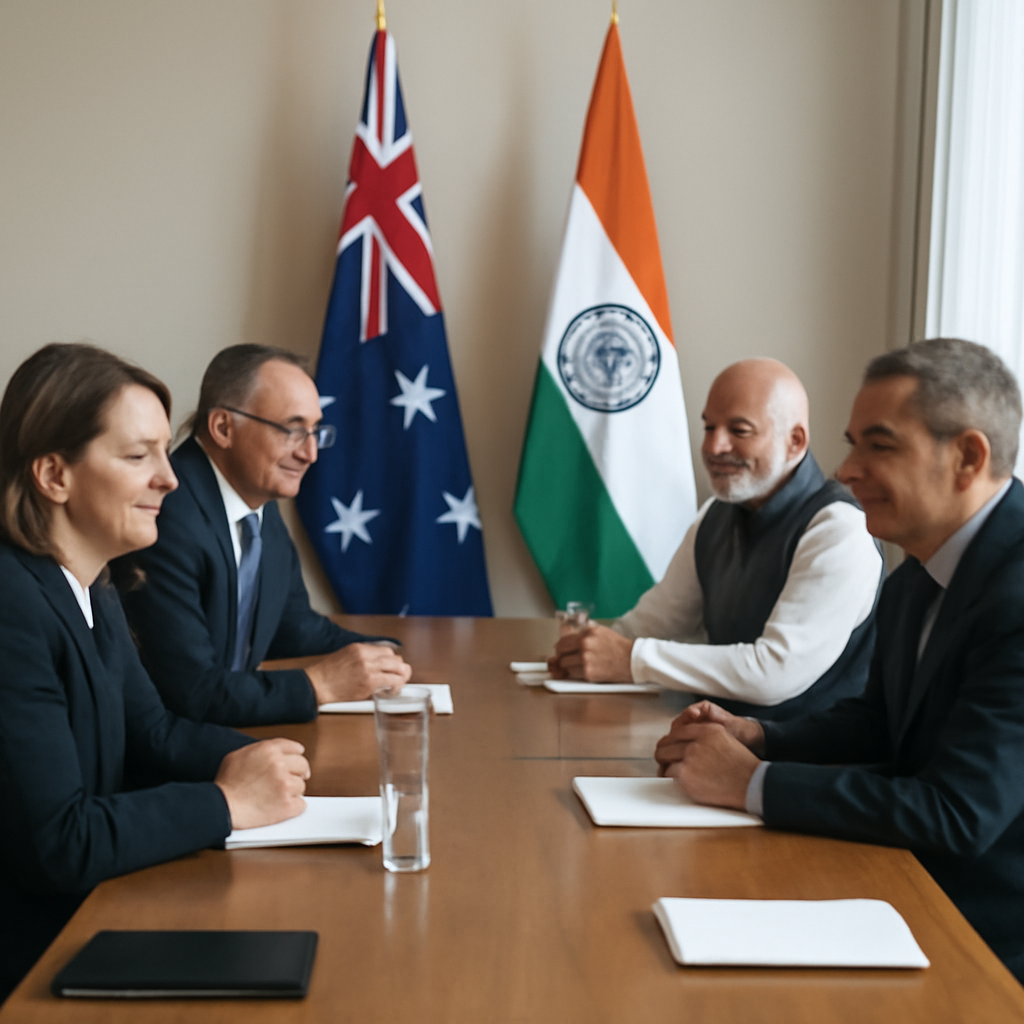
Hindustan Times says the Safran–Gas Turbine Research Establishment (GTRE) joint‑venture proposal has reached the Cabinet Committee on Security, the final financial-approval body for high‑value defence programmes. The CCS is chaired by the prime minister and routinely signs off on procurements exceeding ₹3,000 crore; its membership typically includes the Defence, Home, External Affairs and Finance Ministers. The file has not traversed the standard Defence Acquisition Procedure stream: this is a DRDO development sanction routed through the Ministry of Defence, the National Security Council and the Finance Ministry with a strategic‑fit clearance from the National Security Council Secretariat rather than the usual Request for Proposal and Acceptance of Necessity process.
Technical package claimed: 120 kN initial, 140 kN uprate, nine prototypes and an IP pledge
Reporting cites an initial engine conceived at about 120 kN of thrust, followed by an uprated 140 kN variant, with nine prototypes to be built and certified. The Hindustan Times account, as presented by its executive editor Shishir Gupta, states India will hold 100% of the intellectual property on the powerplant — a key stipulation that the source frames against past transfers where hot‑section, single‑crystal blade technology and source code were not handed over.
Quwa’s report also notes Olivier Andriès, Safran’s chief executive, publicly described a joint development with the DRDO in November 2025 that would include transfer of critical hot‑section technologies and single‑crystal blade manufacturing, at about ₹610 billion over a decade or more in the 120–140 kN class. Reported cost estimates otherwise vary widely, from “over ₹20,000 crore” through “₹30,000 crore” to ₹61,000 crore in circulating figures; one cited commentary framed the largest figure as part of a wider National Aero Engine Mission funding envelope rather than the specific Safran deal.

Audit-ready is a season. It shouldn't be.
Evidence in spreadsheets, controls drifting between audits, frameworks multiplying on flat headcount. Nubivance runs continuous compliance on Rapid7 Cyber GRC - SOC 2, HIPAA, ISO 27001, PCI, CMMC.
End the scrambleGTRE’s inherited capabilities and remaining infrastructure gaps
GTRE enters the partnership with a substantial legacy: a 64‑acre campus in Bengaluru, about 240 scientists and 400 technicians, and the Kaveri programme record — nine full prototype engines (K1–K9), four Kabini cores and 3,217 completed tests. The GTX‑35VS Kaveri reached roughly 70.4 kN wet thrust against a required 81 kN and was delinked from Tejas in 2008; it also flew on an Il‑76 testbed during a maiden flight test in November 2010.
Domestic supply‑chain steps are underway: PTC Industries received a GTRE purchase order in October 2025 for post‑cast operations on single‑crystal ready‑to‑fit turbine blades — the first time an Indian company was entrusted with machining, brazing, vacuum heat treatment and thermal barrier coating of that class. GTRE is building a 130 kN twin‑cell engine test bed at Rajanukunte sized for the dry Kaveri and the AMCA engine.
Two funded but unbuilt gaps remain: a high‑altitude engine test facility near the Nagarjuna Sagar dam in Telangana for the 110–130 kN class (awaiting funding) and a domestic flying testbed, with plans to convert two Su‑30MKI airframes for the role; India continues to send engines to Russia for high‑altitude validation.
Competing bids and parallel files: Rolls‑Royce, GE and the interim powerplant problem
The selection has not been reported as settled. ThePrint reported on 23 June 2026 that Rolls‑Royce offered a development timeline with a core test in 2030, a first flight in 2034 and production in 2036, and that the contest was narrowed to two firms. Times of India reported on 1 July that both Rolls‑Royce and Safran had submitted final financial proposals.
Separately, the GE F414 transfer‑of‑technology contract for the AMCA Mk1 and Tejas Mk2 remains unsigned after GE raised a per‑engine estimate from an initially discussed ₹70–₹80 crore to over ₹200 crore. F404 deliveries for the Tejas Mk1A slipped past a March 2026 deadline, leaving completed airframes waiting on engines — a parallel logistics and timing pressure the Safran–GTRE negotiation sits alongside.
How the National Security Council Secretariat, GTRE and foreign suppliers will react
- National Security Council Secretariat and the CCS: they will be the procedural gatekeepers — the file’s non‑standard acquisition route means their strategic‑fit clearance and the CCS financial sign‑off determine whether the project moves from proposal to execution in short order.
- GTRE and Indian industrial partners (PTC Industries): they will need to scale blade manufacturing, complete the Rajanukunte test bed and secure funding and construction for the Telangana high‑altitude complex; converting Su‑30MKIs into flying testbeds is also on GTRE’s plan list.
- Foreign suppliers (Safran, Rolls‑Royce, GE): each faces the same Indian precondition set — transfer of design authority, configuration control, lifecycle ownership and exclusive Indian IP rights — while commercial terms and schedules (including the interim engine supply) remain live negotiation points.
The immediate, concrete milestone is the CCS decision, which Hindustan Times said is expected before 15 August 2026. Beyond that, the record the reporting establishes is specific and unfinished: competing bidders remain, contract values diverge widely, and a suite of technical and legal thresholds — hot‑section transfer, single‑crystal blade capability, source‑code access, Interface Control Document terms and lifecycle control — must be resolved at contract negotiation. The CCS outcome will therefore be less an endpoint than the start of an execution phase whose costs, schedule and ultimate ownership of the technology are still very much in play.
https://quwa.org/india-defence-news/safran-gtre-fighter-engine-joint-venture-reaches-indias-ccs/