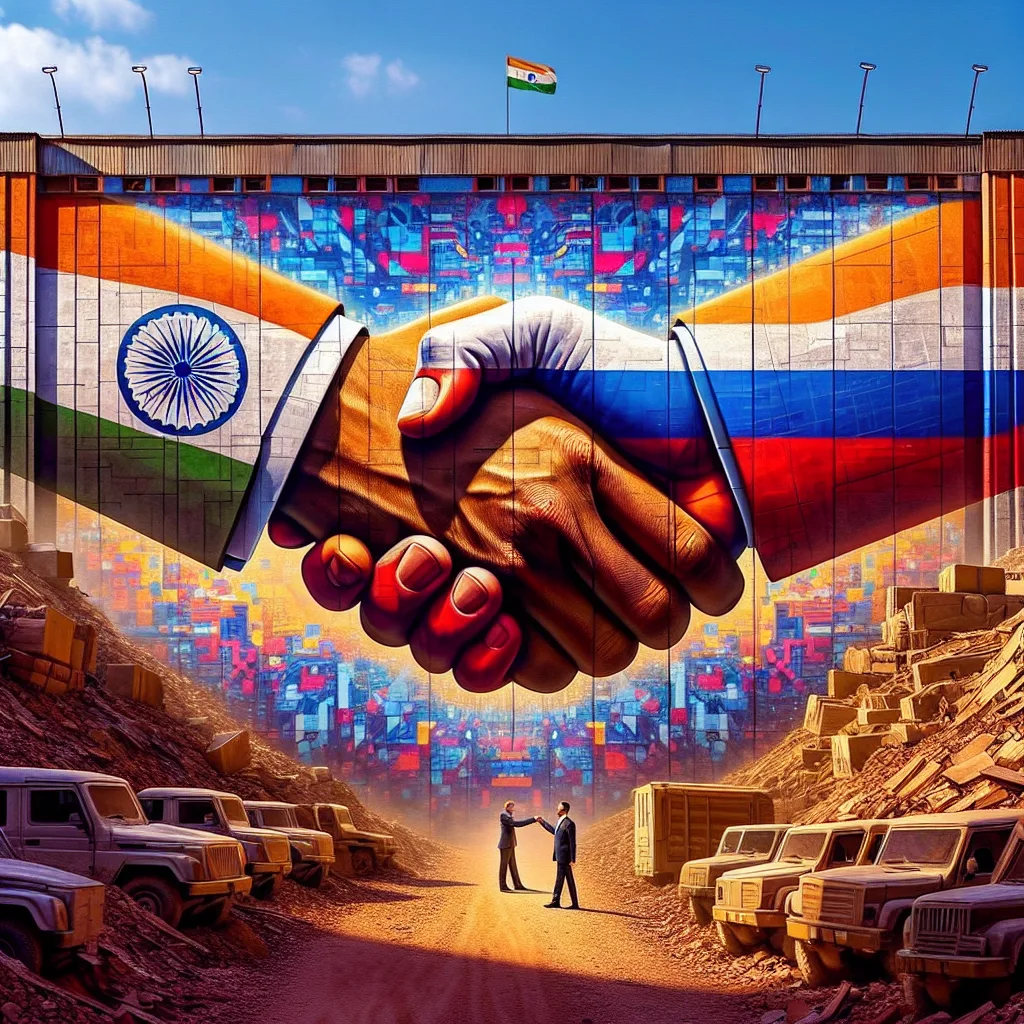
India’s Unlikely Role: Navigating the Crossroads of Global Information Warfare
On 12 November 2022, Manish Jha, a reporter for India’s TV9 channel, took to Twitter with a pointed protest over the misuse of his name, an incident that would soon spark wider questions about India’s role in the complex realm of international information warfare. His outcry, aimed at what he described as a distortion of his reportage, came at a time when narratives and counter-narratives were being meticulously crafted by multiple state actors. Among these, Russia’s ongoing struggles to shape global opinion by exploiting digital platforms has increasingly placed India in an unexpected spotlight.
Across the global media landscape, Russia’s information operations have been well-documented. They range from the subtle manipulation of social media algorithms to overt disinformation campaigns aimed at both domestic and international audiences. Amid this backdrop, India emerges not only as a target of these tactics but also, at times, as an inadvertent ally, given its historical ties with Moscow and its growing geopolitical weight in South Asia and beyond.
Historically, the relationship between India and Russia has been rooted in decades of strategic partnership. Since the Cold War era, Moscow has been a trusted partner in defense, energy, and technology for New Delhi. This long-standing relationship has created an atmosphere of mutual trust. However, in the realm of information warfare, those same relationships have sometimes blurred the lines between independent policy formulation and the perceived alignment with Russian narratives. While official denials have repeatedly surfaced from the Indian government regarding any systematic alignment with Russia’s planned messaging, subtle undercurrents remain that merit closer examination.
At the heart of the controversy lies the phenomenon of attribution in online content. Manish Jha’s protest on Twitter is more than a singular episode; it encapsulates the dilemmas faced by media professionals caught between journalistic integrity and the politicized strategies of global information warfare. In a climate where disinformation is as valuable as traditional statecraft, even a simple statement or tweet can be co-opted to serve larger narratives or even to administer credibility to pre-existing political viewpoints.
Recent media analyses, including work by the Atlantic Council’s Digital Forensic Research Lab and studies published by think tanks such as the Carnegie Endowment for International Peace, have documented how narratives can be repurposed across borders. For example, in the case of Russia’s broader information campaigns, key messages about sovereignty and resistance against Western hegemony have often found receptive audiences where historic alliances and shared interests converge. India, with its non-aligned yet increasingly assertive stance on global issues, finds itself in a delicate balancing act.
Current events in India further complicate the narrative. On one hand, India continues to foster its traditional defense and economic ties with Russia, which includes co-development projects in the energy sector and arms procurement. On the other hand, India’s democratic institutions and vibrant press are increasingly cautious of external attempts at influence, a perspective underscored by the public reaction to incidents like the one involving Mr. Jha. The Times of India and The Hindu have both documented a rise in public discourse around media veracity and political accountability, reflecting concerns that extend beyond a single reporter’s experience.
As the information battle lines are redrawn, several realities shape the present circumstances:
- Historical Partnerships: India’s long-term defense and energy collaborations with Russia contribute to a shared narrative that can be co-opted by disinformation campaigns on both ends of the spectrum.
- Media Vigilance: Cases like Manish Jha’s underscore the vigilance of Indian journalists, who are alert to the risks of having their work or identity repurposed for politically motivated narratives.
- Digital Ecosystem: The proliferation of online platforms in India, home to one of the largest numbers of internet and social media users, has amplified both the spread of information and the risk of manipulative narratives gaining traction.
- Global Influence Strategies: Russia’s structured approach to information warfare sees the exploitation of diverse channels—including state-sponsored media and proxy social media influencers—to reach a global audience, a strategy that occasionally intersects with the Indian digital sphere.
It is important to analyze why these convergences matter. In an era where global narratives are actively contested in digital public squares, the misappropriation of a journalist’s identity is not an isolated issue—it is a symptom of broader systemic challenges. The case exemplifies how state and non-state actors alike are increasingly investing in narratives that can enhance their strategic positioning. For India, a country balancing its non-aligned tradition with pragmatic partnerships, maintaining control over its narrative is both a domestic imperative and a matter of international significance.
Experts in international relations and cybersecurity have weighed in on these trends. Dr. Karan Thapar, a respected political analyst featured in publications like The Indian Express and NDTV, emphasizes that “the information environment has become as significant a battleground as conventional military theaters. When a professional like Mr. Jha becomes the focal point of misinformation, it reflects deep vulnerabilities that need to be addressed by both media institutions and policy frameworks.” Similarly, representatives from the Observer Research Foundation in New Delhi have highlighted the necessity for a more robust framework to screen and counter digital propaganda, especially when state-sponsored narratives become interconnected across borders.
Critics of the prevailing strategies argue that such incidents could undermine public trust, not only in media institutions but also in government responses to external influence. They point to the potential risks of conflating India’s independent policy-making with automatic alignment with Russian state narratives. This tension is manifest in policy circles where senior officials from the Ministry of External Affairs have repeatedly clarified that India’s partnerships in technology and defense are guided by national interest rather than any external ideological alignment.
Looking ahead, the discourse on information warfare in the Indian context seems poised for deeper introspection. The evolving relationship with digital platforms and the reproducible nature of narratives means that any missteps—intentional or inadvertent—could serve to further polarize public opinion. Yet, while caution is warranted, there are also opportunities. Investments in media literacy, coupled with enhanced cybersecurity protocols, promise a more resilient information ecosystem in the long run.
Analysts at the Observer Research Foundation and the Centre for Internet and Society in India are advocating for multi-stakeholder approaches. They envision workshops and collaborative initiatives that bring together policymakers, media professionals, and cybersecurity experts to fortify the narrative space against external manipulation. Such measures, they argue, would not only safeguard India’s sovereign discourse but also provide a template for other nations grappling with similar challenges in an increasingly interconnected world.
The story of Manish Jha’s Twitter protest thus becomes a microcosm of a broader geopolitical challenge. It highlights the interplay between historical alliances and emerging media dynamics, urging policymakers to consider comprehensive strategies that address both conventional and non-conventional dimensions of national security. In this light, India’s role is evolving—from a passive partner in conventional military or economic alliances to an active defender of its information sovereignty in a digital age.
Ultimately, the indicators are clear. As governments across the globe grapple with the implications of cyber-enabled misinformation, India’s experience stands as a cautionary tale and a call to proactive engagement. The challenges are complex, spanning the traditional realms of geopolitics as well as the rapidly shifting digital frontiers. In confronting these challenges, India must navigate a path that honours its historical ties while asserting its independence in shaping the narrative—a delicate balance that will continue to evolve in the years to come.
The broader question remains: In the era of digital influence and cross-border information warfare, can a nation maintain its narrative integrity without being subsumed by the agendas of its historical partners? As India steers through this ambiguous terrain, observers and strategists alike will be keenly watching, aware that the stakes extend far beyond a single tweet, impacting the very fabric of national and international discourse.



