"America didn’t lose ground in high-speed flight because of a lack of ideas. We slowed down because flight tests became too expensive, too rare, and too cautious. Meet Ramjet-X. Air-launched from the Quarterhorse program, it’s a low-cost, repeatable test vehicle built to fly and…"
— Zach Shore (@Zsshore), September 9, 2026
Ramjet-X concept and role
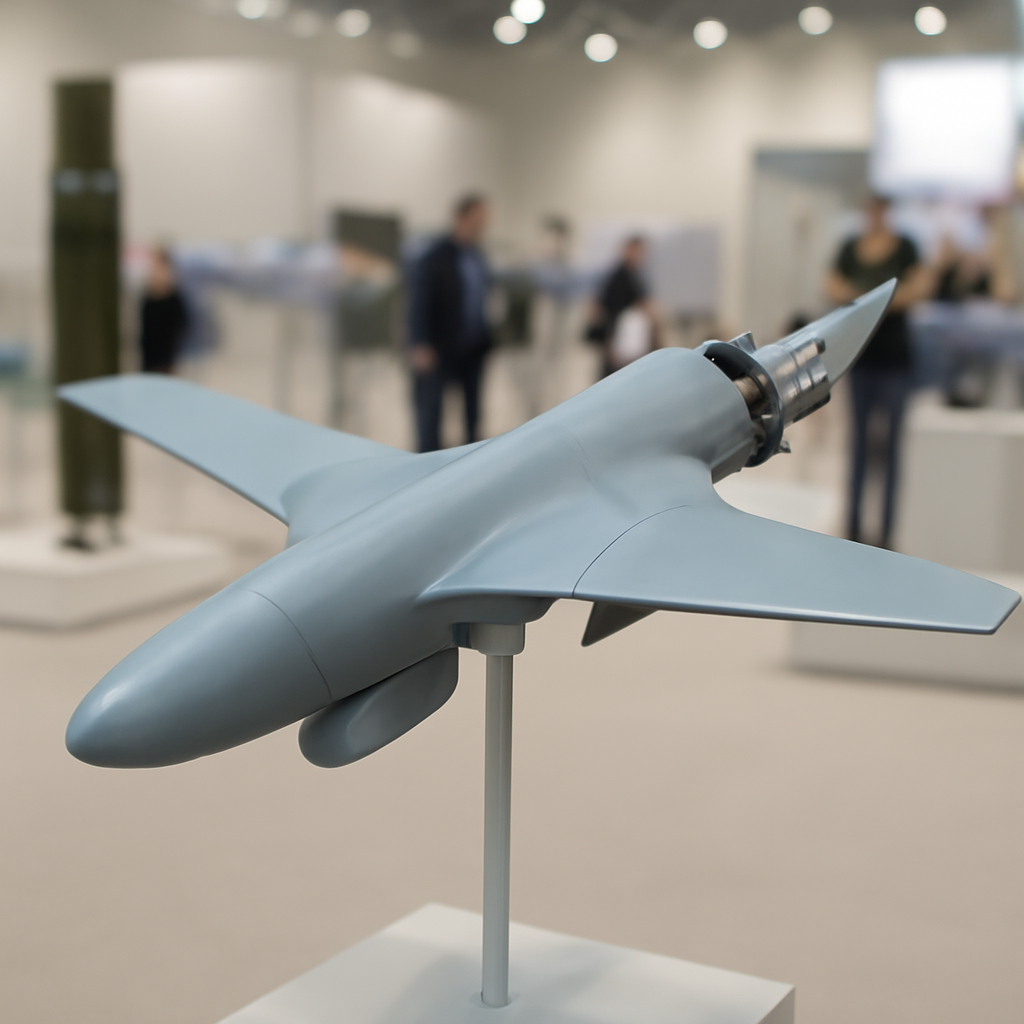
Hermeus unveiled Ramjet-X as an expendable, ramjet-powered test vehicle designed to be air-launched from the company’s reusable Quarterhorse high-speed drone. The company frames the pairing as a two-vehicle architecture intended to reduce reliance on large expendable boosters and to make repeated high-Mach flight testing cheaper and more frequent. Hermeus describes the idea internally as “Flight Test as a Service,” offering payload carriage for sensors, communications equipment, computing and autonomy systems, materials, and propulsion hardware.
Launch profile, altitudes, and vehicle design
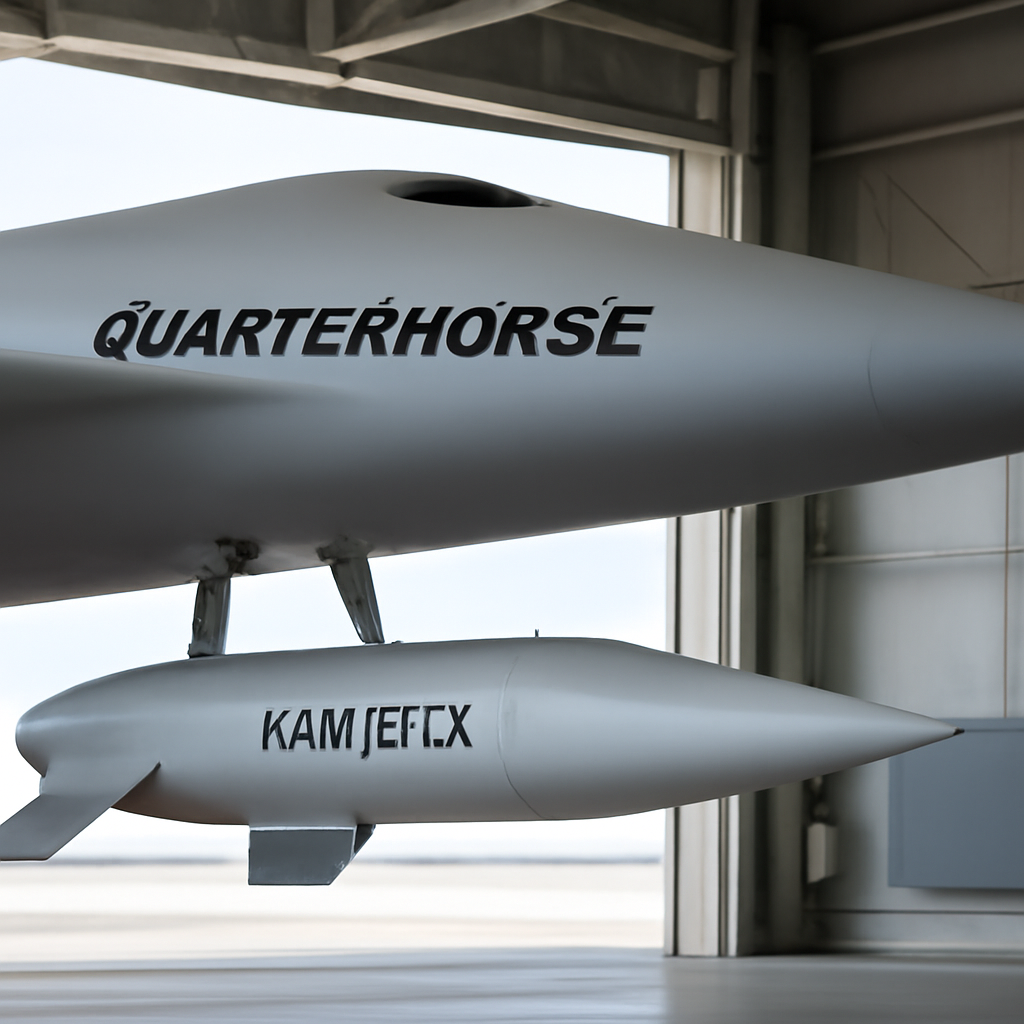
According to Hermeus, Quarterhorse will carry Ramjet-X beneath its wings and release the smaller vehicle at roughly Mach 3—an entry speed at which the ramjet can begin producing thrust. After release, Ramjet-X is expected to accelerate and climb to about 100,000 feet and reach speeds in the region of Mach 4. Imagery released by the company shows a compact, missile-like vehicle with delta wings featuring prominent dihedral, no horizontal tail surfaces, a conventional vertical fin and a ventral fin.
Axios reports the Ramjet-X measures approximately 22 feet long and 7 feet wide. Visually and by propulsion type it resembles the Cold War D-21 Tagboard drone, though the D-21 was substantially larger—more than 40 feet long with a 20-foot wingspan, as Hermeus’ materials note.

The cyber insurance questionnaire just landed. Now what?
SOC 2, HIPAA, insurance renewals - someone has to own security strategy. Nubivance provides fractional CISO leadership without the full-time salary.
Get a security leadQuarterhorse carrier variants and propulsion roadmap
Hermeus’ Quarterhorse is described in the company’s materials as a reusable, F-16-sized, high-speed drone. Quarterhorse Mk 2.1 completed an uncrewed supersonic flight earlier this year, reaching Mach 1.21 on its third test flight. Imagery accompanying the Ramjet-X announcement shows a different Quarterhorse configuration—beefed-up landing gear with twin nosewheels—and Ramjet-X carried on pylons under each wing. The presence of two pylons per wing in the released images suggests two different high-speed tests could be flown in a single sortie; Hermeus’ imagery also shows the Quarterhorse with six underwing hardpoints in total, indicating other external payloads are contemplated.
Hermeus confirmed this summer that Quarterhorse Mk 2.2 and the Mach-3-capable Mk 2.3 are under construction. The requirement to release Ramjet-X at Mach 3 implies the carrier will need to reach that speed, pointing to the Mk 2.3 as the likely launch platform. For a later Quarterhorse Mk 3, Hermeus is developing Chimera, a turbine-based combined-cycle propulsion system intended to transition from turbine operation to ramjet operation as speed increases.
Ground testing, timeline, and operational questions
Hermeus says it is testing the Ramjet-X propulsion system at its High Enthalpy Air-Breathing Test (HEAT) facility in Jacksonville, Florida, while high-temperature structures are under development at its El Segundo, California, headquarters. The HEAT facility is being developed to eventually provide continuous high-Mach airflow for more flight-like ground testing. Integrated vehicle testing for Ramjet-X is planned for 2027; the vehicle has not yet flown.
The company has not released detailed performance specifications for Ramjet-X, including range, payload capacity, recoverability, or the expected cost per flight. Hermeus has stated only that some trajectories could include a cruise phase lasting “tens of minutes.” How long experiments can actually run—and what thermal loads, acceleration regimes, electrical power and telemetry capabilities will be available—will determine which sensors, materials, or propulsion elements can be usefully tested in-flight.
What this means for the Defense Innovation Unit, potential customers, and Hermeus
- Defense Innovation Unit: Hermeus has been selected by the Defense Innovation Unit for work under its Hypersonic and High-Cadence Airborne Testing (HyCAT) effort, which aims to expand government access to high-speed environments using commercial flight-test capabilities. DIU’s involvement signals official interest in using commercial providers to increase test cadence.
- Potential customers (government and commercial developers): The “Flight Test as a Service” model promises easier access to high-speed environments for experiments in materials, sensors, communications and propulsion hardware—particularly where ground tests cannot fully replicate flight conditions. The company suggests repeatable launches from airports near approved ranges could reduce the need for a new large booster on every flight, and could make short-notice testing more feasible in constrained airspace.
- Hermeus: The company is investing across air and ground infrastructure—building HEAT, iterating Quarterhorse variants, and developing high-temperature structures—to create an end-to-end capability. The success of planned 2027 integrated testing will be the first meaningful indicator of whether the concept can become a practical, repeatable test capability.
Ramjet-X aims to shift a familiar trade-off: replace expensive, single-use boost vehicles with a reusable carrier and shorter-duration expendable risers. If the 2027 integrated tests validate propulsion, thermal management and operational flexibility, Hermeus’ two-vehicle architecture could lower one of the major barriers to obtaining real-world high-Mach flight data. Absent published specs on recoverability, cost per mission, and concrete flight profiles, the program’s practical value to specific experiments will hinge on the details the company has yet to release.
Original Hermeus Ramjet-X announcement and reporting (The War Zone)