“We cannot fucking wait.” Dan Driscoll used that blunt refrain in an AUSA address last October to press the urgency of reshaping the Army; on Sept. 1, 2026, he resigned as secretary of the Army, the culmination of a public clash over transformation, readiness and who should lead the effort.
Dan Driscoll resigns amid internal fights over transformation
Dan Driscoll — a former Army Ranger who led a platoon with the 10th Mountain Division, a Yale Law School graduate and a former investment banker — has stepped down as the Army’s top civilian leader, a move first reported by the Wall Street Journal and confirmed to Defense One by a source directly familiar with the matter. The source said Defense Secretary Pete Hegseth’s removal of generals tied to Driscoll’s innovation and transformation efforts was a primary cause of the resignation. The source said, “Driscoll brought up concerns with the administration surrounding Army transformation and readiness, and Hegseth's blocking those efforts, specifically by firing the generals who were responsible.”
Pete Hegseth’s actions and the removal of senior generals
The reporting connects Driscoll’s departure directly to Secretary of Defense Pete Hegseth’s recent personnel moves. The story names several uniformed leaders who had worked closely with Driscoll on reform and whom Hegseth has pushed out or removed: Army Chief Gen. Randy George; Gen. David Hodne, commander of Transformation and Training Command; Army Vice Chief of Staff Gen. James Mingus; and Gen. Christopher Donahue, commander of U.S. Army Europe and Africa. The article describes Hegseth’s actions as a central factor in blocking Driscoll’s agenda.

The cyber insurance questionnaire just landed. Now what?
SOC 2, HIPAA, insurance renewals - someone has to own security strategy. Nubivance provides fractional CISO leadership without the full-time salary.
Get a security leadThe Army Transformation Initiative: aims and public rhetoric
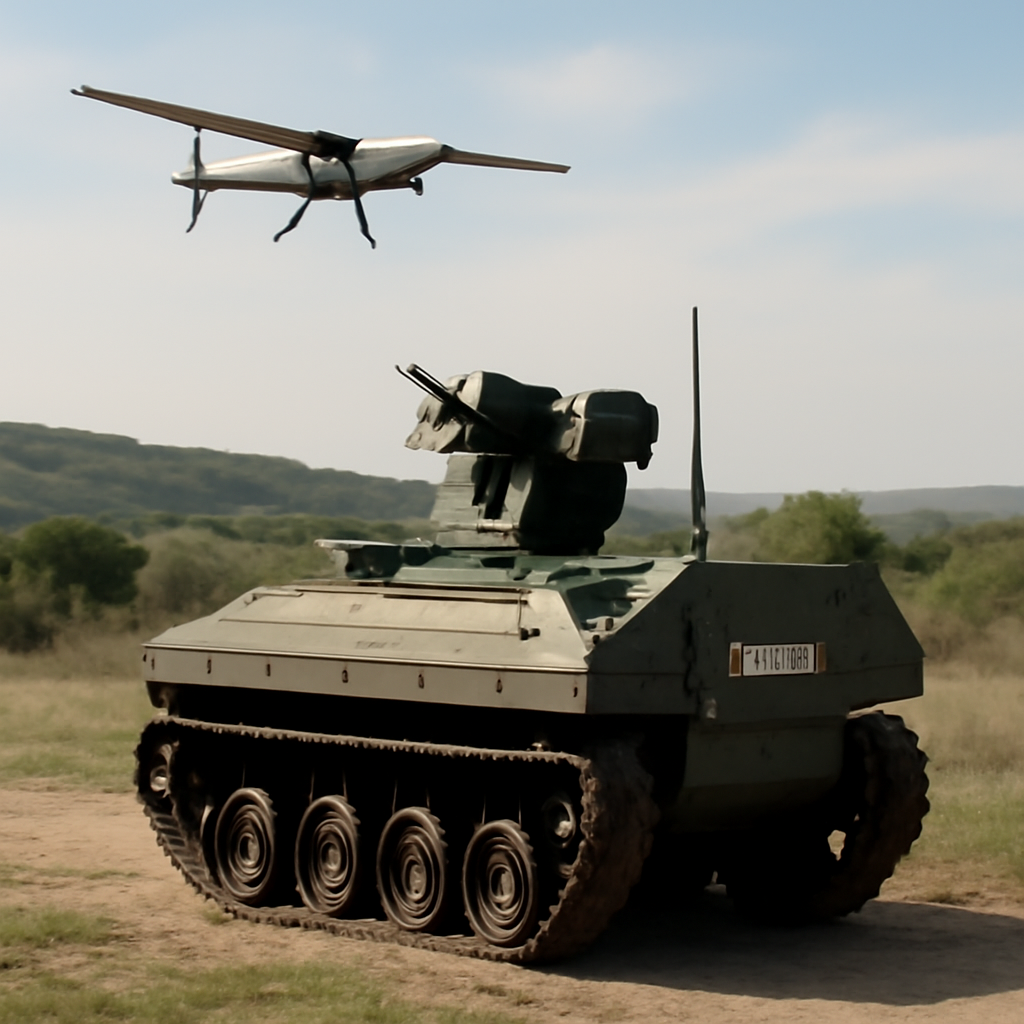
Driscoll launched the Army Transformation Initiative in May 2025. The initiative emphasized integrating artificial intelligence into decision-making, decentralizing purchasing and equipment modification authority toward frontline units, deploying modernized drone formations, and addressing a perceived “gap” in counter-drone technology. Driscoll repeatedly invoked Ukraine’s battlefield improvisation as a model, telling Pentagon reporters “When you look at Ukraine, [they] have not accepted the current version of a thing as sufficient, and they have MacGyvered and come up with whatever they have to do to get to an outcome they need.” He framed the effort starkly in public remarks: “We will win with silicon and software and not our soldiers’ bodies… No one can predict the next war, but we cannot wait, we cannot fucking wait to innovate until Americans are dying on the battlefield.”
Immediate operational consequences: a battalion returned to traditional infantry role
The personnel shifts have had prompt operational effects. Following the ouster of Gen. Randy George, the new acting chief, Gen. Christopher LaNeve, ordered a battalion that had been working with Ukrainian forces to integrate lessons learned from drone warfare to return to being a traditional infantry battalion. That instruction illustrates how leadership changes tied to the dispute over transformation are translating into concrete changes in unit missions and training emphases.
What this means for Sen. Jack Reed, technologists, and warfighters
- Sen. Jack Reed, D-R.I.: Reed publicly reacted to the resignation, saying he did not welcome the news and that he was “alarmed that Secretary Driscoll’s leadership of the Army stands in stark contrast to Secretary Hegseth’s disastrous tenure atop the Defense Department.” His statement signals continued congressional attention and partisan scrutiny over senior Pentagon leadership and the direction of Army reform.
- Technologists and procurement leaders: Driscoll’s agenda prioritized AI integration, decentralized purchasing and drone formations. The removal of the generals who championed those changes and the reassignment of a battalion away from drone-warfare lessons suggest potential delays or reversals for programs that depended on uniformed advocates to test and field new concepts.
- Warfighters and training units: The reassignment of a battalion back to a traditional infantry role after embedded work with Ukrainian counterparts highlights an immediate operational trade-off — units already experimenting with new tactics and equipment may see that work curtailed as personnel and priorities change.
Driscoll’s resignation closes a chapter in which a civilian secretary and a tight set of uniformed partners pushed a visible, fast-moving reform agenda that drew public praise from the president in 2024, who hailed Driscoll as “a disruptor and change agent.” It also illustrates how personnel moves at the top of the Defense Department can rapidly reshape which experiments, units and leaders are empowered to change the force. With senior reform advocates removed and a battalion redirected away from drone-integration work, the central questions left on the table are practical: which elements of the Army Transformation Initiative will persist, who will champion them within the senior military leadership that remains, and how quickly the Army’s stated urgency for silicon-and-software solutions will translate into enduring practice.