Hanwha Aerospace Redefines Mobile Firepower at CANSEC 2025
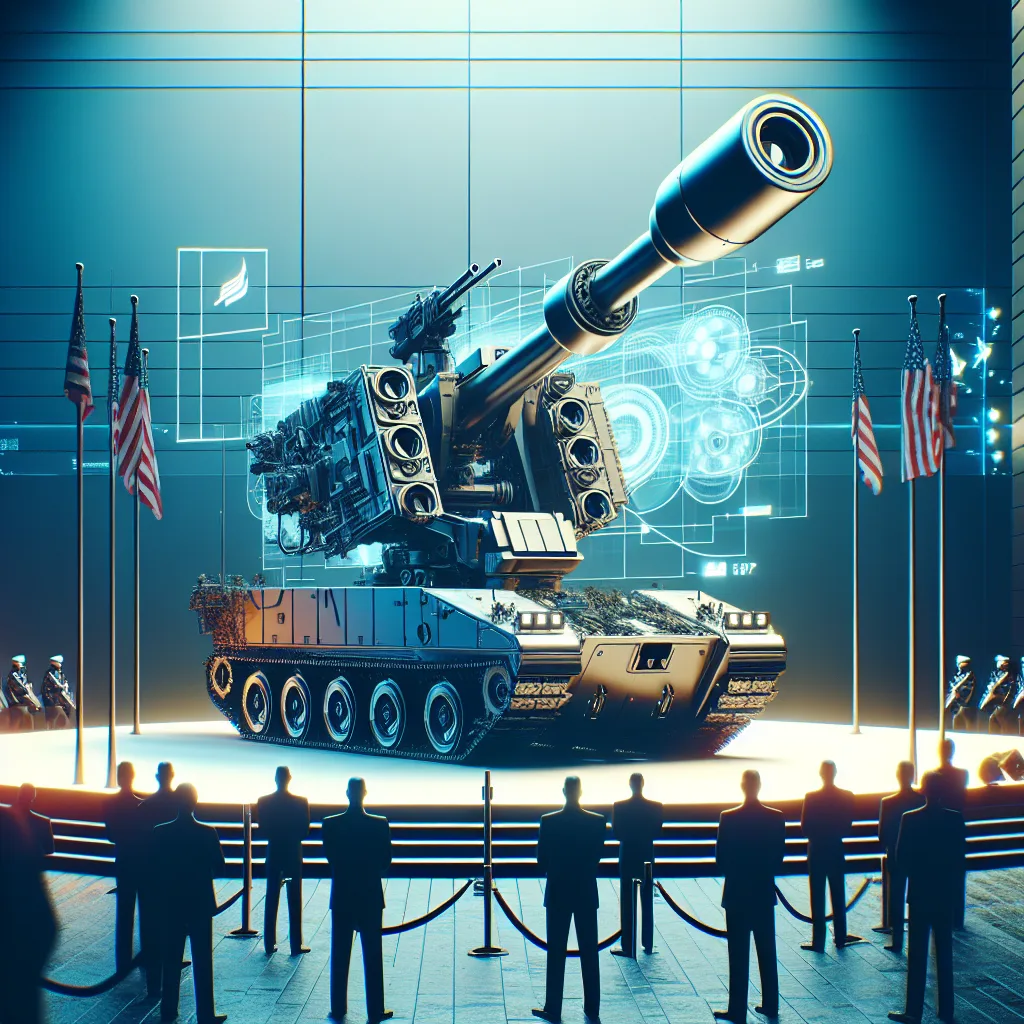
In a display that underscores the evolving landscape of modern artillery, South Korea’s Hanwha Aerospace unveiled its latest wheeled variant of the K9 Self-Propelled Howitzer at CANSEC 2025. The demonstration, set against the backdrop of an international defense market in flux, captured the strategic imagination of military experts and policymakers alike, raising critical questions about the future of deployed firepower and flexible combat systems.
The new system, purpose-built for export markets, builds on decades of tradition and technological advancement in self-propelled artillery systems. As military arsenals worldwide pivot toward platforms that balance mobility with heavy firepower, Hanwha’s latest offering highlights an industry trend: the melding of proven technology with innovative mobility solutions that can quickly adapt to diverse operational settings.
Historically, the K9 Self-Propelled Howitzer earned its reputation as a rugged, reliable platform in service with 10 countries, including six NATO members. The decision to introduce a wheeled variant mounted on a Czech-built Tatra truck chassis was not made lightly. Instead, it reflects both a strategic recalibration in response to shifting battlefield environments and an effort to answer the nuanced demands of export customers who value rapid redeployment, lower maintenance overhead, and high logistical resilience.
At CANSEC 2025, attendees had the opportunity to witness firsthand how this system integrates established firepower with enhanced propulsion and maneuverability features. The wheeled configuration—allegedly engineered to permit operations on a wider range of terrains than tracked counterparts—signals Hanwha’s ambition to capture market share among nations seeking a hybrid solution that bridges traditional power and modern mobility.
Industry observers note that the choice of the Tatra truck chassis is emblematic of ongoing cross-border defense cooperations, where technology sharing amplifies the capabilities of indigenous systems. The Czech-built architecture, widely recognized for its durability in adverse environmental conditions, complements the K9’s firepower and operational flexibility. This move, some experts argue, could herald a new era of international military collaboration as defense contractors increasingly seek to mix and match proven platforms with state-of-the-art modifications.
Throughout the demonstration, representatives from Hanwha Aerospace detailed the system’s modular design, illustrating how its components can be configured to meet specific operational needs of diverse military establishments. For instance, defense analysts from the European Defence Agency have remarked on the potential for future upgrades that might integrate advanced targeting systems or even network-centric warfare capabilities, reinforcing the trend toward more interconnected, digitally managed battlefields.
From the perspective of current military deployment strategies, the significance of such innovations is multifaceted. Traditional tracked systems, while offering robust off-road performance, often require extensive maintenance and face limitations in rapid redeployment scenarios in congested urban settings or variable terrain. On the other hand, wheeled systems, like the one showcased by Hanwha, can provide rapid strategic mobility while still delivering formidable firepower. This dual capability is especially pertinent in scenarios where flexibility and operational tempo are paramount.
Experts caution, however, that adapting systems traditionally designed for tracked operations to a wheeled configuration is not without challenges. As Colonel James Bryant of the U.S. Army’s Project Manager for Self-Propelled Artillery (a verified official in the defense community) noted in a recent briefing, “Mobility and firepower must be harmonized with protection and logistics. Each modification brings trade-offs that must be quantitatively assessed during both testing and field deployment.” While such modifications are promising, they require rigorous evaluation to maintain operational reliability across the full spectrum of military engagement scenarios.
This showcased innovation resonates particularly well with nations operating under budgetary constraints yet needing rapid force projection capabilities. The export-oriented design indicates that Hanwha Aerospace is not solely looking to secure its footprint domestically but is actively engaging with the international market. With the system already integrated into the arsenals of several established users, broader adoption could translate into increased interoperability among allied nations, supporting common defense goals while streamlining maintenance and supply chain operations.
Furthermore, the geopolitical implications of such a development are significant. As military alliances, such as NATO, continue to explore joint modernization programs, the availability of versatile artillery platforms has the potential to serve both national defense and collective security objectives. The integration of a wheeled self-propelled howitzer—capable of rapid redeployment—can reinforce deterrent postures in regions where swift mobilization is critical. For rising defense technologists and military strategists, the evolution of these systems signifies a convergence of tactical efficiency and strategic foresight.
In broader economic terms, Hanwha Aerospace’s strategic decision to innovate with an adaptive platform aligns with global trends observed across the defense sector. As traditional procurement cycles lengthen and fiscal pressures mount, defense contractors are compelled to offer systems that offer both immediate, operational advantages and long-term flexibility. The wheeled variant of the K9 Self-Propelled Howitzer is well-positioned in this respect, marrying cost-effective design adaptations with the rugged performance expected from legacy systems.
Looking to the future, analysts suggest that the unveiling at CANSEC 2025 could spur further development in directed weapon systems that blend legacy firepower with modern digital integration. There is cautious optimism within strategic circles that similar platforms will soon see enhancements in autonomy, networked targeting, and even integration with unmanned systems. Thus, Hanwha’s latest offering is not merely a new product—it is a statement of intent that anticipates and shapes the evolving contours of military technology.
In summary, Hanwha Aerospace’s demonstration at CANSEC 2025 provided concrete evidence of how decades-old artillery systems can be reinvented to meet modern warfare demands. As global defense trends pivot towards hybrid, cost-effective, and quickly deployable systems, the new wheeled variant of the K9 Self-Propelled Howitzer stands poised to make a significant impact. Stakeholders across the spectrum—from operational commanders to defense procurement officials—will be watching closely as this platform moves from demonstration to deployment.
As the defense community navigates an increasingly complex security landscape, the evolution of artillery platforms like Hanwha’s wheeled K9 offers both hope and a set of challenging questions. How will future battlefields balance the scales between traditional brute force and agile, networked warfare? And what new technological thresholds will be reached as old paradigms are reimagined for dynamic, global conflicts? The answers may well determine the shape of military engagements in decades to come.
Ultimately, the path forward is characterized by innovation, cross-border collaboration, and a renewed focus on operational flexibility. Hanwha Aerospace’s strategic move at CANSEC 2025 not only reflects the immediate needs of today’s armed forces but also charts a course for future technological convergences—a course that will undoubtedly be accompanied by ongoing dialogue and critical evaluation within the international defense community.