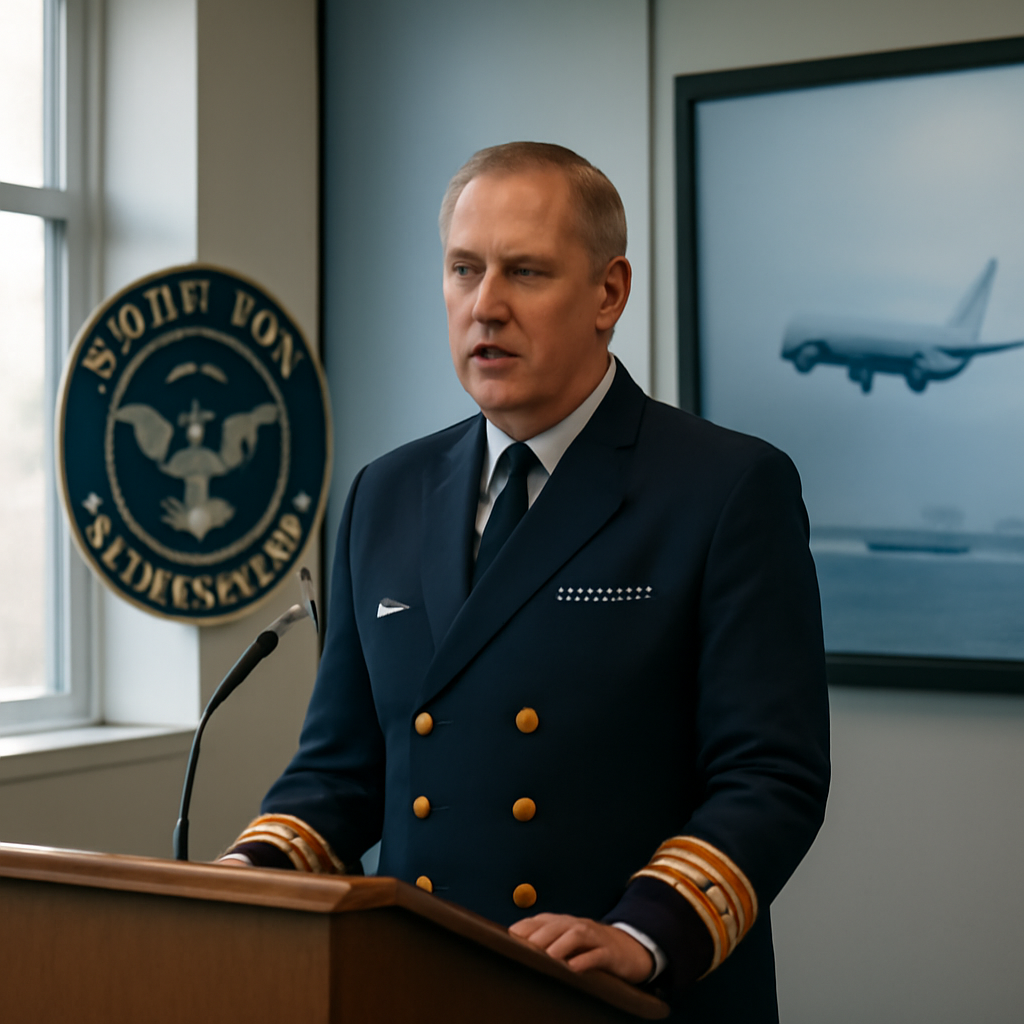
“No, eight is not enough. Give me 10, and I will say I need more. And give me 12, I will say give me more,” Capt. Broder Nielsen, the commanding officer of Germany’s naval air command, told reporters Wednesday at the Farnborough International Airshow.
Germany’s immediate buy: eight P-8A Poseidons
Germany has contracted for eight Boeing P-8A maritime patrol aircraft to expand its ability to track Russian naval activity, particularly in the High North, according to statements made at Farnborough. The purchase is explicitly tied to concerns over Russian undersea operations, including attacks on undersea cables, which NATO members are working to counter through strengthened anti-submarine capabilities.
Capt. Nielsen framed the P-8A purchase as only the start of a much larger requirement: he argued that the aircraft’s demand is “so huge” that covering the vast patrol areas requires a significant fleet, and that the combined fleet of P-8As across Europe and the North Atlantic is part of that solution.
Capt. Broder Nielsen on mission priorities and weapons
Nielsen stressed that as Germany introduces the P-8A into service it must also receive the weapons to be tactically meaningful. “What is even more important is our capability to launch kinetic effects,” he said, specifically naming torpedoes and “deep precision strike” capabilities as high priorities.
The navy is also re-examining anti-ship options. Nielsen noted that the German navy “lost the ability to fight against surface warships” about 25 years ago when Tornado aircraft were transferred to the air force, and that since then “we do not have any missiles in stock anymore against surface ships.” He said long-range surface missiles are needed and identified the Kongsberg joint strike missile as “a valid option.”

The cyber insurance questionnaire just landed. Now what?
SOC 2, HIPAA, insurance renewals - someone has to own security strategy. Nubivance provides fractional CISO leadership without the full-time salary.
Get a security leadP-8As paired with MQ-9B SeaGuardian — but unmanned effects remain secondary
The German navy plans to operate its P-8As alongside General Atomics’ MQ-9B SeaGuardian uncrewed aircraft. That integration reflects a mixed manned-unmanned approach to wide-area maritime surveillance and anti-submarine work.
However, other unmanned capabilities — notably air-launched effects, which can deploy small drones from missile-like tubes — are “not a primary consideration yet,” Nielsen said. Germany is focused first on getting the initial P-8As into service and on ensuring those aircraft can carry kinetic weapons and precision strike loads before expanding into additional unmanned payloads or novel delivery concepts.
NATO context: Denmark’s and the UK’s parallel moves
NATO members are moving in parallel to expand maritime patrol fleets. Earlier this month Denmark agreed to buy two Boeing P-8A Poseidons, and the United Kingdom finalized a sustainment deal for its P-8A fleet. The German navy’s statements at Farnborough emphasize interoperability: Nielsen argued that the true coverage of the High North comes from pooling P-8As operated across Europe and the North Atlantic.
That perspective links procurement choices in Berlin, Copenhagen and London: each national investment contributes to a collective surveillance and deterrence posture in a region the German navy described as having an active threat environment.
Defense spending and the F126 frigate cancellation
Germany is dramatically increasing defense spending as part of an effort to hit NATO’s target of 5 percent of gross domestic product. Officials said defense outlays could soon make up a third of federal spending while pursuing that target.
As part of the rebalancing of naval priorities, Germany recently canceled the long-delayed, multibillion-euro F126 frigate program — a ship design intended for anti-submarine warfare — in favor of a smaller, more commercially ready design. The cancellation and shift in ship procurement underlines the German navy’s emphasis on fielding capabilities quickly to meet the P-8A-driven expansion of maritime patrol and anti-submarine operations.
What this means for NATO, the German navy, and unmanned systems
- NATO: Member states can expect incremental increases in Arctic and North Atlantic surveillance capacity as national P-8A fleets are pooled for regional coverage; Denmark’s two P-8As and the UK sustainment deal are concrete, parallel moves.
- The German navy: Immediate near-term tasks include standing up the P-8A fleet, equipping those aircraft with torpedoes and deep precision-strike weapons, and deciding on an anti-ship missile solution such as the Kongsberg joint strike missile.
- Unmanned systems and industry: While Germany intends to operate MQ-9B SeaGuardian drones alongside P-8As, manufacturers of air-launched effects and other novel unmanned payloads should expect delayed procurement timelines until initial P-8A introduction and kinetic capability fielding are complete.
Germany’s purchase of eight P-8As is both a concrete step and an explicit plea for more capacity. Capt. Nielsen’s remarks at Farnborough framed the aircraft as central to a larger, multinational picture: only through a substantial, coordinated fleet can NATO members hope to “get a clear picture of what is up in the High North.” The near-term checklist is clear — deliver the first P-8As, arm them with torpedoes and precision strike, and decide on long-range anti-ship missiles — but the navy’s appetite for more aircraft suggests a procurement trajectory that could reshape regional maritime surveillance and strike posture if followed through.