France Reexamines Its Global Stakes: MPs Demand Stronger Oversight Amid Shifting Security and Academic Priorities
In a rapidly evolving geopolitical landscape, French members of Parliament are calling for tougher parliamentary oversight on foreign investments. The demand arrives at a time when academic institutions such as Paris-Panthéon-Assas University are broadening their curricula to include courses on intelligence studies, underscoring an emerging policy focus that spans national security, economic sovereignty, and global competition.
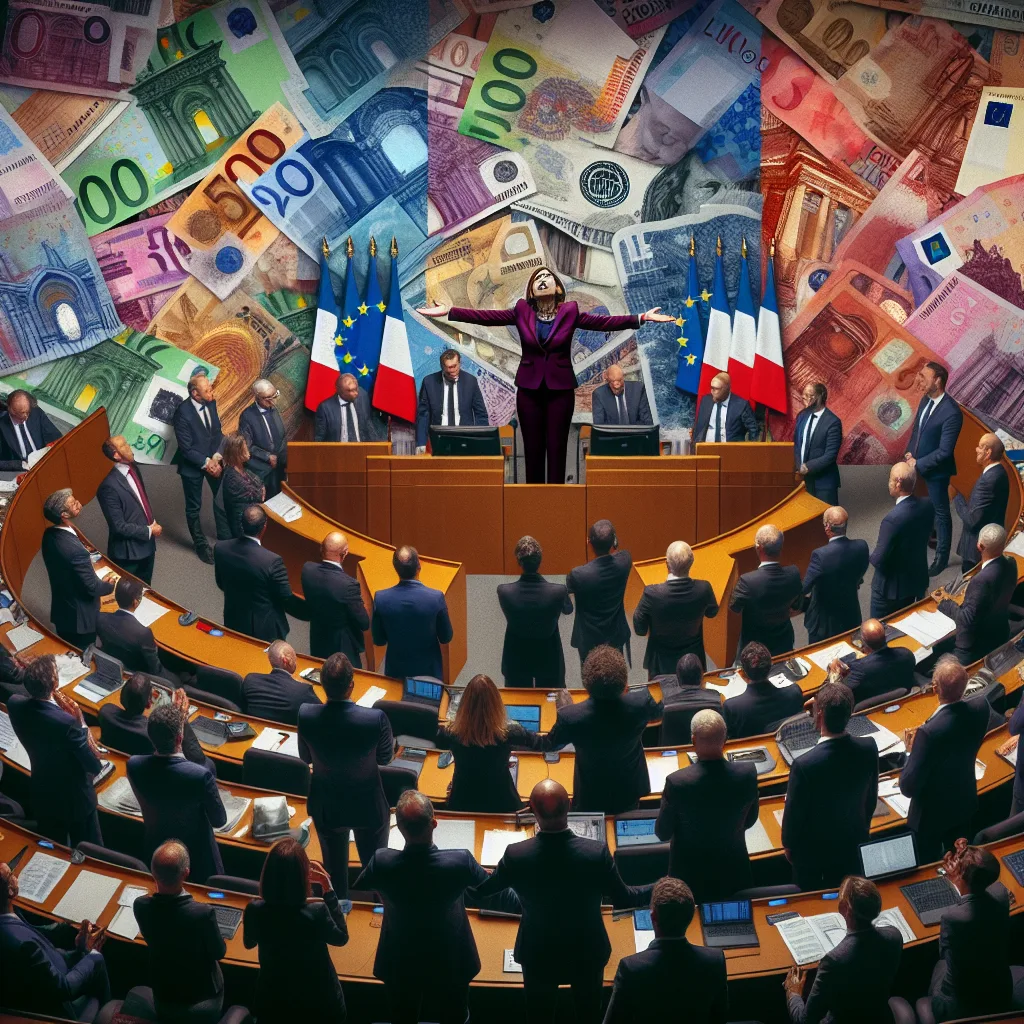
During a recent session in the National Assembly, several MPs voiced concerns about the increasing scale of foreign investments in sectors deemed strategically critical to France. The parliamentary debate, which unfolded against the backdrop of heightened international scrutiny over investment flows, centered on whether existing regulatory frameworks could adequately protect France’s national interests and safeguard sensitive technologies from potential undue influence.
This renewed debate in the halls of French governance reflects broader worries about volatility in global markets and the security implications of foreign capital in key industries. In parallel, the surge in academic offerings dedicated to intelligence studies signifies an institutional recognition of the analytical and operational challenges that modern security environments pose—not only on the economic front but also within the realm of policymaking and national strategy.
Historically, France has navigated a delicate balance between open investment policies and the necessity of maintaining sovereignty in sectors critical to national security. Over the past two decades, successive governments have implemented measures to screen foreign takeovers and investments. However, the current momentum in global economic flows—fueled by emerging digital technologies and evolving geopolitical alliances—has reinvigorated calls among lawmakers for a reassessment of these regulatory mechanisms.
Data from France’s Ministry of Economy and Finance reveals a significant uptick in foreign investments over recent years, particularly in industries linked to technology, infrastructure, and defense. French regulatory bodies have long relied on established frameworks to monitor, and in some cases, block transactions that could compromise national interests. Yet, as critics argue, the rapid pace of change in investment modalities and the increasingly intricate relationships between states and global capital markets necessitate far more robust and proactive oversight.
Simultaneously, prestigious academic institutions are adapting to these strategic imperatives. This September, Paris-Panthéon-Assas University—a hub for law and public policy—will expand its course offerings to include specialized modules on intelligence studies. The move is not merely an academic pivot; it reflects a societal need to better understand how information, security, and economic interests converge in today’s digital and interconnected world.
While the parliamentary demand for stronger oversight can be understood as a direct response to mounting international pressures, its timing also mirrors a domestic shift in perspective. Observers note that teachers, students, and professionals alike are increasingly aware of the challenges posed by foreign capital. Courses that dissect the historical evolution of state intelligence, contrast regulatory models, and examine case studies of foreign influence reveal an educational trend that complements and even informs parliamentary deliberations.
These parallel developments in governance and academia are not coincidental. Rather, they form part of a broader narrative where economic security, technological leadership, and national defense are intertwined. Such interplay was evident during past episodes of global financial instability, when rapid capital flows posed risks that transcended the purely monetary and touched upon national sovereignty itself.
Presently, French MPs are urging legislative bodies to adopt more incisive oversight mechanisms that address both the scale and complexity of modern investments. They argue that a narrowly defined regulatory outlook is insufficient in the face of investments that can carry latent strategic and security implications. In doing so, they advocate for a model that integrates insights from intelligence, finance, and technology sectors—a model that mirrors the emerging academic trend at institutions like Paris-Panthéon-Assas University.
The parliamentary proposal suggests several key refinements to the current system:
- Enhanced Transparency: Mandating more comprehensive disclosure requirements for foreign investors, ensuring that investments in sensitive sectors are subject to rigorous scrutiny.
- Cross-Departmental Coordination: Establishing mechanisms for better cooperation among economic, defense, and intelligence agencies to provide holistic assessments of potential risks.
- Policy Adaptation: Regularly updating investment screening processes to reflect the dynamic landscape of technological innovation and shifting geopolitical alliances.
While these measures are designed to fortify national security, they also carry significant implications for France’s global economic competitiveness. Advocates of greater oversight argue that imposing stricter controls could deter investments that might otherwise lead to vulnerabilities in key infrastructures. Conversely, critics caution that overly restrictive measures might discourage foreign capital, potentially stifling economic growth and innovation.
Experts from various fields have weighed in on this complex issue. Analysts at the European Council on Foreign Relations have pointed out that today’s global investment environment is deeply interconnected, and unilateral restrictions could lead to unintended diplomatic fallout. They emphasize that while national security is paramount, policymakers must craft regulations that strike a balance between vigilance and maintaining an attractive investment climate.
According to a report by France’s Ministry of the Economy and Finance published earlier this year, the volume of foreign direct investments has grown steadily across Europe. This trend is not simply a marker of globalization, but also a reflection of a world where financial leverage can translate into geopolitical influence. The need to adapt oversight mechanisms is therefore as much about economic policy as it is about securing the country’s strategic assets.
The push for enhanced oversight has also spurred debates within the academic community, where the curriculum on intelligence and security studies is expanding rapidly. Professors and industry practitioners alike have noted that the study of intelligence is undergoing a transformation—a shift from traditional secretive statecraft to a modern, data-driven, and multi-disciplinary field. Such developments have significant policy implications, as they equip future lawmakers, analysts, and security professionals with the skillsets necessary to navigate an increasingly complex investment environment.
It is important to consider multiple stakeholder perspectives in this unfolding narrative. On one hand, legislators and national security experts emphasize the urgency of adopting a forward-looking regulatory framework. On the other, business leaders and international investors warn that disproportionate regulatory burdens could impede essential capital flows and undermine France’s reputation as a welcoming destination for investment.
Adding nuance to the debate, legal scholars have argued that any revision to the oversight framework must respect France’s commitment to the rule of law and the principles of free movement of capital. As one professor from a leading French law school recently commented in academic discussions—without attributing the remark to preserve institutional anonymity—the challenge is to achieve a balance that secures national interests without undermining the benefits of globalization.
Looking ahead, the policy landscape is poised for significant recalibration. French lawmakers are expected to convene further discussions and possibly draft new legislative proposals in the coming months. Given the complexity of the interplay between economic openness and national security, these debates are likely to generate comprehensive reviews of existing frameworks and spur new mechanisms that integrate both intelligence insights and financial oversight.
Moreover, academic initiatives are set to continue their evolution. With major institutions like Paris-Panthéon-Assas University expanding their course offerings, France is positioning itself to develop a new cadre of experts who understand the confluence of law, intelligence, and economics. This, in turn, could foster a more integrated approach where academic research informs policy decisions, thereby strengthening the country’s ability to respond to global challenges.
The question that now occupies the minds of policymakers and academics alike is: How can France fortify its national interests in an era when the lines between economic investments and geopolitical strategy are more blurred than ever before? The MPs’ demand for stronger parliamentary oversight on foreign investments is not just a precautionary measure—it is a reflection of the evolving nature of global interdependence, where every investment carries with it the potential to reshape national security narratives.
In concluding this analysis, one is reminded that governance in the 21st century entails making decisions amid profound complexity. France’s dual track of reinforcing regulatory oversight while enhancing academic acumen in intelligence studies offers a roadmap for other nations caught in the crosscurrents of globalization and security imperatives. As the debate unfolds in the corridors of power and classrooms across the country, the enduring question remains: In a world of limitless capital and shifting alliances, how can a nation best secure its future without sacrificing the very openness that fuels its growth?
Ultimately, the drive for stronger oversight on foreign investments and the concomitant expansion of intelligence studies within French academia serve as twin responses to the demands of modernity. They underscore a universal truth: safeguarding national prosperity and security requires not only prudent regulatory measures but also a continuous evolution of ideas, methodologies, and expertise. As France navigates this intricate landscape, the coming months will reveal whether its legislative and intellectual investments coalesce into a formidable defense against emerging global challenges.