"With this contract, Airbus Defence and Space is contributing to France’s sovereignty and strategic autonomy. […] In addition, this program strengthens the French supply chain in space-based optical imagery," Alain Fauré, head of Space Systems at the company, said in a press release.
The contract: €1.5 billion to build two high-resolution satellites
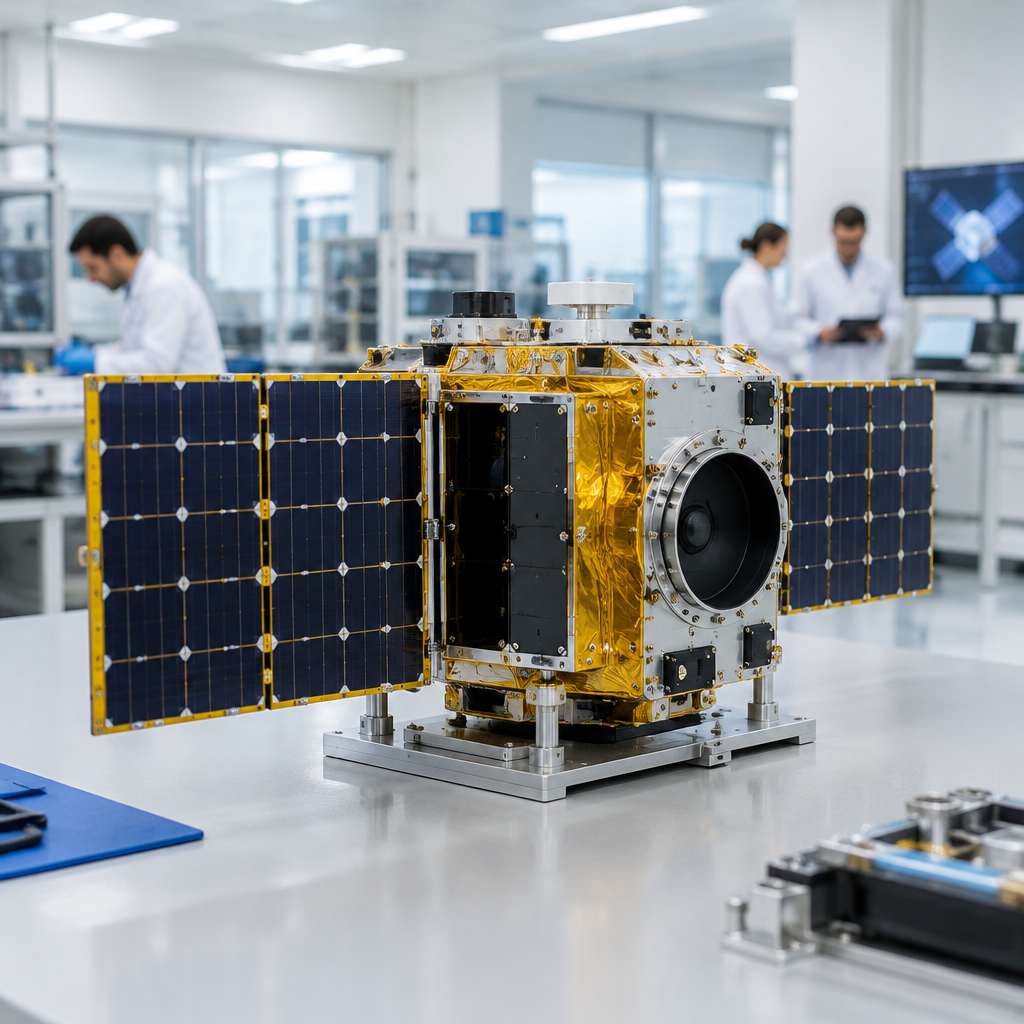
France’s Directorate General of Armament (DGA) has awarded €1.5 billion ($1.7 billion) to Airbus Defence and Space and Thales Alenia Space to procure two high-resolution Earth-observation satellites for the French armed forces. The award covers development, manufacturing and testing of the spacecraft, together with in-orbit operations and maintenance — a full life-cycle contract that places long-term stewardship of the capability on the winning industrial team.
IRIS: the next-generation optical imagery program
The satellites are part of France’s next-generation military satellite program, known as IRIS. According to the DGA, IRIS will replace three current satellites collectively known as the Optical Space Component (CSO). The DGA says the new orbiters will bring improved technology to deliver clearer images and faster access to captured imagery, and will help “guarantee France an operational space-based imagery intelligence capability.”

Audit-ready is a season. It shouldn't be.
Evidence in spreadsheets, controls drifting between audits, frameworks multiplying on flat headcount. Nubivance runs continuous compliance on Rapid7 Cyber GRC - SOC 2, HIPAA, ISO 27001, PCI, CMMC.
End the scrambleHow Airbus and Thales Alenia Space will divide responsibilities
Airbus Defence and Space will act as lead contractor. Under the contract Airbus will supply both satellite platforms, provide the majority of the payload for the first satellite, and oversee the program’s ground segment. Thales Alenia Space is designated as a co‑contractor, charged with providing the satellites’ optical systems. Thales states the IRIS optical systems will be able to capture extremely high-resolution imagery “anywhere on Earth, even under low-light and nighttime conditions” thanks to infrared capabilities built into the payload.
Schedule: first operational satellite in 2033; full deployment by 2035
The DGA’s timeline places the first IRIS satellite into operational service by 2033, with both satellites expected to be in orbit by 2035. Those dates frame a multi-year delivery and commissioning phase that will replace the three CSO assets currently in use and transition France’s space-based imagery intelligence to the new IRIS architecture.
What this means for the French armed forces, the French space supply chain, and the contractors
- French armed forces: The DGA frames IRIS as a means to secure a continuous space-based imagery intelligence capability. Replacing three CSO satellites with two IRIS orbiters implies a change in the architecture of how imagery will be procured and delivered, with promised improvements in image clarity and speed of access.
- French space supply chain: Airbus and Thales highlight national industrial benefits. Alain Fauré and Airbus both emphasized that the program strengthens the French supply chain in space-based optical imagery, suggesting a concentration of production and engineering work within domestic suppliers tied to the contract.
- Airbus Defence and Space & Thales Alenia Space: The contract assigns clear technical leadership and subsystem roles — Airbus as the platform and ground-segment lead, and Thales Alenia Space as the optical-systems provider. The arrangement bundles platform, payload and operations responsibilities that will shape program execution over the coming decade.
The award completes a major procurement step for France’s military imagery capability: two satellites procured under a single, integrated contract with a defined industrial split and a multi-year delivery schedule. With the DGA’s stated operational dates of 2033 and 2035, the IRIS program now shifts from planning into implementation — a period that will test whether the industrial teams can translate the announced technologies and timelines into operational, on-orbit performance.