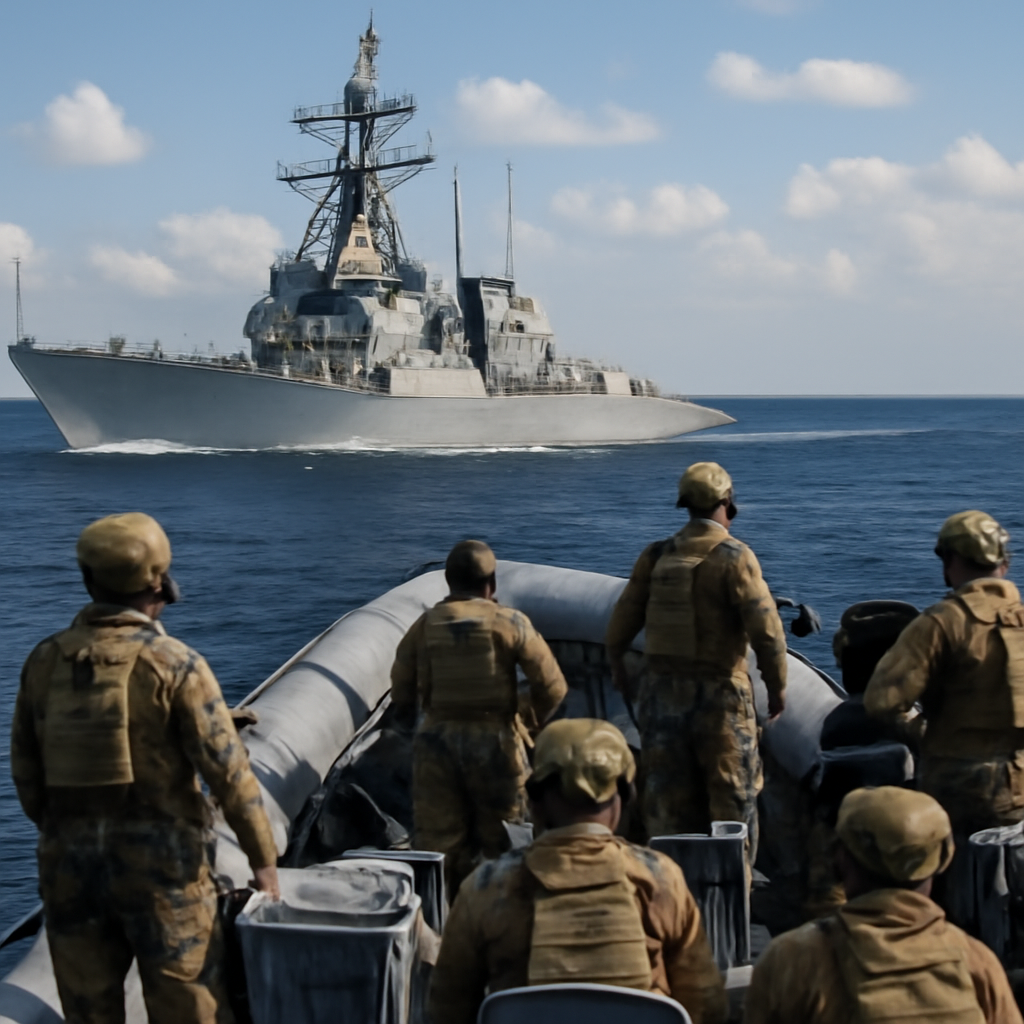
"Accept the design that is and works well, and start work on it to get units out there for the fleet," Fincantieri Marine Group CEO George Moutafis told USNI News — a direct pitch for the Italian shipbuilder's FREMM EVO design as the U.S. Navy reconsiders what a small surface combatant should be.
Fincantieri and the FREMM EVO
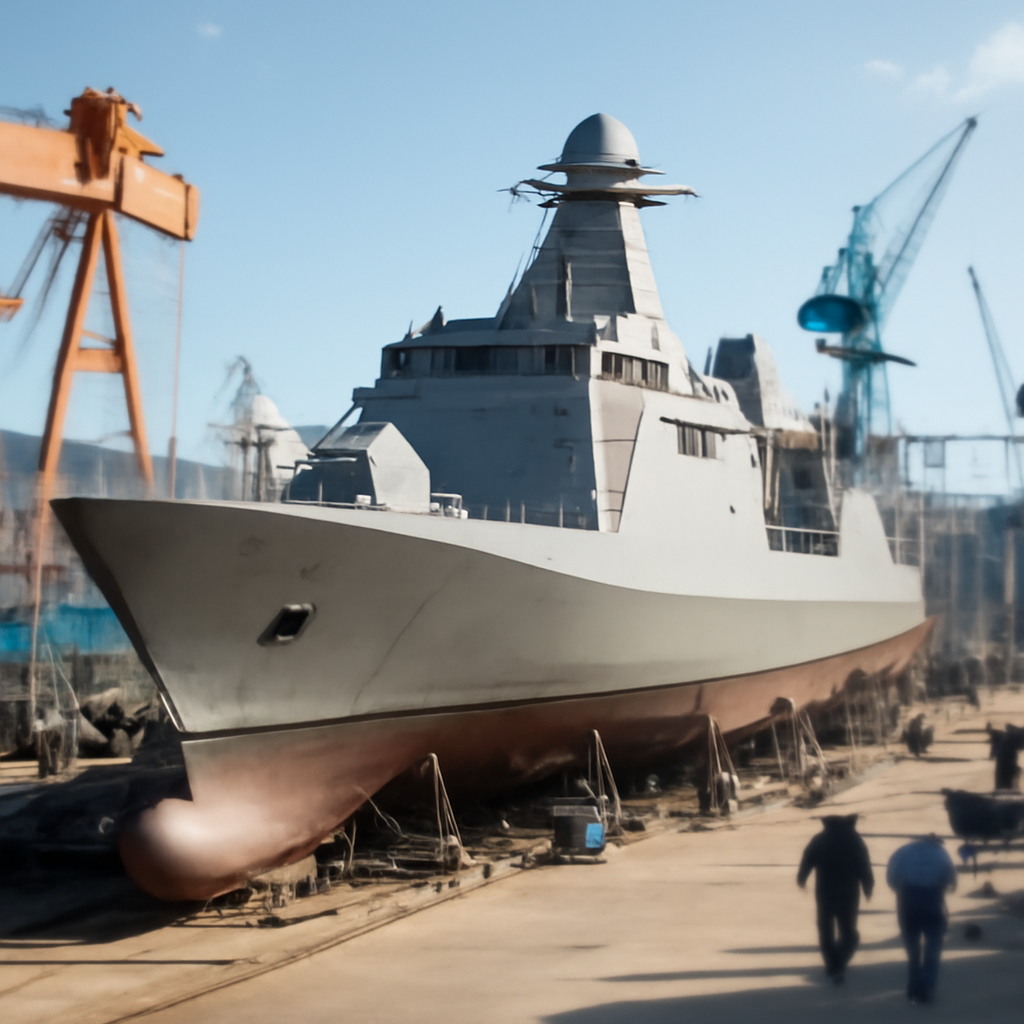
Fincantieri Marine Group, the U.S. subsidiary of the Italian shipbuilder, says it wants to re-enter the U.S. frigate competition by offering the FREMM EVO — a direct evolution of the Franco‑Italian FREMM design that underpinned the cancelled Constellation class. The company highlights that FREMM EVO is an in‑production design, and that investments it made at the Marinette Marine shipyard and in U.S. supply chains during the Constellation effort could be applied to EVO with “few modifications,” Moutafis told USNI News.
FREMM EVO: Kronos DBR, Aster missiles, and counter‑drone suite
Fincantieri’s published specifications for FREMM EVO show a ship roughly 472.5 feet (144 meters) long, about 64.6 feet (19.7 meters) wide, and displacing 6,500 tons at full combat load. EVO introduces a new Leonardo Kronos Dual‑Band Radar (DBR) that pairs C‑band Kronos Quad and X‑band Kronos StarFire AESA arrays into a combined four‑array radar system. The design carries up to 16 Sylver VLS cells at the bow in baseline FREMM form and can fire Aster 30 and Aster 16 missiles; EVO reserves space for additional VLS cells and is described as having an expanded capability to engage incoming ballistic missiles in their terminal phase using Aster 30s.
FREMM EVO retains the baseline’s deck‑mounted anti‑ship missile launchers, two triple torpedo tubes, two turreted 76mm guns, and a mix of smaller guns. It also upgrades sensors, electronic warfare, communications, and introduces a dedicated counter‑drone suite tied to Leonardo’s SADOC 4 combat management system. Suppliers such as ELT Group said the counter‑drone package will include detection, recognition, and “soft‑kill” countermeasures driven by AI algorithms, according to Naval News.

Audit-ready is a season. It shouldn't be.
Evidence in spreadsheets, controls drifting between audits, frameworks multiplying on flat headcount. Nubivance runs continuous compliance on Rapid7 Cyber GRC - SOC 2, HIPAA, ISO 27001, PCI, CMMC.
End the scrambleConstellation class: 15 percent commonality and cancellation
The Constellation class was explicitly intended to be a frigate based on an established, in‑production parent design. In practice, Constellation only achieved 15 percent design commonality with FREMM, a degree of divergence that the source attributes to schedule delays and other issues that directly contributed to the program’s cancellation. Fincantieri executives say those experiences produced lessons the Navy is now applying: empowering Portfolio Acquisition Executives (PAEs) to minimize change and make faster decisions, and prioritizing schedule over continued design spirals when “good enough” delivers capability to the fleet.
Navy review, FF(X), and the presidential memo
The Navy is conducting a foreign warship study — reportedly examining Japan’s Mogami class, South Korea’s Chungnam class, and Turkey’s Istanbul class — and that study is “expected to wrap up next month,” according to the reporting. The review follows a presidential memo issued in August that directed then‑Acting Secretary of the Navy Hung Cao to submit a plan for “a new competitive acquisition approach for surface combatants” and described a “Finland Model” requiring foreign shipbuilders to invest in U.S. enterprises and hire American workers if bidding on future contracts.
Meanwhile, the Navy has launched its own FF(X) frigate program. The service has already announced it will buy a design derived from Huntington Ingalls Industries’ Legend class National Security Cutter for an initial lot; those FF(X) ships will initially lack VLS arrays and other capabilities seen as critical to Constellation, with planned offsets through containerized weapon modules and companion uncrewed surface vessels. Rear Adm. Casey Moton, head of PAE‑M, said the Navy is studying all options in response to the presidential memo and recently completed a critical design review for FF(X) Flight I.
What this means for the Navy, Congress, and Marinette Marine
- The Navy (PAE‑M and acquisition leadership): will weigh trade‑offs between buying an in‑production foreign design with domestic build options and continuing down the FF(X) path. Moton has signaled the service is assessing options but will not pre‑commit to a direction before the study concludes.
- Congress: some members have been “very vocally pushing back” on production in foreign shipyards. That political pressure shapes how attractive an overseas initial build would be and helps explain emphasis on the “Finland Model” in the presidential memo.
- Marinette Marine and Fincantieri: the yard has physical expansions and supply chains developed under Constellation and is already on contract to build new Medium Landing Ships (LSM) for the Navy. A domestic FREMM EVO offer could leverage those investments, but Fincantieri will have to make the case that it can avoid the design‑change pitfalls that sank Constellation.
Fincantieri’s overture is a clear attempt to turn a politically and technically bruising episode—the Constellation cancellation—into a second chance for an in‑production foreign design. The Navy’s ongoing study, the requirements the presidential memo imposes, and Congress’ sensitivity to where ships are built will all shape whether FREMM EVO reappears on the procurement table. The review that is “expected to wrap up next month” will be a decisive moment: it will either open a path for offers grounded in established designs and existing U.S. infrastructure, or reinforce the path the Navy is already pursuing with FF(X) and modular additions to fill capability gaps.