NBC’s account: injuries, unit, and unanswered confirmations
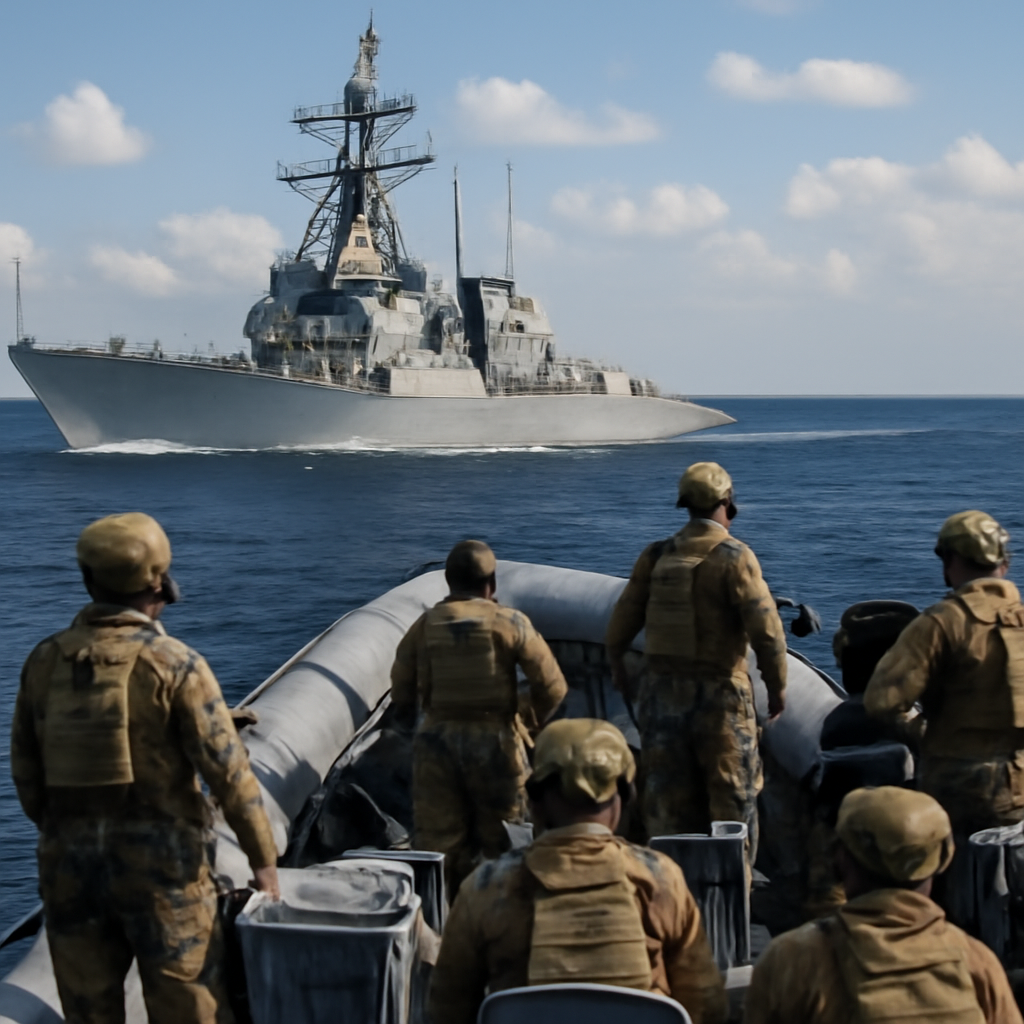
NBC News told a story that, if confirmed, would be an uncommon instance of U.S. Marines wounded while embarked on a non‑Navy vessel. The network, citing three U.S. officials, reported that eight Marines — seven enlisted and one officer — suffered smoke inhalation and symptoms consistent with concussions such as headaches after a Sept. 14 attack. The officials said the Marines “were not seriously injured” and “all returned to duty soon after the Sept. 14 attack,” and that they were operating “as part of a battalion landing team.”
TWZ said it could not independently confirm that Marines were aboard the ship that was struck. The Pentagon referred inquiries to U.S. Central Command (CENTCOM), and CENTCOM declined to comment.
UKMTO alert and the single vessel reported struck that day
United Kingdom Maritime Trade Operations (UKMTO) posted an alert on Sept. 15 saying it had “received a time late report of an incident within the Strait of Hormuz” that occurred a day earlier and that “a verified source has reported that a vessel has been struck by an unknown projectile.” UKMTO added: “There is no reported damage or environmental impact” and “Authorities are investigating.”
TWZ reports that, according to UKMTO and a maritime security official contacted for this story, only one vessel was known to have been struck on Sept. 14. Several maritime trade publications and security sources subsequently identified that ship as the M/V St. Helena; Lloyd’s List reported the ship was being operated by the Ambrey maritime security firm at the time. Ambrey declined to comment.

This site is the portfolio.
OSINTSights runs on Cloudflare Workers, D1, R2, and Vectorize, with an AI pipeline on Hetzner ARM. Nubivance designed, built, and operates it. We do the same for clients.
See what we buildM/V St. Helena: a ship with an unusual, multi‑role past
The vessel several outlets named, St. Helena (IMO 8716306), entered service in 1990 and operated as a combined passenger and cargo ship between Cape Town, South Africa, and Saint Helena and Ascension Islands, carrying Royal Mail and earning the RMS designation, according to Cruise Arabia and Africa and Maritime Executive. Maritime Executive described St. Helena as Britain’s last working postal ship before its 2018 retirement.
After retirement, the vessel’s trajectory included competing plans: Maritime Executive reported in April 2018 that, renamed MNG Tahiti, the ship was being prepared by MNG Maritime “to become a floating armory working in the Gulf of Oman.” Later in 2018 the off‑road racing series Extreme E said it had “secured exclusive use of the former Royal Mail ship” and undertook an extensive refurbishment to serve as a freight and logistics hub and science laboratory for race weekends. Both names — St. Helena and MNG Tahiti — share the same IMO number, per MarineTraffic.
Horizon Ship Brokers listed the ship for sale on Sept. 17, 2024; current ownership was described as unclear in the reporting. Terra Nova Expeditions had chartered the vessel for Antarctic cruises, but those plans were canceled “last month” because the ship “was stuck in the Persian Gulf” and was no longer available for the Antarctic season. MarineTraffic last tracked the ship’s transponder near Dubai nearly two months before TWZ’s report.
Marines, mission sets, and the practice of using commercial ships
TWZ’s reporting notes that Marines have trained for missions that would place them aboard commercial ships. USNI News reported in 2023 that “a force of 100 Marines, newly trained by Navy personnel,” stood ready “to respond, if ordered, to provide armed security aboard foreign commercial ships transiting the Strait of Hormuz,” and that those Marines were members of the 26th Marine Expeditionary Unit embarked on the three‑ship Bataan Amphibious Ready Group. The TWZ piece says it is unclear whether those plans remain active or whether Marines in the region have been ordered to provide armed security for commercial vessels.
The article also draws a parallel to past practice: adapting commercial vessels to serve as sea bases or platforms for special missions has precedent in the region, and TWZ points to contemporary commercial vessels used in similar roles — for example, the special mission ship U.S. Motor Vessel Kellie Chouest — as evidence that the model exists.
What this means for CENTCOM, maritime security firms, and commercial charterers
- CENTCOM: The command’s decision to decline comment leaves its posture and any rules authorizing U.S. personnel aboard commercial ships unspecified; CENTCOM may be the focal point for later official clarification.
- Maritime security firms (Ambrey, MNG Maritime): Ambrey declined comment about operations; the history of the St. Helena/MNG Tahiti underscores how private firms and conversions — including plans for floating armories — can complicate attribution and public understanding of incidents in the strait.
- Commercial operators and charterers (Terra Nova Expeditions, Horizon Ship Brokers): The ship’s reported presence in the Persian Gulf and the cancellation of Antarctic cruises illustrate immediate commercial consequences when a vessel is committed to regionally sensitive work or becomes unavailable.
For now the public record is concrete in three respects: UKMTO reported a vessel struck in the Strait of Hormuz on Sept. 14 and said authorities are investigating; several maritime outlets identified the ship as M/V St. Helena, a vessel with a documented history of conversion plans and commercial charters; and NBC reported, citing U.S. officials, that eight Marines were injured aboard an unnamed ship in that incident. Beyond those points, key questions — whether the struck ship was indeed St. Helena, what its mission was at the time, and whether U.S. Marines were aboard — await confirmation from authorities conducting the investigation and from U.S. military spokesmen who so far have declined to comment.