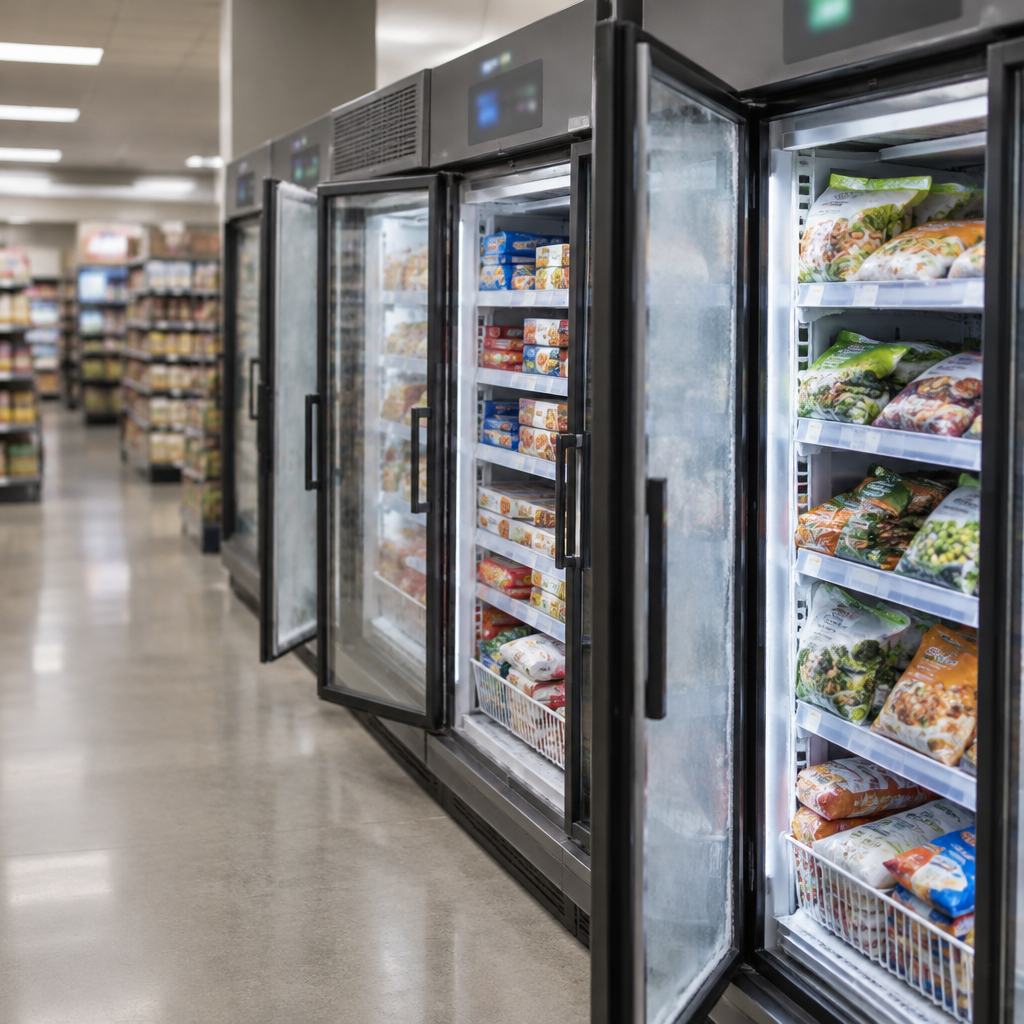
The blunt advisory from the FBI and the Cybersecurity and Infrastructure Security Agency (CISA), issued jointly with the U.S. Departments of Health and Human Services (HHS), Agriculture (USDA), and Transportation (DOT), frames a practical and immediate risk: industrial refrigeration and cold‑chain monitoring systems worldwide are being actively targeted by malicious cyber actors. The agencies say attackers are exploiting weaknesses in electronic temperature controllers and commercial refrigeration management systems to alter temperature controls, disable monitoring, and in some cases force equipment into continuous heating or defrost cycles — outcomes that can spoil food, damage equipment, and create fire hazards.
Scope of the advisory and the agencies involved
The advisory was published jointly by the FBI and CISA, with participation from HHS, USDA and DOT. It warns that the threat affects a broad range of sectors that rely on refrigeration controllers — healthcare facilities, food production and retail, chemical facilities, and transportation — because these controllers are used to monitor temperatures remotely, manage defrost cycles, and control cooling equipment.
Attack techniques: authentication bypass, code injection, and weak configurations
According to the advisory, the attackers exploit a set of concrete technical weaknesses. These include authentication bypass vulnerabilities, arbitrary code injection flaws, and weak device configurations. When exploited, those weaknesses allow threat actors to modify temperature settings and force refrigeration equipment into continuous heating or defrost cycles. The agencies note that successful intrusions can also reduce visibility into current temperatures, preventing operators from detecting problems in real time.

Nobody's watching your logs at 2 AM.
Full SOC coverage without building one. Nubivance deploys and manages Rapid7 InsightIDR and MDR for organizations that need detection and response, not another dashboard.
Get coverageRecent incidents in Europe: supermarkets and blood storage
The warning follows documented attacks in Europe that demonstrate the operational impact. In October, hackers compromised refrigeration controllers at an estimated 250 to 350 French supermarkets, remotely activating defrost functions and raising temperatures in refrigerators and freezers. A second wave reported in November affected more than 115 stores across six European countries; in some cases refrigeration systems shut down entirely and in others temperatures were raised to as high as 50°C (122°F).
On November 3, the French Blood Establishment (EFS) confirmed a cybersecurity incident affecting a refrigeration equipment provider had altered temperature and defrost settings at three facilities used to store blood products. Those incidents underline two separate dimensions of risk highlighted in the advisory: loss of perishable inventory and threats to medical cold-chain integrity.
Agency recommendations and operational steps
To counter the threat, the agencies urge immediate operational steps. Key recommendations include removing refrigeration controllers from the public internet and securing any necessary remote access, changing default passwords, and applying available security updates. The advisory also recommends isolating operational technology systems from business networks and enforcing safe temperature limits to prevent controllers from operating outside acceptable ranges.
Taken together, the guidance emphasizes both configuration hygiene (passwords, remote access controls, segmentation) and lifecycle maintenance (patching and updates) for devices that traditionally have not been treated as standard IT assets.
What this means for healthcare, food retailers, and transportation
- Healthcare facilities: Facilities that store blood products and other temperature‑sensitive items must watch for altered temperature or defrost settings and validate backups and monitoring systems; the EFS confirmation of altered settings at three blood-storage facilities shows the consequences can extend to clinical supplies.
- Food retailers and cold storage operators: Grocery stores and cold storage facilities are explicitly named in the advisory and in incidents that affected hundreds of stores; these operators will need to reassess remote access paths, replace default credentials, and prioritize patching to avoid inventory loss and equipment damage.
- Transportation and logistics providers: Because refrigeration controllers are used across transportation and cold‑chain monitoring, providers should enforce network isolation between operational technology and business systems, and set safe temperature thresholds so controllers cannot drive equipment outside acceptable ranges.
The advisory is a terse but concrete alarm: controllable devices that connect to networks can be weaponized in ways that produce real-world spoilage, physical damage, and safety hazards. With documented incidents already affecting supermarkets and medical storage in Europe, the agencies' guidance focuses on actions organizations can take now — remove exposed devices from the public internet, change defaults, patch, and segment networks — while the broader question remains how operators will sustain those practices across diverse vendors and aging equipment. For organizations that rely on refrigeration, the technical fix is straightforward; the operational challenge is making it consistent.
Source: FBI, CISA warn of cyberattacks targeting refrigeration systems — BleepingComputer