"This has not been an easy decision," RIAT’s statement read, explaining why the Royal International Air Tattoo was canceled to the public in late May amid "uncertainty over access to RAF Fairford, given the ongoing situation in the Middle East."
RIAT cancellation concentrates attention on Farnborough
The late-May cancellation of the Royal International Air Tattoo (RIAT) has reshaped the calendar of this summer's aerospace gatherings. Organizers cited uncertainty over access to RAF Fairford linked to the war in Iran as the reason for the public cancelation. As a direct consequence, the Farnborough International Air Show — running July 21 to July 24 — is expected to absorb much of the focus and presence that would otherwise have been shared between the two events, according to Eric Fanning, CEO and president of the Aerospace Industries Association.
U.S. presence, platforms, and commercial momentum
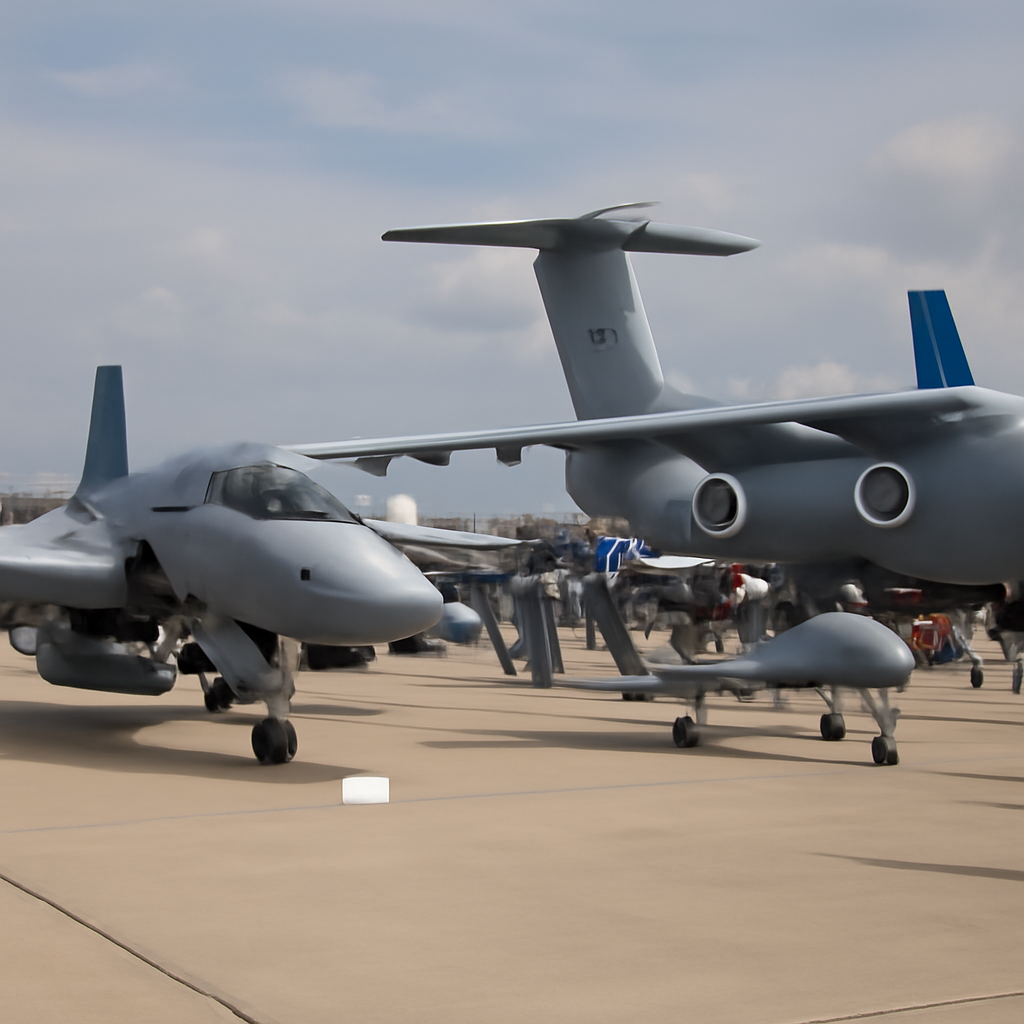
Fanning said the U.S. delegation to Farnborough is at record attendance for the country, with "more U.S. companies that are involved in the air show, displaying at the air show, than have ever before." The air show website lists U.S. Air Force platforms that will be shown this year: the F-35 Lightning II, the C-130J, the UH-60 Blackhawk, and the CH-47 Chinook helicopter. British, Czech, Italian and Turkish aircraft also will be displayed. Industry figures point to a broader commercial upswing: Fanning put U.S. aerospace exports up 25 percent from the prior year, with the United Kingdom among the top five destinations for those exports.

Audit-ready is a season. It shouldn't be.
Evidence in spreadsheets, controls drifting between audits, frameworks multiplying on flat headcount. Nubivance runs continuous compliance on Rapid7 Cyber GRC - SOC 2, HIPAA, ISO 27001, PCI, CMMC.
End the scrambleNATO tensions and defense-spending debates shadow the show
Farnborough arrives on the heels of what the source describes as a "bumpy" NATO summit earlier in July and amid sustained political pressure from the administration in Washington for allies to increase defense spending. The administration’s $1.5 trillion military budget — pitched as a revitalization of the defense industrial base — is described in the reporting as "in dire straits" in part because of political disagreements over the Iran war. Industry and government attendees are arriving with those funding and alliance questions very much on the table.
United Kingdom investment plan and the politics of spending
Within that broader debate, the United Kingdom's domestic developments are notable. The source reports that the country's defense secretary resigned and publicly stated the country was "unwilling" to support a necessary increase in military spending; shortly after, the government unveiled a $298 billion Defense Investment Plan (DIP). A summary of the DIP reads: "The Government has committed to increasing defence spending to 3 percent of GDP in the next Parliament, with funding and plans to be set out at the next spending review where defence will be the number one priority. Alongside NATO allies, the UK has committed to reach 3.5 percent of GDP on defence spending by 2035."
Franco-German-Spanish FCAS collapse and the search for a replacement
European program dynamics add another layer to Farnborough's agenda. Last month, Germany and France dropped their plans for a collaborative next-generation fighter, the Franco-German-Spanish Future Combat Air System (FCAS). J.J. Gertler, senior aviation analyst at the Teal Group, said he will be watching Farnborough for any announcements or moves toward replacement programs, asking explicitly whether independent or replacement programs will be unveiled at the show after “a year plus” in which European nations have had time to advance their own projects.
How defense firms, NATO allies, and show organizers are responding
- Defense firms: U.S. companies are expanding their presence at Farnborough, pursuing export opportunities after a reported 25 percent jump in aerospace exports year-over-year, and using the show as a commercial pivot after RIAT's cancellation.
- NATO allies and national governments: Governments arrive under pressure to define and fund future defense programs — illustrated by the UK's DIP commitments and by public debate over who will pay for alliance needs amid disagreement over the Iran war.
- Show organizers and militaries: Organizers are adjusting logistics and planning for military aircraft displays in light of war-related uncertainties; the U.S. Air Force and other militaries have confirmed specific platforms that will appear despite those planning considerations.
Farnborough will therefore function as more than a trade fair this week: it is a venue where commercial momentum, alliance politics, and program-level decisions converge. The canceled RIAT has concentrated attendance and removed one forum for public military displays, while the collapse of FCAS leaves a concrete programmatic question hanging over European delegations. As Eric Fanning put it, "there's so much focus on, pressure on, and questions about the transatlantic alliance and the future of the alliance." One practical question the event may answer — or at least clarify — is whether any nations will use Farnborough to announce new paths toward next-generation combat aircraft programs after FCAS.