"It means that we’ve been working integration work with the airframe. It means that the design is solid. It means that we’re ready to move forward from an industrial base as well," Pratt & Whitney executive Jill Albertelli said in describing the milestone.
Engine Core Upgrade (ECU) clears risk reduction design review
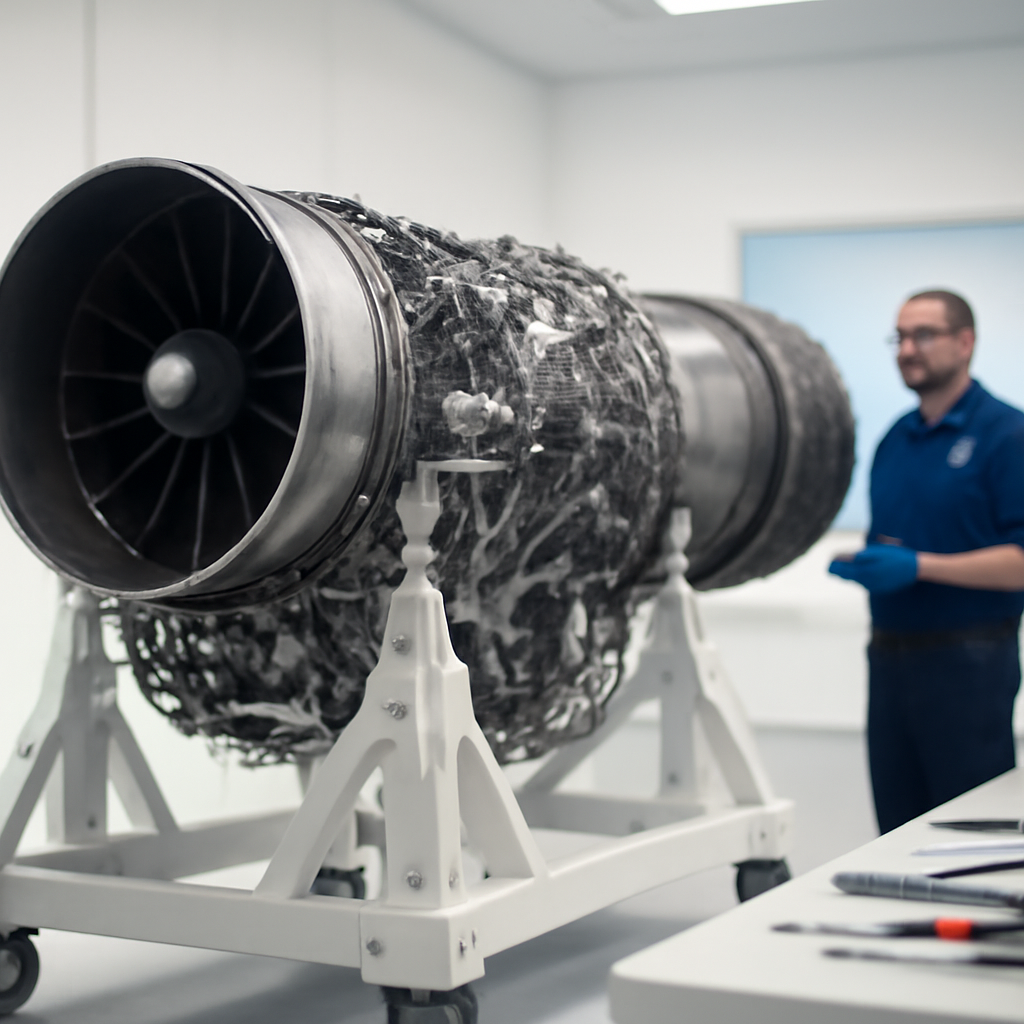
Pratt & Whitney’s enhancement for the F-35’s F135 powerplant — dubbed the Engine Core Upgrade (ECU) — has passed a risk reduction design review, a milestone the company says is essentially equivalent to the Pentagon’s critical design review. Jill Albertelli, president of Pratt’s military engines business, described the finding on the sidelines of the Air and Space Forces Association conference in National Harbor, Md., and said roughly one-third of the unique hardware for the first upgraded engine is "in process."
Technical and operational benefits promised
Military officials cited by Pratt say the ECU will deliver greater thrust and improved fuel efficiency, restore expected engine life, and support the F-35’s forthcoming Block 4 upgrades. All three F-35 variants are expected to benefit; the ECU is planned as a retrofit for existing jets rather than a propulsion replacement.
Pratt emphasized the ECU was selected after officials passed over developing a whole new, so‑called "adaptive" propulsion system for the aircraft. The company also predicted maintenance savings: the upgrade will save "tens of billions" of dollars in maintenance costs compared to foregoing an enhancement for the F135, according to Albertelli.

Audit-ready is a season. It shouldn't be.
Evidence in spreadsheets, controls drifting between audits, frameworks multiplying on flat headcount. Nubivance runs continuous compliance on Rapid7 Cyber GRC - SOC 2, HIPAA, ISO 27001, PCI, CMMC.
End the scrambleSchedule: first engine test, ground testing, flight trials, and production
Pratt identified the next technical step as the first engine test, but Albertelli declined to specify timing and referred calendar questions to the F-35 Joint Program Office. A senior Air Force official previously told reporters that ground testing is expected to begin in 2027, with flight testing around 2030. A Government Accountability Office review last year, by contrast, placed ECU production start in 2031.
When Pratt originally advocated the ECU several years ago, company officials projected the program could be ready to enter service by 2028 — a more optimistic timeline that contrasts with the GAO and the testing schedule cited by the Air Force official. Pratt says it is "meeting [the government’s] milestones" while balancing program priorities and funding constraints.
Program funding and recent contract actions
The Pentagon recently awarded a roughly $240.8 million modification for ECU work, following a $1.3 billion base contract issued in September 2024. Albertelli framed those awards in the context of industrial planning, noting the company must balance resources against government priorities: "We always want to make sure we are giving the customer what they’re prioritizing," she said, adding that "funding isn’t unlimited, so we have to balance those equations on what the need is."
Pratt’s parent company, RTX, announced that Albertelli has been promoted to serve as Pratt’s president effective Jan. 1, 2027, a corporate move the company disclosed alongside the program comments.
What this means for military operators, procurement officers, and maintenance crews
- Military operators: Expect a retrofit pathway to improved performance and life‑extension for the F-35 fleet across all three variants, with flight benefits tied to the Block 4 roadmap.
- Procurement officers and program managers: Will need to align funding priorities and schedules — balancing earlier service-entry ambitions with the GAO’s production timetable and the Air Force testing milestones (ground testing in 2027; flight testing around 2030).
- Maintenance crews and sustainment planners: Stand to realize the "tens of billions" in projected maintenance savings Pratt cites, but will also face the logistics of retrofitting existing airframes once production and fielding schedules are finalized.
The ECU milestone marks a tangible, engineering-level advance: a design judged mature enough to move from integration work toward testing and eventual production. The near-term question now is timing — when the first engine test will occur and how the differing schedules (Pratt’s earlier service estimate, the Air Force’s testing timeline, and the GAO’s production forecast) will reconcile as the program advances from design review into the test regime.
Source: Breaking Defense — F-35 engine upgrade clears key design review, Pratt says