France’s Comet program
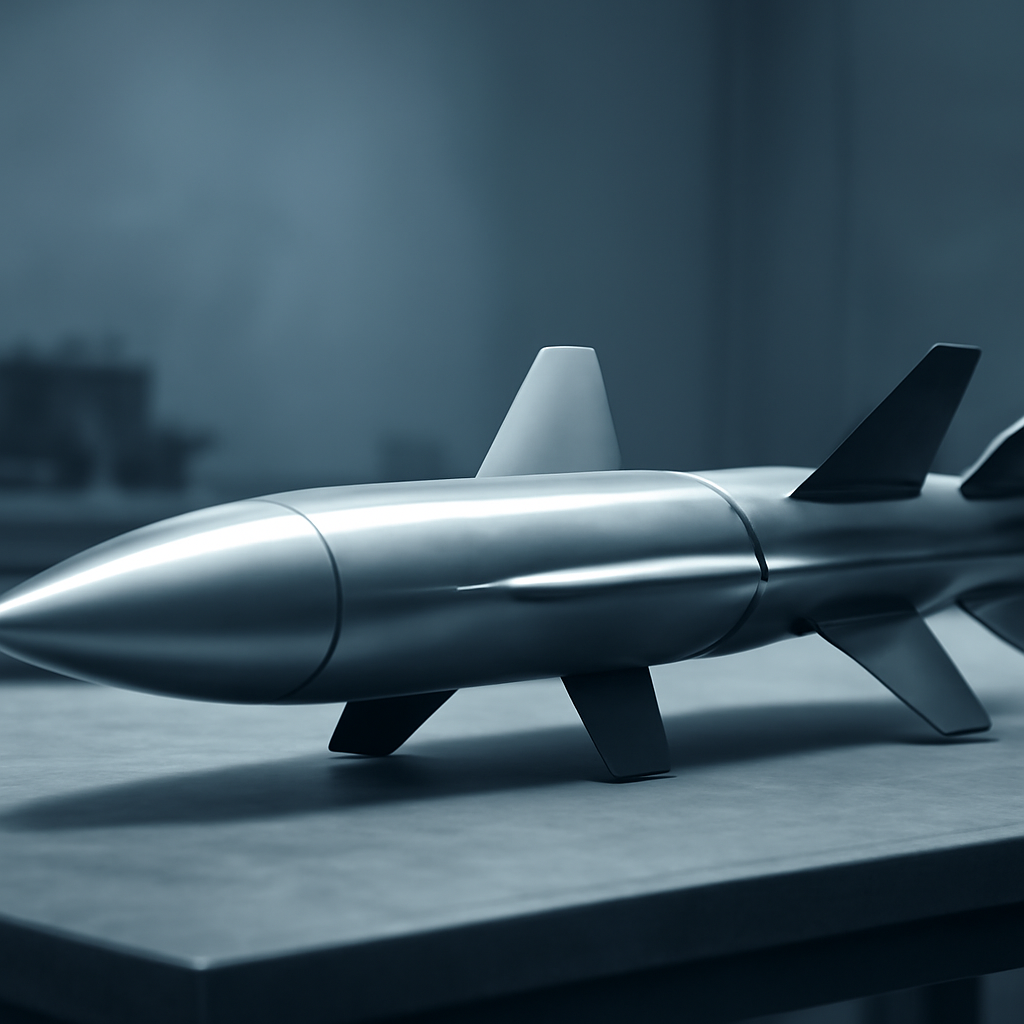
Comet, apparently led by the French side of the MBDA consortium, is the clearest near-term European effort aimed at a post-MICA capability. Very little is publicly known about its specifications, but published reporting describes Comet as offering greater range and speed than current systems and places an apparent timeline around 2030. In public commentary, Barrie characterized Comet as a relatively rapid response to long‑range Chinese systems such as the PL‑15 and the operational shockwaves from the May 2025 Indo‑Pak conflict, where pictures of a PL‑15E missile body were recovered in India’s Punjab region.
Britain’s FASE and the GCAP/Tempest trajectory
The United Kingdom’s Future Air Superiority Effectors (FASE) program is being shaped more by longer‑term requirements tied to the Future Combat Air System and GCAP/Tempest workstreams. Justin Bronk of the Royal United Services Institute told TWZ that FASE “is likely aimed at providing significantly better combat capabilities by the early‑mid 2030s than a mid‑life upgrade of the Meteor missile would be able to offer within the bounds of its basic layout and size.” The U.K. has reportedly dropped plans for a Meteor mid‑life upgrade to concentrate on what would be a more ambitious, higher‑performance successor or family of successors optimized for Tempest.

Audit-ready is a season. It shouldn't be.
Evidence in spreadsheets, controls drifting between audits, frameworks multiplying on flat headcount. Nubivance runs continuous compliance on Rapid7 Cyber GRC - SOC 2, HIPAA, ISO 27001, PCI, CMMC.
End the scramblePropulsion, size, and the case for a family of effectors
Meteor’s ramjet propulsion gave it a distinct energy advantage versus conventional solid‑rocket missiles, but current thinking in the reporting highlights trade‑offs. Barrie noted that ramjets are difficult to push above Mach 5 without compromises, and European planners may consider larger solid‑propellant motors, multi‑pulse designs, or multi‑stage architectures instead. Critically, next‑generation fighters such as Tempest are expected to offer substantially larger internal weapon bays than aircraft that constrained Meteor’s size; that extra volume could support heavier, faster missiles or enable a multi‑sized family of weapons.
The U.K. language around “effectors” suggests the possibility of multiple missile types rather than a single Meteor replacement: a very large, long‑range weapon for crewed Tempest aircraft; a medium weapon for existing fighters; and a smaller, lower‑cost effector for crewed‑controlled aircraft (CCAs) and uncrewed platforms. Shared subsystems — seekers, datalinks, guidance electronics — could knit such a family together even if the weapons differ in size and propulsion.
Seeker design, sensors, and a networked kill chain
Seeker technology is emerging as a decisive design axis. An active electronically scanned array (AESA) seeker is framed in reporting as a logical baseline for a next‑generation weapon; Japan’s Mitsubishi AAM‑4B and earlier U.K.–Japan work on the Joint New Air‑to‑Air Missile (JNAAM) program were cited as relevant precedents. Multi‑mode seekers combining active radar and passive radio‑frequency detection — reportedly a feature attributed to China’s PL‑17 — would enhance resilience in contested electromagnetic environments and could add anti‑radiation capability. Imaging infrared (IIR) seekers are also mentioned as complementary options, particularly against low‑signature targets.
Perhaps the most consequential change is the missile’s dependence on a wider sensor network. Reported requirements include two‑way datalinks, midcourse guidance, and the ability to accept third‑party targeting — a “track‑source agnostic” approach that allows launch platforms to use targeting from CCAs, airborne early warning aircraft, ships, or space sensors. That approach would let weapons fly far beyond the organic sensor range of the launch aircraft and demand robust electronic‑warfare resilience and datalink interoperability.
What this means for the U.K., France, and Japan
- United Kingdom: Prioritize a very large, high‑performance weapon suite tied to Tempest and GCAP, optimized for long‑range air superiority in regions such as the Indo‑Pacific; FASE appears to be a central vehicle for that work and is currently “for U.K. eyes only.”
- France: Develop a near‑term response in Comet that can be fielded sooner — around 2030 — to address emerging long‑range threats while preserving flexibility for future systems and continued ties to the Meteor family.
- Japan: Leverage experience with AESA seekers and GCAP/Tempest partnership to potentially contribute advanced seeker and guidance technologies, building on prior U.K.–Japan missile collaboration despite that program not becoming operational.
Meteor remains Europe’s benchmark: a successful multinational program whose ramjet architecture set a high bar. But the reporting makes clear that the coming generation will be defined as much by the kill chain that missiles plug into as by speed or range alone. Whether Europe moves to larger solid motors, multi‑stage boosters, or a family of networked effectors — and whether the Meteor consortium endures in its present form — will be decided as Comet, FASE, GCAP/Tempest, and allied cooperation all advance across the next decade.