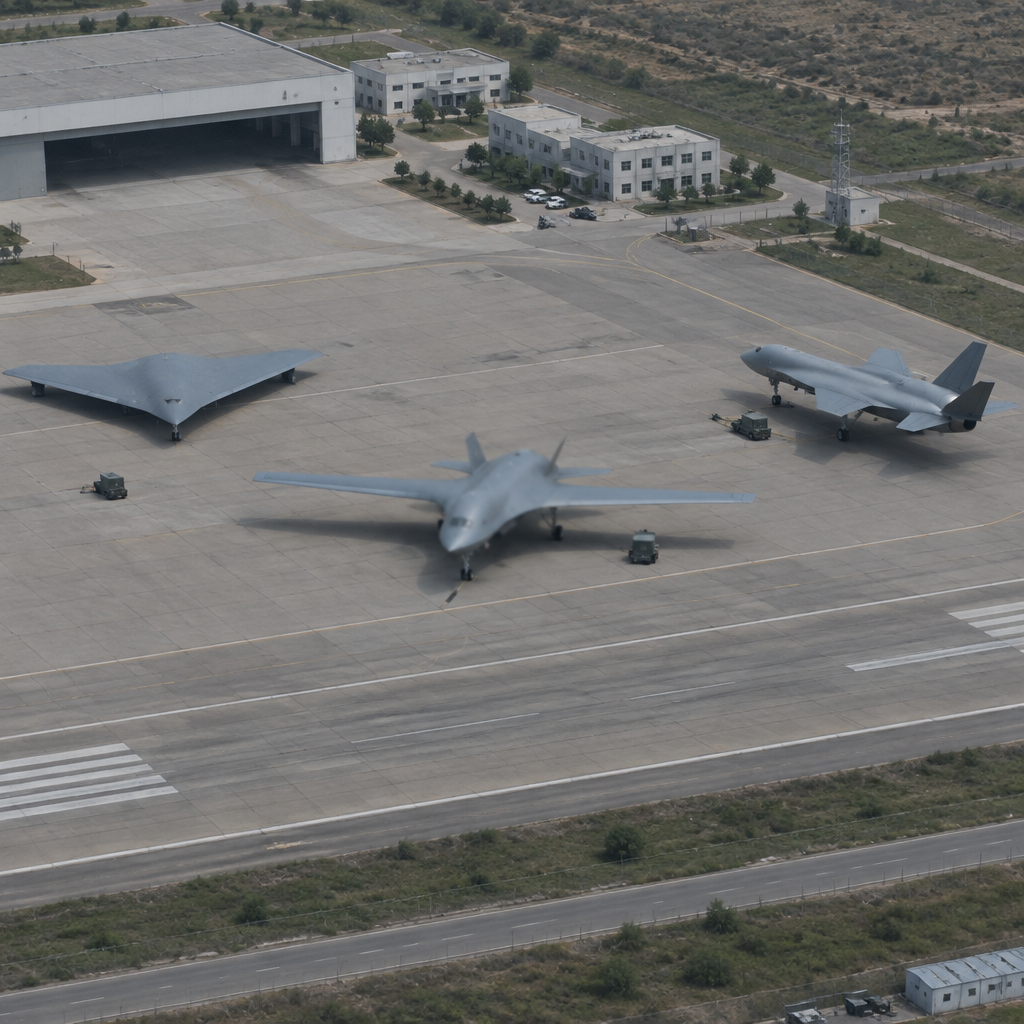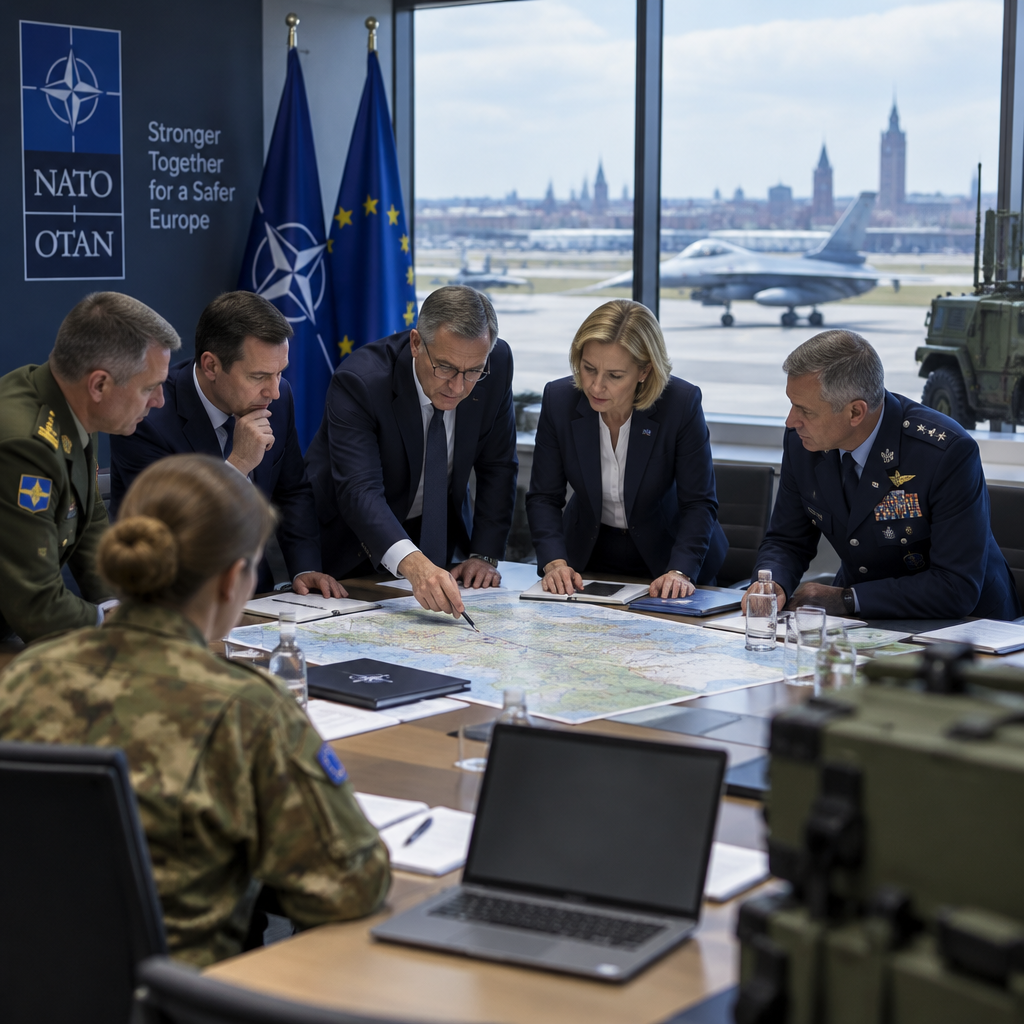
"Putin has been landing drones in Poland and a couple of little missiles, by mistake," President Trump said — a remark aired hours before two more Russian missiles and a suspected drone came down in Poland on Friday. The comment, and the broader diplomatic backdrop around it, framed a week in which European leaders, NATO officials and Ukrainian partners doubled down on preparing for further Russian aggression.
NATO leaders commit 70 billion euros and the EU’s parallel aid
In Berlin this week, the leaders of Germany, France and Britain reaffirmed NATO’s pledge to provide 70 billion euros’ worth of military equipment, assistance and training to Ukraine this year — and to deliver at least that much again in 2027. Separately, the European Union has promised to lend Ukraine 60 billion euros for defense and 30 billion euros for budget support through the next year. Those figures frame the financial backbone of Europe’s current approach to supporting Kyiv.
Trump’s phone call from Air Force One and divergent impressions
On Thursday, President Trump phoned European leaders from Air Force One and reportedly questioned their plans to spend more billions on Ukraine. One interlocutor described the call as a “tirade,” though a U.S. official countered that the suggestion Trump had told leaders to stop funding Ukraine was “not accurate.” The same day Trump warmly greeted Vladimir Putin as “my friend,” then publicly downplayed the significance of recent Russian incursions into NATO territory.

Audit-ready is a season. It shouldn't be.
Evidence in spreadsheets, controls drifting between audits, frameworks multiplying on flat headcount. Nubivance runs continuous compliance on Rapid7 Cyber GRC - SOC 2, HIPAA, ISO 27001, PCI, CMMC.
End the scrambleRussian hybrid activity: drones, missiles and cyber pressure
Allied officials and Ukrainian sources described a pattern of hybrid operations aimed at testing and intimidating NATO. Paweł Ksawery Zalewski, secretary of state at Poland’s Ministry of National Defence, said in September that the region is “in phase zero” of a war Russia initiated, with drone incursions, sabotage and other actions that can prepare the ground for further operations. French Adm. Pierre Vandier, NATO’s Supreme Allied Commander Transformation, warned at the NATO Edge conference that Russian “cyber attacks against our infrastructure” are intended to challenge social cohesion and intimidate allies. Alik Kasman, chief strategy officer at the Peace Through Strength Institute, said Russia uses such operations to “discredit NATO” by flying drones and testing allied responses.
NATO Edge, technology ties, and battlefield lessons from Kyiv
At the NATO Edge conference in Izmir, officials, defense firms and Ukrainian representatives pushed to deepen technological ties and adapt lessons from Ukraine’s battlefield experience. Vandier said alliance members are increasing spending on intelligence, surveillance and reconnaissance to detect incoming drones and missiles and are working to coordinate military and civilian responses. In a notable example of tech cooperation, UK defense companies in September became the first foreign firms allowed to access Avengers Labs, a Ukrainian Defense Ministry platform for training AI models on data collected directly from the battlefield.
How NATO, Ukraine, and European defense companies are responding
- NATO and European governments: Increasing funding for ISR (intelligence, surveillance and reconnaissance), training and civil–military coordination to spot and respond to drone and missile incursions, according to French Adm. Pierre Vandier’s remarks at NATO Edge.
- Ukraine and its Defense Ministry: Sharing battlefield data and platforms such as Avengers Labs with allied firms to accelerate AI-assisted training and defensive capabilities.
- European defense manufacturers: Deepening ties with NATO and Ukrainian partners to supply equipment, assistance and training connected to the billion-euro commitments made in Berlin.
Those steps are being taken even as political dynamics complicate the picture. The source notes that the Trump administration has lowered sanctions on Russia even while some U.S. envoys reportedly floated a proposal — reported by the Wall Street Journal — to add Ukraine to NATO on condition that Kyiv cede territory to Moscow, a condition Kyiv has rejected. French President Emmanuel Macron urged reopening the question of Ukraine’s accession to NATO in Berlin, saying the maximalist Russian position makes that reconsideration necessary; Russian Deputy Foreign Minister Sergei Ryabkov called any prospect of Ukraine joining NATO “unacceptable to us.”
The week’s facts — billion-euro pledges, intensified technology cooperation with Kyiv, admitted Russian probing operations and a public U.S. presidential dismissal of those incursions — together paint a region preparing for sustained pressure. European and NATO officials are channeling battlefield lessons and industrial capacity into surveillance, defense and civilian readiness even as diplomatic fault lines remain open between allies and Russia.
Link to original story: https://www.defenseone.com/threats/2026/11/europeans-ukraines-help-brace-more-russian-attacks/417389/