"GRU-ordered," Prime Minister Kristen Michal wrote on X, characterizing an overnight sabotage attempt against the Tallinn-based drone maker Threod Systems as ordered by the Russian military intelligence agency.
Prime Minister Kristen Michal's public allegation
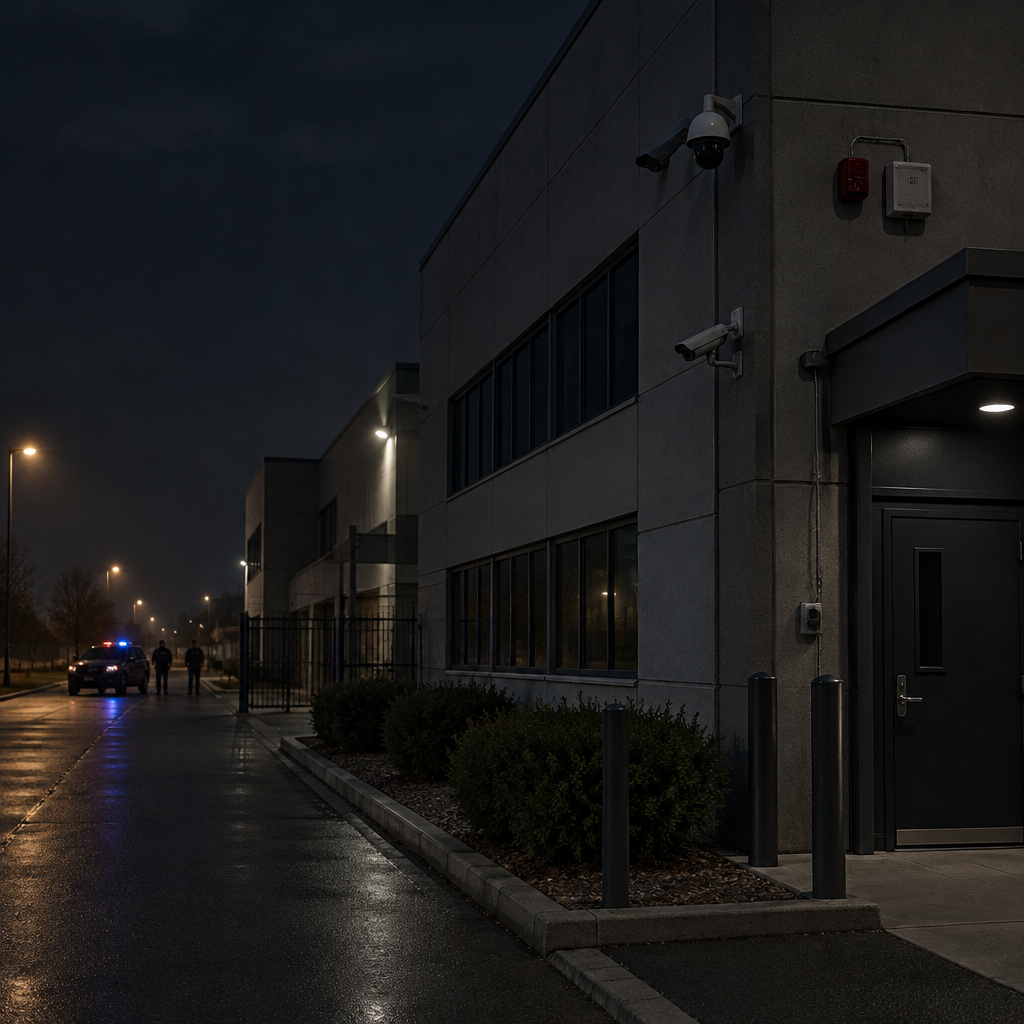
Michal said the incident, which took place during the night of Nov. 14, was aimed at causing an explosion and setting fire to Threod Systems’ building. He said heightened security measures helped prevent significant damage, that "the attackers have been detained," and that "we will not be intimidated." Michal framed the episode as part of "Russia’s broader hybrid war against Europe, with the aim of decreasing support to Ukraine and pressure on Russia."
Threod Systems: customers, operations, and immediate impact
The Tallinn-based company did not report injuries and, according to the prime minister, its production line was unaffected. Threod Systems told Breaking Defense in March that its most consequential customer is Ukraine, where "several dozens of its drones are used for reconnaissance and guiding artillery fire," and that the company also trains operators in the war-torn country. The Nov. 14 attempt echoes concern about attacks on suppliers that support Ukraine.

Audit-ready is a season. It shouldn't be.
Evidence in spreadsheets, controls drifting between audits, frameworks multiplying on flat headcount. Nubivance runs continuous compliance on Rapid7 Cyber GRC - SOC 2, HIPAA, ISO 27001, PCI, CMMC.
End the scrambleEstonian security agencies: arrests, warnings, and past incidents
Eight suspects have since been detained by the Police and Border Guard Board, the government said. The Estonian Internal Security Service issued a public warning "against even considering such job offers from Russia" and said the consequences for these actions "are serious." The episode follows an earlier case: during the night of Aug. 14 the Estonian defense company Milrem Robotics "was the victim of a fire sabotage attempt," and a month later the Estonian government said that "we can conclude with certainty that the arson attack… was an act of sabotage ordered by the special services of the Russian Federation."
Baltic foreign-policy move and the Russian response quoted in state media
In response to the incident, Estonia’s Foreign Ministry announced that all Estonian-Russian border crossing points would be closed as of Dec. 1, saying Moscow’s "attempts to intimidate or undermine our security will come with a price." The Kremlin did not issue a direct reply in the immediate aftermath; Russian News Agency TASS, reproduced by Kommersant, quoted Maria Zakharova, spokesperson for the Russian Foreign Ministry, saying the country is verifying the allegations and that "if these are their actual plans, they fit into another bout of aggressive and unrestrained Russophobia."
What this means for Estonian security teams, European policymakers, and defense companies
- Estonian security teams: The arrests and public warnings indicate domestic agencies are treating sabotage as a law-enforcement and counterintelligence priority; the Internal Security Service’s statement signals an active effort to deter insider recruitment and warn potential collaborators.
- European policymakers and regulators: The Foreign Ministry’s decision to close all Estonia–Russia border crossing points as of Dec. 1 shows how such incidents can prompt rapid diplomatic and border-control measures, raising immediate logistical and political consequences beyond the crime scene.
- Defense companies supplying Ukraine: The government and industry calls for increased vigilance noted in reporting on this series of incidents underscore that suppliers with identifiable ties to Ukraine—like Threod Systems and Milrem Robotics—remain potential targets and are likely to prioritize hardened physical security and incident response planning.
For now, the immediate human toll is reported as zero and manufacturing at Threod Systems continues, while eight suspects are detained and Tallinn has moved to close border crossings with Russia. The episode reinforces a pattern of alleged sabotage against European defense suppliers cited by Estonian officials and invitations from security agencies to take threats seriously. The next concrete markers to watch are any official investigative findings that attribute the operation more narrowly, public details on the detained suspects, and how the announced border closures are implemented on Dec. 1.