Australia is investing up to A$7 billion in directed-energy counter-drone capabilities over the next decade.
How lasers currently defeat Shahed-class strike drones
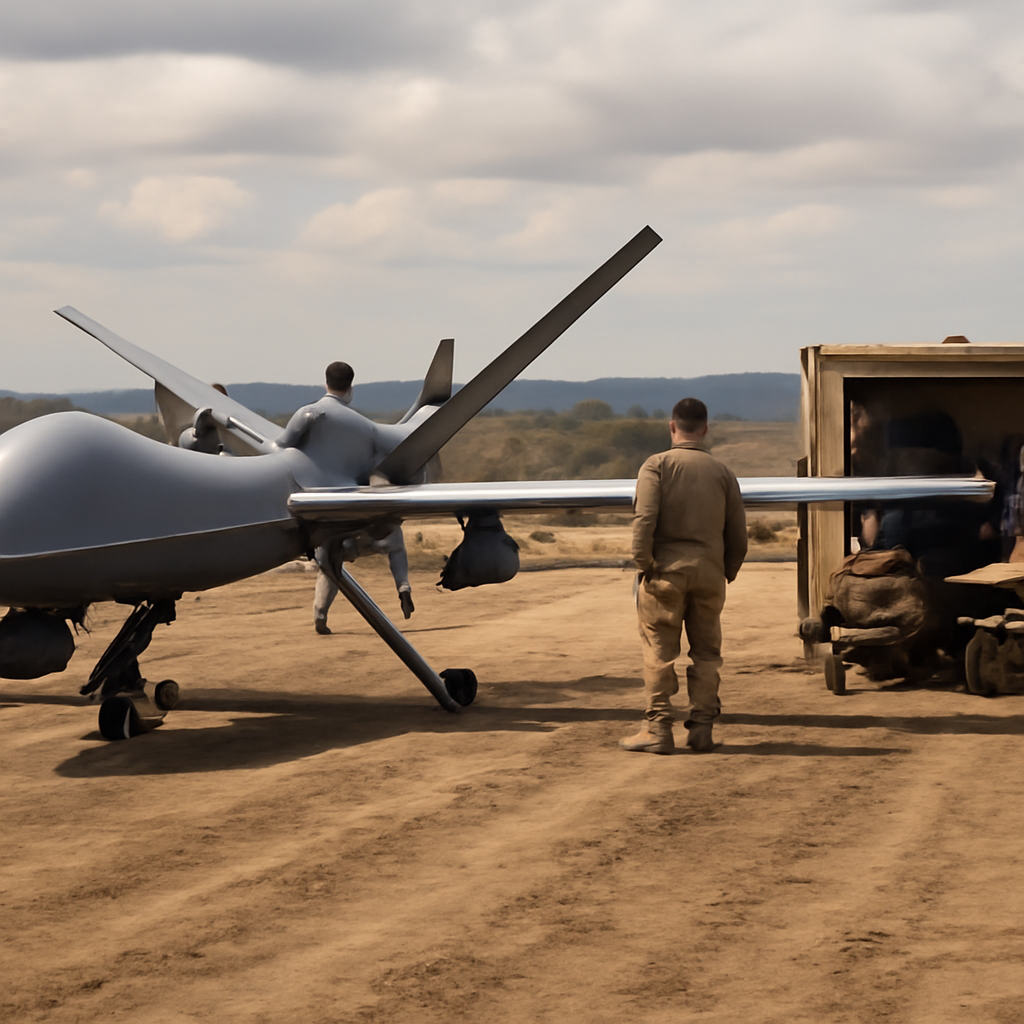
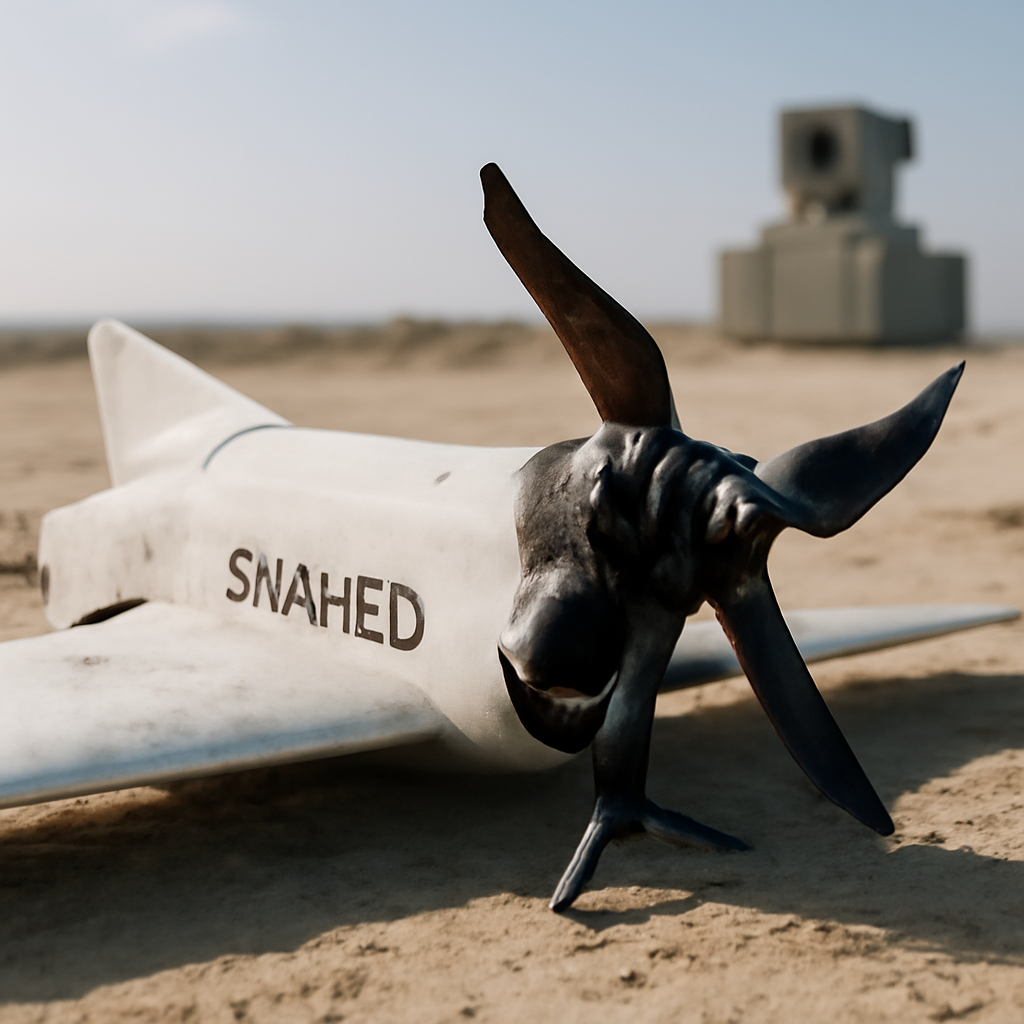
The basic vulnerability a laser exploits is simple: concentrate enough heat into a small spot for long enough to cause a material failure — a softened wing skin, a buckled spar or a broken propeller. The source uses the Shahed-class strike drone as the prime example of a propeller-driven cruise missile that can be defeated this way. Shipboard lasers that can engage at about 10 km put that failure window into a practical timeline: a jet-powered strike drone at 600 km/h closes 10 km in about a minute, during which atmospheric heating and water vapour already reduce some laser energy. When drones fly low, behind hills or under trees, the engagement time can be much shorter than a minute.
Stage 1: surface measures — ceramic topcoats and simple counter-moves
Fire-protection measures used on buildings translate directly to the first line of defence for a drone. Reflective coatings and paints used to cut air-conditioning loads on Australian rooftops can likewise reflect most near-infrared light at wavelengths typical of solid-state combat lasers. These ceramic formulations can be applied without changing outward appearance — they are compatible with a standard matte-black finish and are transparent to radar, unlike emergency survival foil that would betray a drone to radar.
Reflecting most of the beam back keeps heat from entering the skin. If some energy does pass through, a modest auxiliary countermeasure — a small camera that detects heating and triggers a lateral oscillation to present another wing edge to the beam — can repeatedly restart the laser’s “dwell time,” further lengthening the time required to cause local failure.

Audit-ready is a season. It shouldn't be.
Evidence in spreadsheets, controls drifting between audits, frameworks multiplying on flat headcount. Nubivance runs continuous compliance on Rapid7 Cyber GRC - SOC 2, HIPAA, ISO 27001, PCI, CMMC.
End the scrambleStage 2: structural measures — gypsum, aluminium foam and intumescent paints
Construction materials that protect buildings against prolonged fire can be adapted inside airframes to prevent catastrophic temperature rises after heat penetrates the skin.
- Gypsum/plasterboard: Gypsum sets from a slurry and contains crystallised water; when heated, that water turns to steam and absorbs energy. The article proposes using the wing’s leading-edge cavity as the mould, pouring gypsum slurry so it bonds to the inner surface and uses the same phase-change mechanism that fire-rates walls.
- Open-cell aluminium foam: Used in industrial laser-safety beam dumps, the metallic sponge spreads heat laterally across porous internal surfaces rather than allowing a laser to concentrate on one spot. The foam’s conductive surfaces, when molten, become reflective and make local penetration far harder.
- Intumescent paints: Routinely used to fire-rate structural steel, these expand into a thick, low-conductivity char when heated. On a wing spar, the hotter the beam, the thicker the resulting insulating layer — a self-reinforcing protection where it is needed most.
Economic and production realities: A$7 billion versus a few hundred dollars
The story frames a sharp asymmetry. The weapons being purchased — shipboard directed-energy systems — cost millions apiece and are part of an up-to-A$7 billion procurement effort. By contrast, a baseline hardening package that includes ceramic topcoat, a gypsum leading edge, aluminium foam and an intumescent spar coat would add a few kilograms and cost a few hundred dollars per drone at production scale. That extra weight would likely come from payload or fuel, yet still leave an effective weapon.
Production tempo matters. The article cites Russia’s Alabuga facility as producing hundreds of Shahed-class drones per week and iterating design changes in cycles of four to 16 weeks. A hardening modification based on construction physics is the sort of change that could be absorbed in a single quarter on a production line.
What this means for Australian procurement, drone manufacturers, and military operators
- Australian procurement: The article argues Australia’s directed-energy procurement should be tested against drones that have incorporated readily available building-industry protections, not only against existing, unmodified targets.
- Drone manufacturers: Cheap, civil construction materials are on the shelf and well understood by fire engineers; incorporating reflective coatings, gypsum fills or intumescent layers can add survivability for a low incremental cost and modest weight.
- Military operators: The economics that justify lasers today — a cheap beam versus an expensive missile — assume targets remain easy to disable. Hardened drones, even if only one or two measures are applied to critical parts of the airframe, could outlast a one-minute engagement and arrive in synchronized waves, eroding that cost calculus.
The building industry has already solved the problem of keeping structures intact under intense heat: the materials are on the shelf, and the knowledge is in every fire engineer’s training. If that knowledge has not yet reached drone designers, it will — and that reality is the test Australia’s directed-energy purchases should now meet.