“How do we prepare for a battlefield where drones, not soldiers, carry the lifeline of logistics?” This question hung in the air over Rome as military experts from 15 European Union Member States convened this week under the aegis of the European Defence Agency (EDA). Their mission: to test and evaluate emerging drone logistics technologies that promise to revolutionize ground combat operations and the future of soldier systems.
In an era defined by rapid technological advances and evolving threats, the European Union is navigating uncharted terrain. The gathering took place within the framework of the EDA’s Capability Groups focused on Ground Combat Capabilities and Future Soldier Systems, reflecting a deliberate pivot toward integrating unmanned systems into frontline support roles. According to the EDA, these discussions included comprehensive evaluations on countering ground drone threats, a nod to the increasingly complex battlefield environment where adversaries may deploy hostile drones alongside conventional forces.
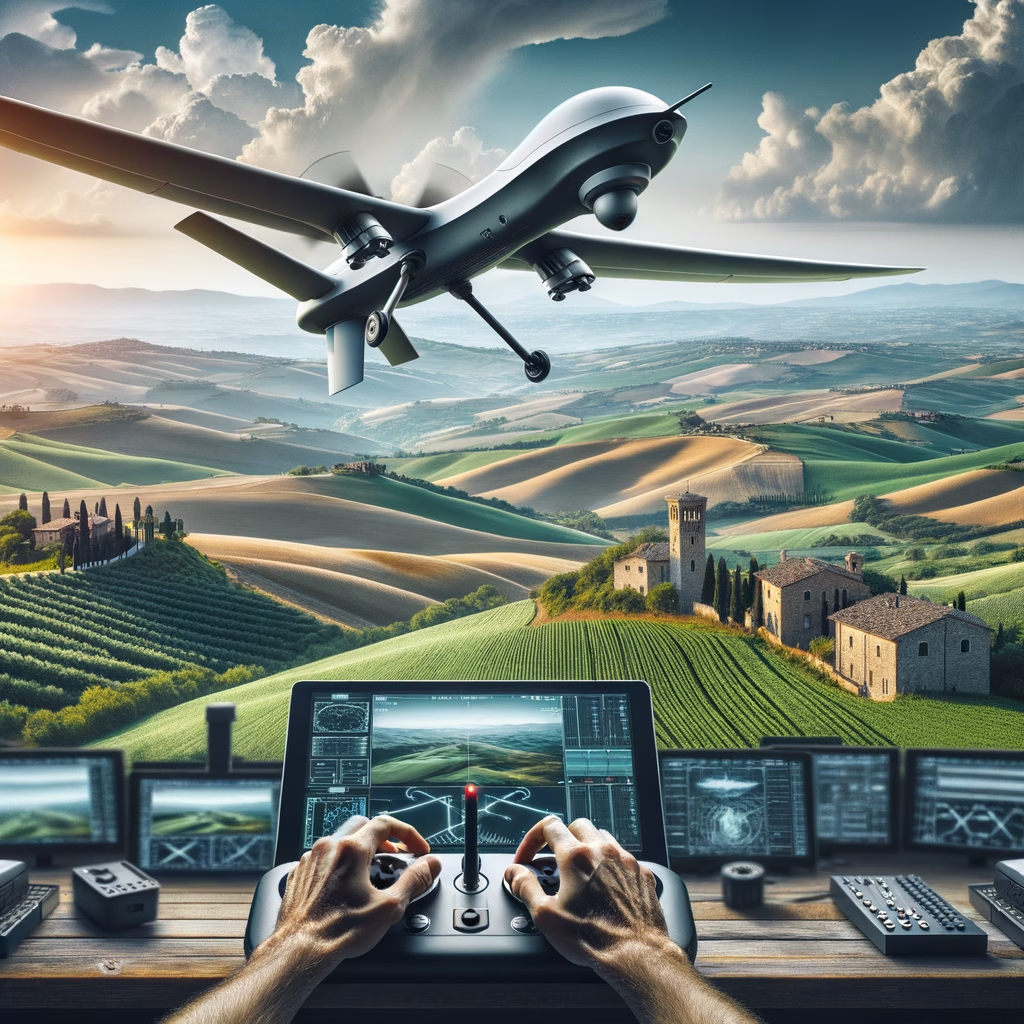
The meeting in Italy was not a mere demonstration of drones ferrying supplies; it was a crucible for testing critical logistic applications that could redefine military supply chains. Ground troops face persistent challenges in hostile or inaccessible environments where traditional vehicle convoys risk ambush or disruption. Autonomous drones, capable of delivering ammunition, medical supplies, and other essentials, offer a potential lifeline that could enhance operational agility and reduce human exposure to danger.
From a technological standpoint, the stakes are high. Experts from across the EU explored how to achieve seamless integration of drones with existing command-and-control frameworks, ensuring reliability, secure communication, and interoperability across member states. Dr. Anne-Marie Jensen, a robotics specialist affiliated with the Technical University of Munich, remarked, “The success of these tests lies not only in the hardware but in the networked coordination that enables drones to respond dynamically to ground forces’ needs.” The trials emphasized autonomous navigation in varied terrain, payload optimization, and rapid deployment under simulated combat conditions.
Policy analysts watching this development point to broader strategic implications. The European Defence Agency’s initiatives underscore a collective will to bolster EU military capabilities amid a complex security landscape marked by hybrid warfare and asymmetric threats. Thomas de Waal, a senior analyst at the European Council on Foreign Relations, notes, “By investing in drone logistics, the EU is not merely catching up with technology trends but attempting to future-proof its ground forces. This could serve as a deterrent by complicating adversaries’ operational calculus.”
However, such technological advancements raise challenging questions. There is the risk that reliance on autonomous systems might generate vulnerabilities, particularly regarding cybersecurity and electronic warfare. Opposing forces with the capability to hack or jam drone communications could undermine logistic chains, potentially paralyzing operations. Moreover, ethical and legal considerations about autonomous supply systems operating in contested zones remain subjects of ongoing debate among EU policymakers and international law experts.
End users—the soldiers on the ground—often view these technologies through a pragmatic lens. Lieutenant Colonel Marco Rossi of the Italian Army, participating in the tests, emphasized the operational benefits: “Anything that reduces the burden on logistics convoys and enhances our capacity to sustain fighting units in isolated environments is a game-changer. Yet, trust in these systems must be earned through rigorous testing and proven reliability.”
As the EU defense community continues to invest in drone logistics and future soldier systems, the Rome tests mark a pivotal chapter in military modernization. They embody a synthesis of innovation, strategic foresight, and collaborative spirit among EU member states. But the evolving nature of warfare also reminds us that no technological leap is without its perils.
Will drone logistics become the backbone of European ground forces, or will adversaries’ countermeasures neutralize these advances? The answer remains to be written in the crucible of future conflicts, where the balance between technology and human resilience will once again be tested.