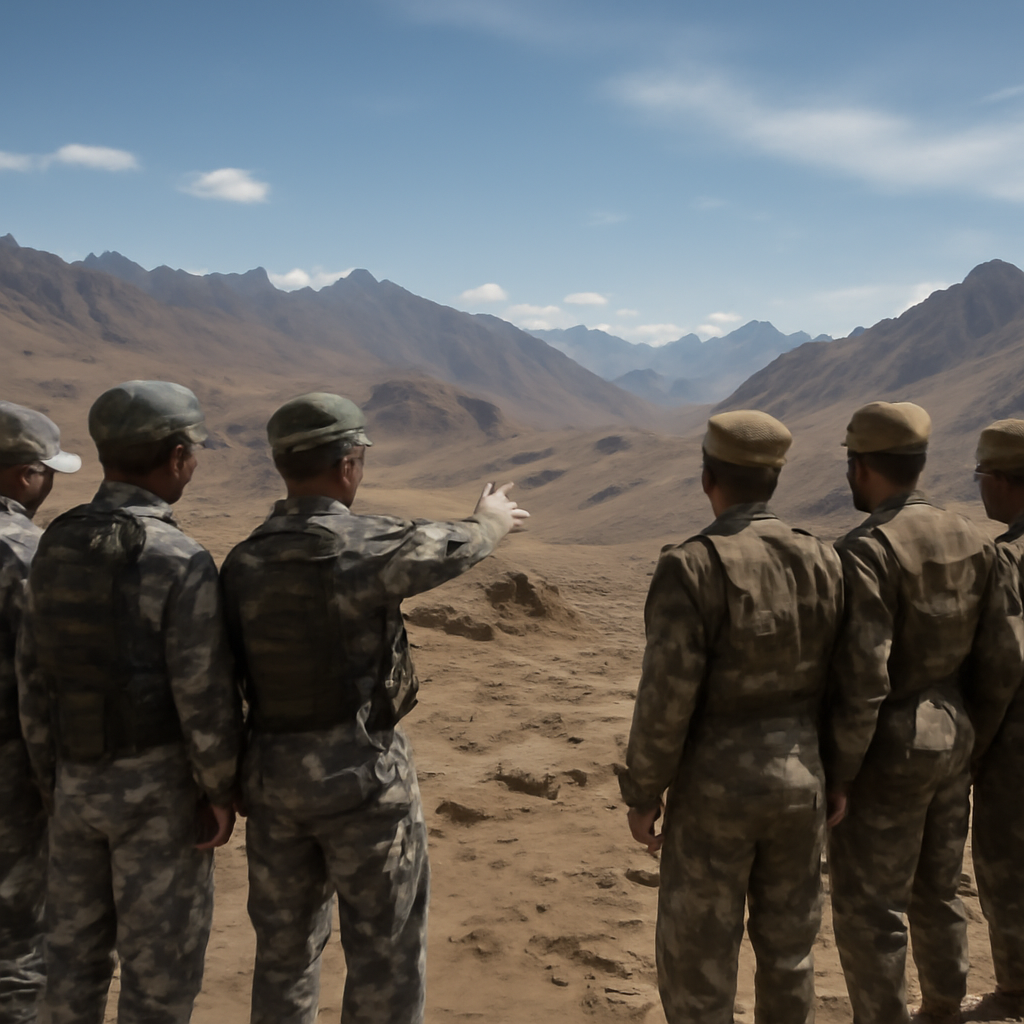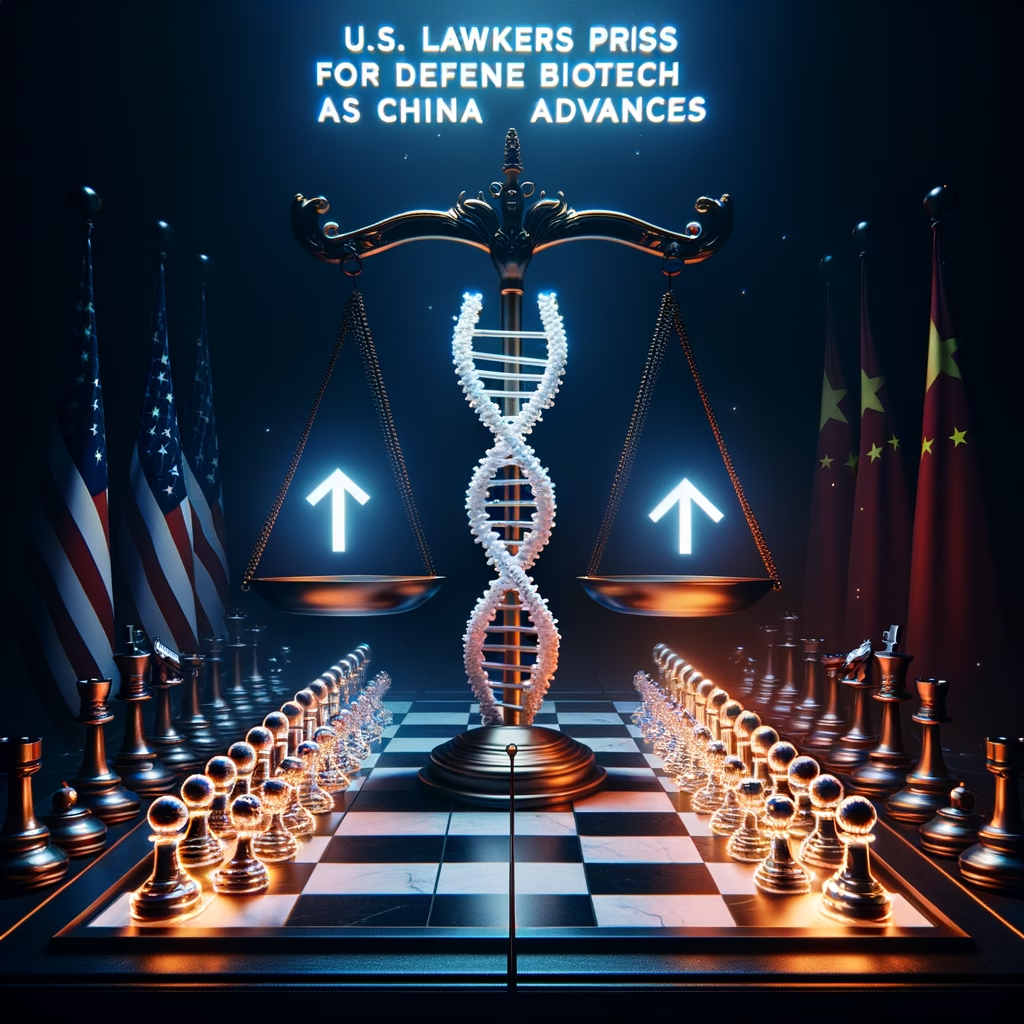
Which matters more: staying ahead of an emerging rival’s scientific momentum, or ensuring that the United States develops biology-based tools under the guardrails of safety, ethics and law? That is the dilemma U.S. lawmakers say they confront as China accelerates investments in biotechnology that could alter the character of military capability and medical response alike.
Legislators on both sides of the aisle are pressing for a stepped-up U.S. defense biotech effort — not only because of strategic competition with Beijing, but because the technologies on the horizon promise to change how wars are fought and how battle casualties are treated. Innovations discussed in recent congressional briefings and industry forums include shelf-stable blood for far-forward medics, biological camouflage that could mask personnel or materiel from biometric detection, and battlefield biosensors able to distinguish pathogens or chemical agents in real time. These are not science-fiction fantasies; they are active research priorities across government labs, universities and industry.
The context is straightforward. China has boosted funding and centralized programs in synthetic biology, gene editing and bio-manufacturing, aiming to turn basic discoveries into economic and military leverage. U.S. lawmakers, alarmed by that trajectory, are urging Defense Department agencies and congressional appropriators to ramp up research, accelerate commercialization pathways and harden supply chains for critical biological materials. Defense One recently detailed those calls for increased defense biotech research as China pursues breakthroughs.
Why biotechnology? Because biology can be both a force enabler and an operational vulnerability. On the enabling side, biological solutions can make the force more resilient and lethal in nontraditional ways: rapid-response biosensors reduce uncertainty in contaminated environments; biologically derived materials may be lighter, more adaptive and less dependent on brittle global supply chains; and medical advances such as long-shelf-life blood products could save lives when evacuation timelines are measured in hours rather than minutes.
On the vulnerability side, the same advances lower technical barriers to manipulation of living systems, raising dual-use and security concerns. Policymakers and biosecurity experts warn that investments in civilian biotech ecosystems, if not paired with robust oversight, can accelerate capabilities that adversaries might repurpose. That tension — between accelerating useful innovation and preventing misuse — sits at the center of current debates in Congress and within federal agencies.
Several institutional actors are already involved. The Defense Advanced Research Projects Agency’s Biological Technologies Office, the Defense Department’s broader research enterprise, and a range of Navy and Army science offices have pursued projects ranging from biologically inspired materials to portable diagnostics. The White House Office of Science and Technology Policy, federal research agencies and regulators such as the National Institutes of Health and the Food and Drug Administration influence how discoveries move from bench to battlefield or bedside. Industry, including biotech startups and large defense contractors, provides the commercial muscle for scaling and fielding innovations.
Stakeholders offer different emphases on how to proceed.
/ Technologists argue for faster prototyping and clearer pathways to test and deploy promising platforms, saying that delays in procurement and regulatory uncertainty stifle the very innovation the U.S. must harness.
/ Policymakers in Congress stress the need for consistent, multi-year funding and stronger coordination between civilian and defense research agendas to avoid duplicative efforts and to protect critical supply chains.
/ Military users — medics, special operations forces, and logistics planners — want solutions that work in austere environments: products that survive transport, require minimal refrigeration, and integrate with existing training and doctrine.
/ Biosecurity experts call for robust oversight mechanisms, stricter export controls where appropriate, and investments in detection, attribution and response to reduce the risk of accidental or intentional misuse.
The arguments converge on a few practical imperatives. First, the U.S. needs a sustainable talent pipeline: scientists conversant in both biological science and the particular constraints of defense deployments. Second, the country requires modernized infrastructure — high-containment labs, secure manufacturing capacity for biologics, and diversified supply lines for reagents and equipment. Third, governance must keep pace: export controls, research-security screening, and ethics guidance should be calibrated so they do not unduly hamper benign research but still mitigate the greatest risks.
There are hard trade-offs. Tighter controls and more security screening can slow collaboration with trusted international partners and chill basic science. Rapid fielding to meet an adversary’s progress risks insufficient testing and unknown downstream consequences. Lawmakers weighing these choices are therefore pushing a blended approach: expand defense-focused investment while strengthening oversight, and create mechanisms to translate civilian breakthroughs into mission-ready systems without sacrificing safety and ethical norms.
Critics of an aggressive defense biotech push raise other cautions. Some public-health professionals fear that military-oriented funding could skew the research agenda away from broader medical needs, with long-term implications for public trust in science. Civil liberties advocates warn about surveillance and biometric technologies that could be repurposed for domestic use without adequate safeguards. Economists and industrial-policy analysts point out that sustainable leadership will require not just government cash but a nurturing environment for startups, predictable procurement, and intellectual-property protections that encourage private investment.
For adversaries, the rise of defense biotech presents both an incentive and a vulnerability. Nations seeking asymmetric advantage may pour resources into biological R&D to bypass conventional deterrents. Yet, as capabilities diffuse, those same nations become more exposed to biological risks they can neither control nor easily defend against — a dynamic that incentivizes norms, agreements, and transparency even as competition intensifies.
Practically speaking, what might an accelerated U.S. defense biotech enterprise look like? Expect to see more public-private partnerships for prototype development, targeted appropriations for translational research, enhanced programs to create shelf-stable therapeutics and diagnostics, and pilot projects to assess “bio-concealment” or biosensor suites in field conditions. Equally likely are legislative and administrative moves to tighten vetting of foreign talent in sensitive labs, and to expand domestic biomanufacturing capacity for strategic materials.
Success will not be measured only by patents or prototypes. It will be judged by deployable, reliable systems that integrate with military logistics and medical care, by the resilience of health and supply chains, and by the integrity of oversight that prevents misuse while allowing life-saving innovation. The choices made today will shape whether biotechnology becomes a stabilizing advantage or a new front in strategic rivalry.
China’s push has injected urgency, but it should not force a binary choice between speed and caution. The challenge for legislators, scientists and operators is to cultivate a defense biotech ecosystem that is innovative, ethical and secure. If that balance proves elusive, the U.S. risks either falling behind in critical capabilities or sowing the seeds of new biosecurity hazards.
Is it possible to race ahead without losing our ethical way, to out-innovate an adversary while also keeping dangerous misuses at bay? That is the question lawmakers and scientists must answer, and the stakes are nothing less than future warfare, public health, and the rules that govern how humans wield biology.
Source: https://www.defenseone.com/technology/2025/10/lawmakers-call-more-defense-biotech-research-china-pursues-breakthroughs/408700/