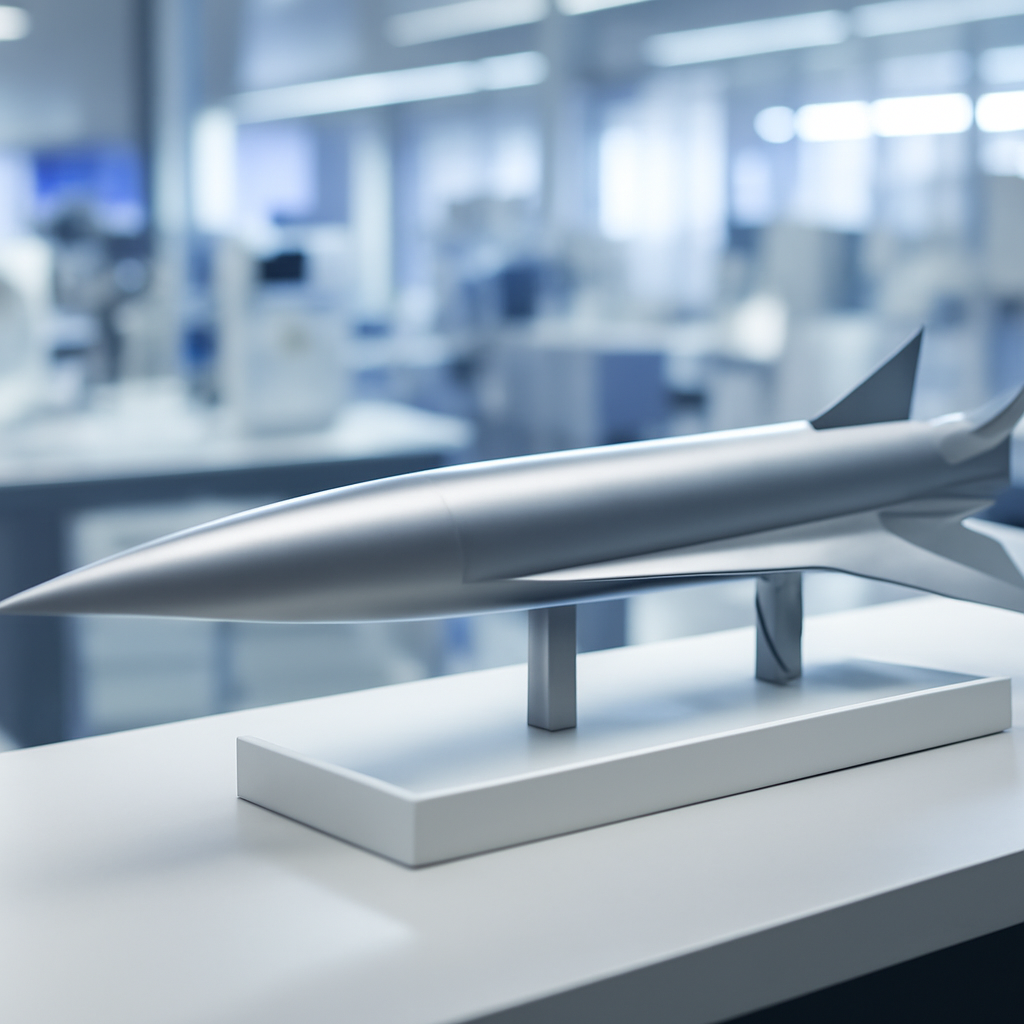
DARPA on Aug. 7 asked industry for “radical” ideas to deliver a next-generation hypersonic cruise missile that leaps beyond today’s incremental gains. The request for information frames the effort as a potential new DARPA program aimed at a full-up demonstrator and stresses a Design for Manufacturing and Assembly (DFMA) approach so promising concepts can move toward “affordable, high-rate production.”
DARPA’s stated objectives and manufacturing emphasis
The notice calls for a “revolutionary leap” in range, speed and altitude rather than modest performance improvements. It warns that prevailing air-breathing hypersonic concepts using scramjet engines “often achieve predictable, incremental gains in isolated performance metrics,” and that “legacy manufacturing processes” are commonly “too expensive and complex” to produce hypersonic weapons at scale. DARPA explicitly asks responders to embrace DFMA “from the outset” to demonstrate a realistic path from demonstration to production.
Air-breathing approach and how it maps to existing programs
DARPA’s request aligns with an air-breathing cruise missile concept, which—unlike boost-glide hypersonics—operates within the atmosphere and typically flies low to evade sensors. The notice contrasts the two broad hypersonic families: boost-glide systems that separate from a rocket booster and “skip” toward a target on descent, and air-breathing systems that rely on atmospheric propulsion.
The notice notes the similarity to the Air Force’s Hypersonic Attack Cruise Missile (HACM), and echoes previously stated Air Force reasoning that air-breathing cruise missiles are smaller than boost-glide vehicles and therefore offer more operational flexibility and broader launch options. The Pentagon is also pursuing boost-glide efforts: the Air Force’s Air-Launched Rapid Response Weapon (a boost-glide system) will be carried by bombers, and the Navy and Army share an overlapping boost-glide program, the notice adds.

Audit-ready is a season. It shouldn't be.
Evidence in spreadsheets, controls drifting between audits, frameworks multiplying on flat headcount. Nubivance runs continuous compliance on Rapid7 Cyber GRC - SOC 2, HIPAA, ISO 27001, PCI, CMMC.
End the scrambleThree focus areas: architecture, high-risk technologies, and testing
- Architectural concepts and integration strategies. DARPA wants system-level thinking about employment, size and launch modality. The notice lists potential form factors including a large external carriage for bombers, a smaller internal carriage, ground launch or even a palletized munition.
- High-risk, high-reward technologies. The agency seeks “unconstrained, radical new subsystem concepts” — not “modernization or incremental improvement.” Specific technology areas requested include high energy density fuels, propulsion advances and high-temperature materials capable of surviving hypersonic conditions.
- Innovative testing and evaluation. DARPA calls for novel test approaches to accelerate development, listing “autonomous telemetry, advanced data assimilation and novel range safety architectures” as examples that could produce a “quantum leap in overall program execution efficiencies.”
Industry engagement, program pathway, and schedule
The RFI, published Aug. 7, says responses are due Oct. 6 and that DARPA will hold an industry day in September to brief interested vendors. The notice encourages participation from non-traditional defense firms. DARPA signals there may be a competitive solicitation and that industry responses will inform whether the agency moves the effort into a formal program. The agency also notes the typical DARPA path: demonstrating new technologies with service partners who could subsequently fund and field systems—citing the Air Force HACM as an example that was heavily influenced by DARPA’s HAWC (Hypersonic Air-breathing Weapon Concept) program.
What this means for the Air Force, DARPA partners, and non-traditional vendors
- Air Force: The notice reinforces Air Force interest in air-breathing designs that are smaller and more flexible to field across a wider range of platforms—potentially changing deployment concepts if DARPA demonstrators prove viable.
- DARPA partners and services: Demonstrations could feed into service acquisition if a promising design emerges; DARPA explicitly frames the effort to allow a path from demonstration to production and notes its history of influencing service programs (for example, HAWC’s role in HACM).
- Non-traditional vendors: DARPA’s encouragement to participate and its call for “unconstrained, radical” concepts create an opening for firms outside the traditional defense supply chain to propose novel subsystems, manufacturing methods and test concepts.
The notice also sits against a backdrop noted in the document: a recent Atlantic Council study cited in the notice concluded the Pentagon is still behind China and Russia in fielding hypersonic weapons. DARPA’s solicitation therefore couples urgency with an explicit push for disruptive engineering and manufacturability rather than evolutionary development.
DARPA’s next concrete steps are set: an industry day in September and RFI responses due Oct. 6. Whether responses produce a viable path to a demonstrator—and whether that demonstrator can reconcile radical performance goals with DFMA-driven affordability—remains the central question the agency has posed to industry.