KC-135 serial 63-8017: from a midair collision to Tinker AFB
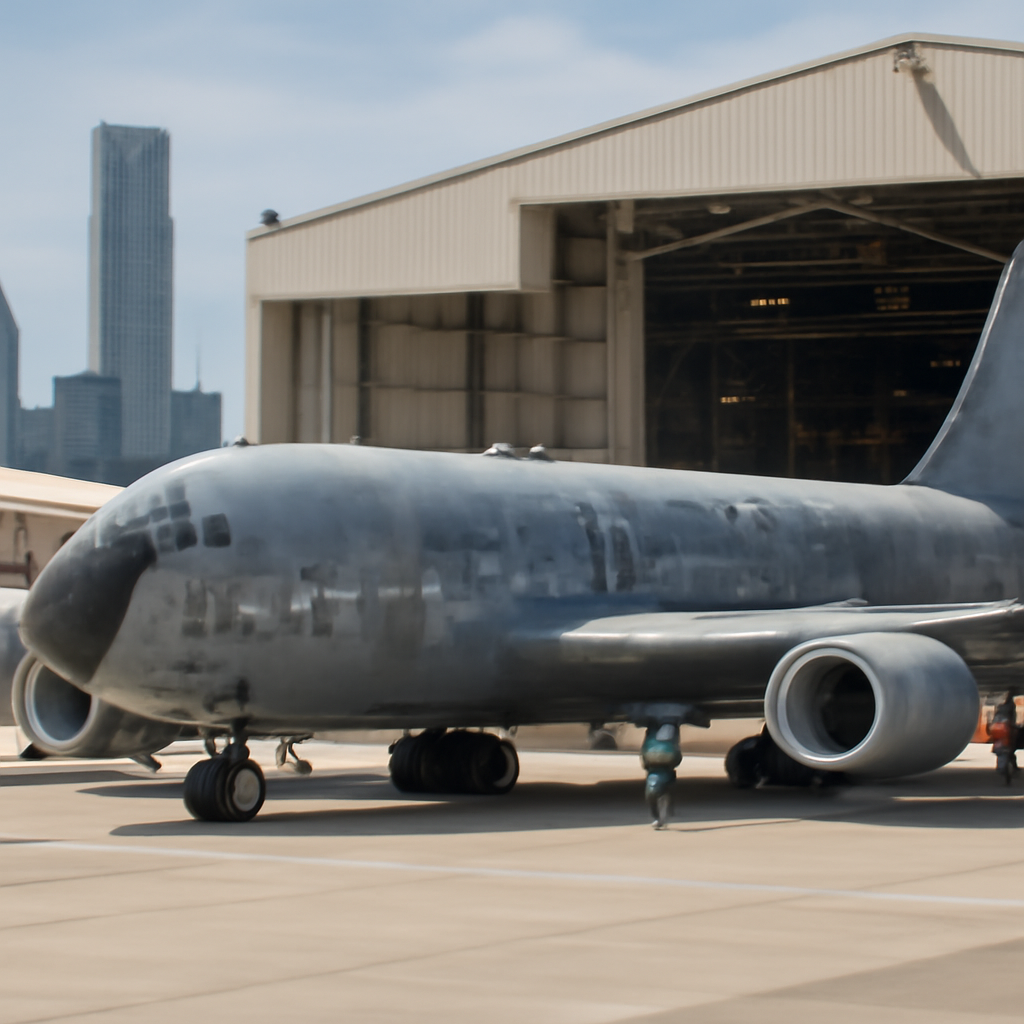
KC-135 Stratotanker serial 63-8017 — an aircraft assigned to the 314th Air Refueling Squadron at Beale Air Force Base, California — is now at the Oklahoma City Air Logistics Complex at Tinker Air Force Base for full repairs after it completed a transit from the Middle East and arrived at Tinker on Aug. 3. The jet was one of two tankers involved in a midair collision over Iraq on March 12. That collision killed the entire crew of the other tanker, which had the call sign Zeus 95; the six deceased crew members named in reporting were Maj. John A. Klinner, Capt. Ariana G. Savino and Tech. Sgt. Ashley B. Pruitt of the 6th Air Refueling Wing, MacDill Air Force Base, Florida, and Capt. Seth R. Koval, Capt. Curtis J. Angst and Master Sgt. Tyler H. Simmons (posthumously promoted) of the 121st Air Refueling Wing at Rickenbacker Air National Guard Base, Columbus, Ohio.
After the March incident, serial 63-8017 landed at Israel’s Ben Gurion Airport with significant damage — images from March showed roughly half its tail sheared off. On Aug. 2 the aircraft arrived at RAF Mildenhall in the United Kingdom with a replacement, donor tail; local photographer Andrew McKelvey documented its Mildenhall arrival. The aircraft subsequently departed Mildenhall and reached Tinker the next day.
Tinker AFB and the Expeditionary Depot Maintenance (EDMX) mission
Tinker houses the Air Force’s sole rapid Aircraft Battle Damage Repair (ABDR) capability for the tanker and bomber fleets through its Expeditionary Depot Maintenance (EDMX) capability. The Air Force described EDMX as “responsible for maintaining the Air Force’s sole source for Aircraft Battle Damage Repair (ABDR) rapid repair capabilities for the entire tanker and bomber fleets.”
EDMX teams have supported accelerated field repairs during recent operations: the service said the EDMX “completed more than 200 repairs over the course of three weeks,” producing effective patches that allowed damaged KC-135s to remain mission-capable and return to Tinker for comprehensive repairs.

This site is the portfolio.
OSINTSights runs on Cloudflare Workers, D1, R2, and Vectorize, with an AI pipeline on Hetzner ARM. Nubivance designed, built, and operates it. We do the same for clients.
See what we buildProgrammed Depot Maintenance: process, timelines, and uncertainty
The Air Force is treating 63-8017’s arrival as an induction into programmed depot maintenance (PDM), the scheduled, deep-maintenance cycle that combines inspections, upgrades and flight testing. A photo caption in reporting described PDM as a sequence in which “each KC-135 undergoes a series of inspections, upgrades to the aircraft, and a flight test to ensure proper functionality.”
The Air Force spokesperson noted that timelines “ultimately depend on the extent of any additional defects or engineering issues identified during the inspection portion of the programmed depot maintenance.” The current average for this regularly scheduled maintenance is 155 days, the Air Force said, but added it is “reasonable to assume the timeline may be extended based on findings.”
The service declined to provide details about how many aircraft have arrived at Tinker to be repaired after being damaged in the conflict with Iran or specifics about the work done on 63-8017 in Israel that enabled it to fly to Mildenhall and onward to Tinker.
Related damage across the region and fleet-level implications
Field repairs at forward locations were visible at RAF Mildenhall earlier this year: a KC-135, serial 59-1444 of the Ohio Air National Guard’s 121st Air Refueling Wing, arrived at Mildenhall on April 12 covered in patches over shrapnel damage, and later another Stratotanker, serial 63-8028 of the Alaska Air National Guard’s 168th Wing, arrived similarly patched. The reporting ties those repairs to Iranian strikes and to damage sustained during the wider U.S. conflict with Iran.
Reporting also counted the damaged tankers among at least 40 aircraft damaged or destroyed during the conflict; that tabulation was current through April 10. The Air Force has taken related actions at home: at the request of the KC-135 System Program Office, the 309th Aerospace Maintenance and Regeneration Group regenerated KC-135R tail number 58-011 and departed on April 2, 2026, en route to Tinker. The service declined to confirm whether that regenerated airframe was being used specifically to repair jets damaged during Operation Epic Fury.
On procurement and funding, Air Force Chief of Staff Kenneth S. Wilsbach told Congress in April: “We hope to be able to address this in a supplemental for the aircraft that we’ve lost,” and said procurement going forward would “increase the number of tails we have, especially in the fighter force, but it will also include bombers and tankers as well. So both the supplemental and the ’27 budget is supposed to address those losses.”
What this means for the 314th Air Refueling Squadron, Air Force logistics, and Congress
- 314th Air Refueling Squadron: One of its assigned KC-135s, serial 63-8017, is now in depot at Tinker for full repairs following emergency field work and a donor tail replacement — the aircraft’s return to operational status will hinge on PDM findings and timeline adjustments.
- Air Force logistics and EDMX crews: The EDMX model of field patching followed by comprehensive PDM at Tinker has kept damaged tankers flight-capable in the short term; the Air Force noted more than 200 field repairs over three weeks as evidence of that approach.
- Congress and acquisition planners: The service has signaled it will seek supplemental funding and budgetary measures to address lost aircraft, explicitly naming tankers among the platforms the Air Force expects to include in future procurement plans.
Field expedient repairs and a donor tail carried 63-8017 from an exceptionally damaging midair encounter in March to Tinker for depot work. How long the jet will remain in PDM — and how many other tankers will follow it through that door — now depends on inspections yet to conclude and on decisions in Congress about replacement and procurement funding.