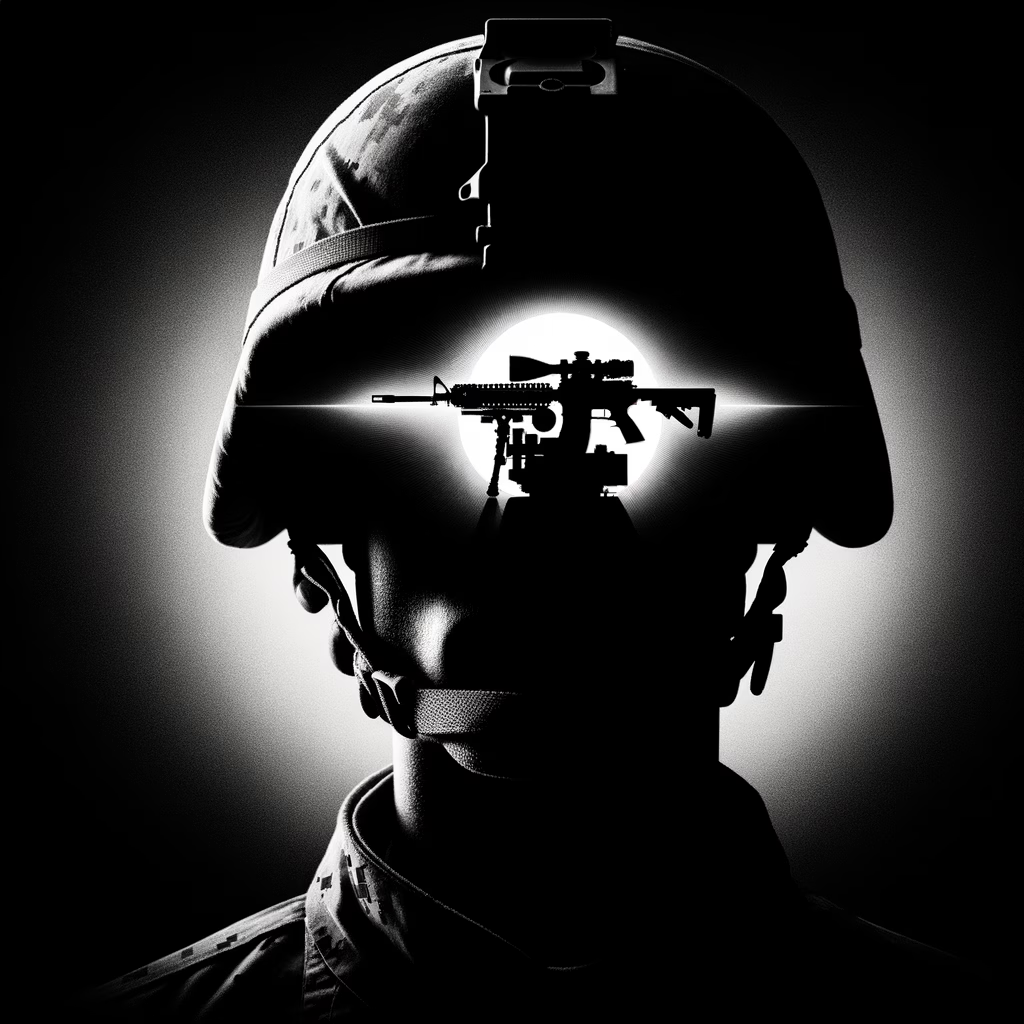
“How do you fight the future when your sights are stuck in the past?” This question encapsulates a crucial challenge facing modern militaries: keeping pace with the rapid evolution of battlefield technology. The recent adoption of Israeli-made computerized rifle sights by the United States Marine Corps (USMC) offers a glimpse into how defense forces are leveraging cutting-edge innovations to enhance combat effectiveness.
The USMC has placed a new order with SMARTSHOOTER Inc., the U.S. subsidiary of an Israeli defense technology firm, for its SMASH 2000L fire control systems. Announced publicly on Monday, the SMASH 2000L is SMARTSHOOTER’s lightest handheld fire control system and represents a significant leap forward in rifle sight technology. By fusing artificial intelligence, computer vision, and advanced tracking algorithms, the SMASH 2000L allows Marines to improve targeting speed and accuracy under challenging conditions.
Fire control systems like the SMASH 2000L are designed to digitally augment the aiming process. Unlike traditional rifle scopes, these computerized sights can track moving targets, compensate for environmental factors such as wind and distance, and even adjust automatically for shooter movement. This technological advance is the result of decades of research in defense applications, particularly in Israel, where the operational landscape has long demanded rapid adaptation to asymmetric threats.
The USMC’s choice to procure this Israeli technology underscores a continuing trend: U.S. forces are increasingly turning to allied innovations to supplement domestic development. Such partnerships are not without precedent. The Pentagon has a history of integrating foreign systems when they offer a clear tactical advantage. “The integration of advanced fire control systems like SMASH 2000L provides our Marines with enhanced situational awareness and increased lethality,” said a spokesperson for the USMC. “It’s about giving our warfighters the tools they need to survive and succeed on the battlefield.”
From the standpoint of military technologists, the adoption of computerized rifle sights addresses critical operational demands. Modern infantry engagements often occur in complex urban environments or at extended ranges where split-second accuracy can determine life or death outcomes. These systems enhance precision by offloading the cognitive burden from the shooter, allowing them to focus on the broader tactical picture.
Policymakers see the procurement as part of a broader effort to maintain technological superiority amid a competitive global arms landscape. With near-peer adversaries such as Russia and China investing heavily in countermeasures and artificial intelligence-driven weapon systems, upgrading individual soldier capabilities becomes imperative. The U.S. defense establishment’s willingness to integrate Israeli innovations also reflects the strength of the bilateral defense relationship, which is characterized by robust intelligence sharing and joint research initiatives.
Yet, this procurement is not without critics or challenges. Some defense analysts caution that increasing reliance on foreign technology could introduce vulnerabilities, whether through supply chain disruptions or cybersecurity concerns. “While foreign technology can provide near-term benefits, the long-term sustainability depends on rigorous integration and vetting processes,” commented Michael O’Hanlon, a senior fellow at the Brookings Institution. Additionally, frontline users must adapt to new equipment interfaces and maintenance protocols, which can affect operational tempo during transition phases.
From the adversary’s perspective, the introduction of smarter rifle sights changes the calculus on the battlefield. Enhanced accuracy and target acquisition may reduce the effectiveness of certain tactics that rely on obscurity or rapid engagement. However, it also likely spurs countermeasures, such as electronic warfare to jam or disrupt computerized systems, highlighting the ongoing cat-and-mouse nature of military technology development.
Ultimately, the USMC’s investment in the SMASH 2000L fire control system signifies more than a hardware upgrade—it reflects a commitment to integrating artificial intelligence and advanced computer vision into the very fabric of infantry combat. As weapons systems become smarter and more interconnected, the role of the individual soldier evolves alongside the machine, demanding new training, tactics, and strategic thinking.
In a world where milliseconds matter and precision can tip the balance of engagement, adopting these Israeli computerized rifle sights is a pragmatic step forward. But it also raises a fundamental question: In pursuing technological advantage, how do we ensure that human judgment remains at the center of decisions that mean life or death? The answer to that will define the future of warfare as much as any piece of hardware.




