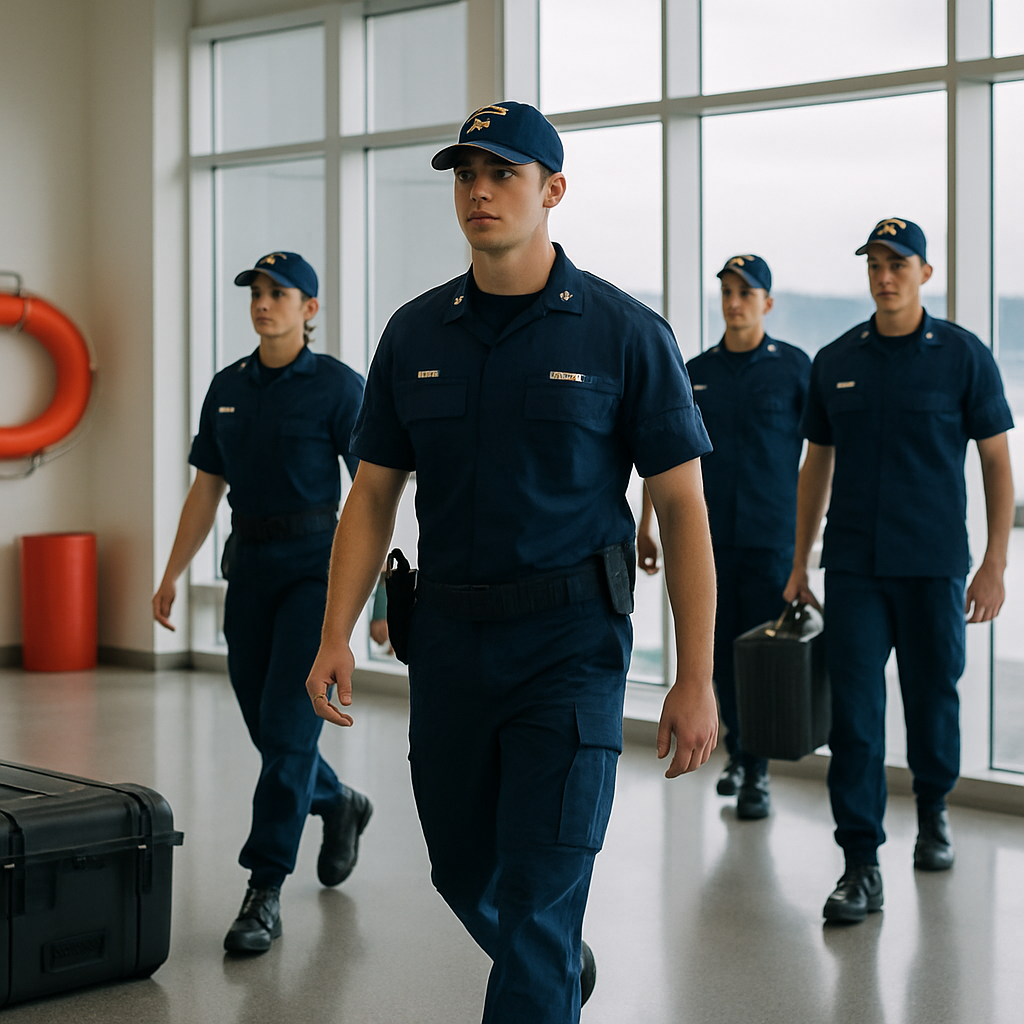
“We are forging our most elite operators into a single, razor‑sharp instrument of national power,” Adm. Kevin Lunday said, describing the Coast Guard’s new Special Missions Command as “not an administrative change; it is an investment ensuring these elite teams are the best trained, equipped, and organized force possible, ready to protect the Homeland and support the Joint Force.”
Why the Coast Guard created the Special Missions Command
The Coast Guard announced the creation of a Special Missions Command (SMC) to consolidate its “deployable specialized forces” under a single operational commander. The service framed the move as a response to an evolving geopolitical landscape and to rising demand for the service’s specialized capabilities. The announcement ties the change to an increased use of these units “for ship and drug interdictions around the globe” during the Trump administration, and highlights a broad set of missions that already put Coast Guard teams at the front lines — interdicting and seizing Iranian‑linked oil tankers in the Indian Ocean, chasing a sanctioned Russian oil tanker from the Caribbean across the Atlantic, reeling in large amounts of illicit drugs, enforcing immigration laws at sea, protecting U.S. ports, and participating in counter‑terrorism operations.
How the SMC will be organized and where it will be based
The Coast Guard says the SMC will “fully integrate the service’s Deployable Special Forces under a single operational commander to provide oversight and advocacy, improve readiness, mission effectiveness, and interoperability.” The service described the change as a shift “from a geographic model to a functional one,” arguing that a single command will provide the “full operational picture before any major incident occurs” and will separate force generation from mission execution. The SMC will be commissioned on Oct. 1 and headquartered at the Coast Guard’s C5I Service Center facility in Kearneysville, West Virginia.

The cyber insurance questionnaire just landed. Now what?
SOC 2, HIPAA, insurance renewals - someone has to own security strategy. Nubivance provides fractional CISO leadership without the full-time salary.
Get a security leadUnits included in the SMC and their missions
- Maritime Security Response Teams (MSRT) — “serve as the Coast Guard’s first responders to maritime terrorism and other high‑risk threats,” equipped to conduct critical maritime security and defense operations at home or abroad with partner law enforcement and joint services.
- Tactical Law Enforcement Teams (TACLETs) — provide law enforcement expertise across maritime response situations with a specific focus on counter‑ trafficking and criminal networks exploiting maritime transit zones.
- Maritime Safety and Security Teams (MSSTs) — rapidly deployable boat teams that provide port, waterway, and coastal security to safeguard the public, protect the marine transportation system, and respond to maritime crime, sabotage, and terrorist activity.
- Port Security Units (PSU) — provide shoreside and waterborne security including point defense of strategic shipping, designated critical infrastructure, and high value assets in joint and combined expeditionary warfare environments.
- Regional Dive Lockers — provide dedicated undersea capabilities for missions such as ensuring port and waterway security, maintaining aids to navigation, and conducting ship maintenance and repair, including in extreme environments like the polar regions.
- National Strike Force (NSF) — provides highly trained technical experts and specialized equipment to prepare for and respond to complex crises and natural disasters, including oil, hazardous substances, and chemical, biological, radiation and nuclear incidents.
Funding, manpower, and readiness changes
A Coast Guard spokesman told the reporting outlet that the proposed Fiscal Year 2027 budget includes funding to add 130 personnel “to manage the complexity of modern specialized missions,” and $20.8 million “to establish a command to unify the service’s specialized tactical communities, streamline training, doctrine, and equipment procurement to enhance readiness and global responsiveness.” The spokesman framed the SMC as streamlining force generation: in a complex port threat requiring MSRT, MSST, and NSF elements, the SMC would reduce the need to coordinate between two geographical commands and headquarters and “allow us to mobilize with speed.”
What this means for DHS, the Joint Force, and Coast Guard specialized teams
- The Department of Homeland Security (DHS) — the Coast Guard currently “falls” under DHS; the service says SMC centralizes oversight and advocacy for its deployable special forces, which DHS will rely on for high‑consequence maritime incidents and port defense.
- The Joint Force — the Coast Guard described the SMC as a mechanism to improve interoperability and to “support the Joint Force,” positioning the command as a unified hub for integration with other services in expeditionary and defense operations.
- Coast Guard specialized teams — leaders say the SMC will standardize training, readiness, and doctrine for deployable units, creating “a singular standard” intended to ensure teams are prepared to deploy “at peak readiness and interoperability for any emergent crisis.”
Capt. Robert Berry, the Special Missions Command pre‑commissioning team lead, described the SMC as “the natural next step” to enable specialized forces to “lead the way at the tip of the spear.” The Coast Guard has set a firm timetable — commissioning on Oct. 1 and a budget request for FY2027 that includes personnel and seed funding — leaving a clear sequence of implementation milestones to watch: budget approval, personnel growth, and the stand‑up of unified training, doctrine, and procurement under the new command. How quickly those changes translate into measurable increases in readiness and global responsiveness will be the central test of the SMC’s promise.
https://www.twz.com/sea/coast-guard-creates-its-own-special-operations-command