"a massive boom" echoed across Yuma Proving Ground, the Army's in-house news organ The Outpost reported — and engineers cheered shortly afterward, confirming what the service called a complete success. The event was not a missile flight but a live-fire test of a full‑scale hypersonic warhead launched from a cannon-based system, an approach the Army says could sharply lower the cost and increase the tempo of terminal‑effects testing for hypersonic weapons.
Yuma Proving Ground's live-fire demonstration
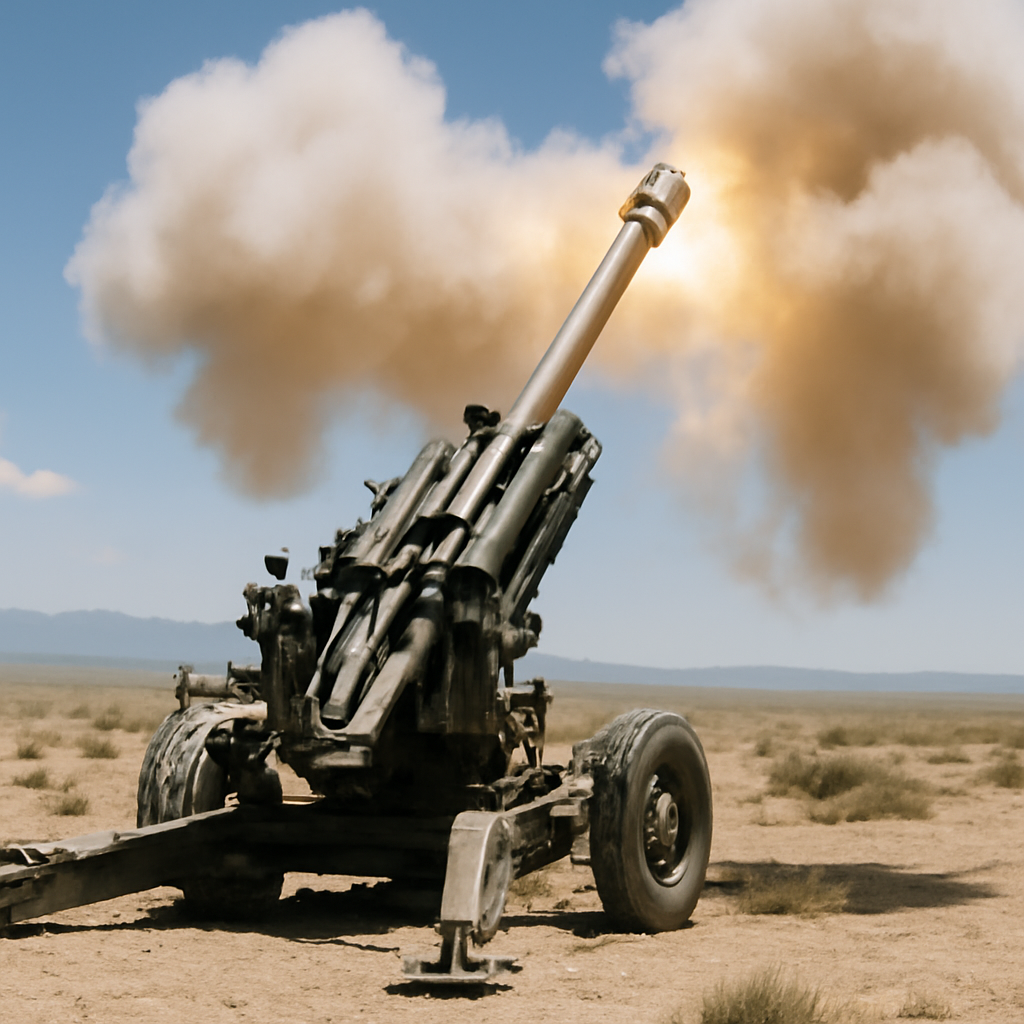
According to The Outpost, Yuma Proving Ground supported a full-scale, live-fire hypersonic warhead test using what the article described as a "cannon base test system." The test used a gun to accelerate the warhead to high speed prior to impact so that engineers could study lethality under controlled conditions rather than expend an entire missile or use an airborne launch platform. The Army defines hypersonic velocity as Mach 5 and above; the release did not disclose the velocity reached or the date of the firing.
Heavy Artillery Test System (HATS) and the canceled Strategic Long-Range Cannon (SLRC)
The photographs and reporting identify the gun used as the Heavy Artillery Test System (HATS), a system developed under the Strategic Long-Range Cannon (SLRC) effort. SLRC — once envisioned to deliver a very large rocket-assisted projectile to ranges of 1,000 miles or more — was canceled when Congress directed the Army to stop funding the weapon in the fiscal 2022 appropriations act. The Yuma firing employed a static gun mounting rather than the platform-style mount depicted in earlier SLRC concept graphics.

The cyber insurance questionnaire just landed. Now what?
SOC 2, HIPAA, insurance renewals - someone has to own security strategy. Nubivance provides fractional CISO leadership without the full-time salary.
Get a security leadDEVCOM‑AC, Lawrence Livermore and the launch package
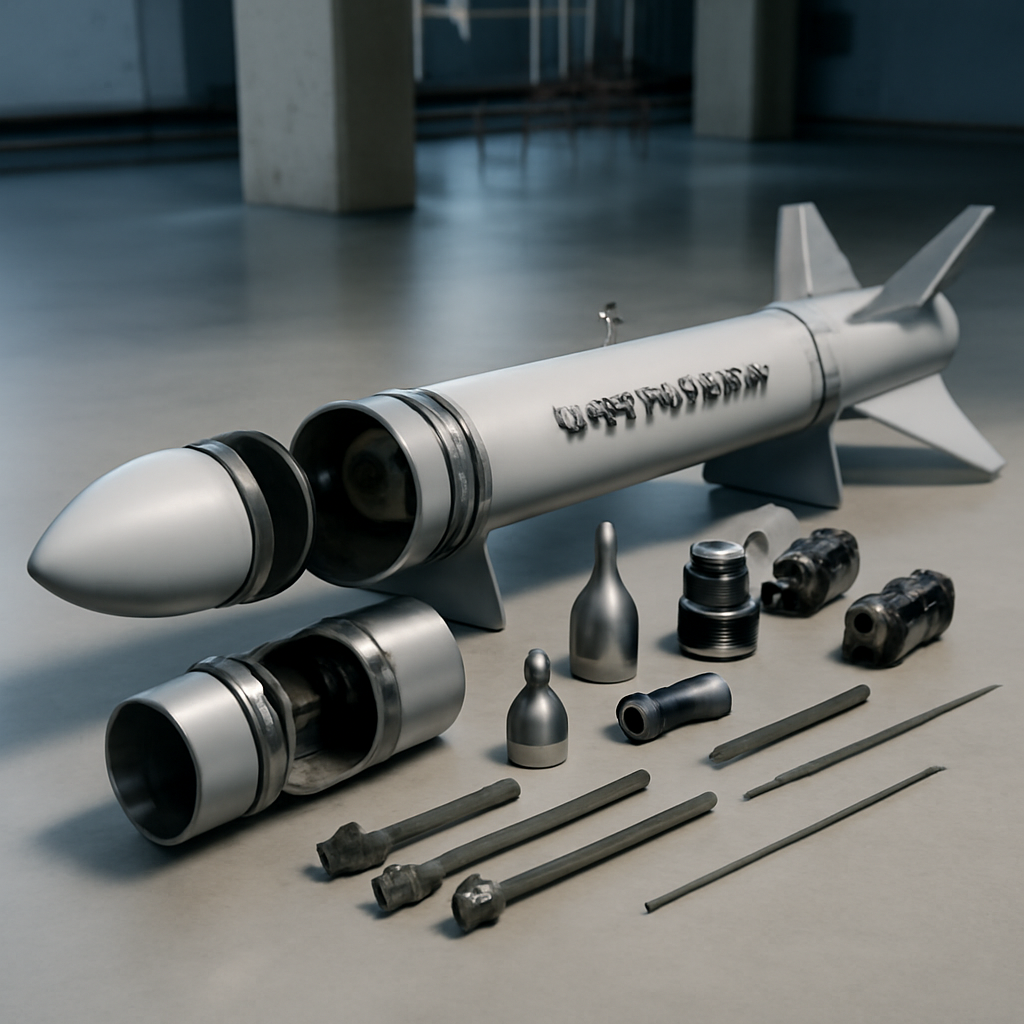
The test brought together researchers from Lawrence Livermore National Laboratory and the Army Combat Capabilities Development Command Armaments Center (DEVCOM‑AC). DEVCOM‑AC developed a specialized launch package designed to survive the extreme acceleration generated inside the gun barrel and incorporated a DEVCOM‑AC electronic safe‑and‑arm fuze. Engineers analyzed the internal ballistic forces the warhead would experience during launch, conducted an earlier inert proof‑of‑concept firing, refined designs, and then progressed to the live warhead event.
The Outpost described the firing sequence in detail: instrumentation checks and target preparation; positioning the launch package, arming the fuze, and loading the warhead and propelling charge; personnel withdrawing to protective bunkers while test officials monitored telemetry; the test director issuing the command to fire; and then, after "a massive boom," engineers reviewed high‑speed camera footage and — as the article put it — the silence was "quickly broken by loud cheers confirming a complete success."
Cannon‑launched surrogates versus missile flight tests
The Army framed the approach as a "high throughput, alternative method for assessing terminal effects at velocity and scale." The underlying rationale is financial and practical: hypersonic missiles and flight tests are costly, and a large‑caliber gun can reproduce at least some terminal conditions produced by hypersonic weapons without consuming a prototype missile or using airborne launch platforms that cost millions. The release says the demonstration has already attracted interest from multiple hypersonic programs considering the methodology for future test campaigns.
The Army contrasted the approach with other non‑end‑to‑end options already used across the services, such as rocket sleds. The Air Force in 2022 recovered a reusable rocket sled after it traveled at 6,400 feet per second — roughly Mach 5.8 — at Holloman Air Force Base. The Holloman High‑Speed Test Track (HHSTT) is about 10 miles long and is the only track capable of recovering sleds that reach hypersonic speeds via high‑speed braking; the Air Force’s Hypersonic Readiness program (HSR) began in 2020 and focused on a nine‑inch monorail sled with high‑speed braking capability.
What this means for hypersonic programs, test engineers, and procurement managers
- Hypersonic programs: Multiple programs have shown interest in incorporating cannon‑launched surrogates into test campaigns, using them to generate impact data earlier and more frequently in development.
- Test engineers and researchers: Teams will need to continue validating survivability of electronics, safe‑and‑arm mechanisms, and structural integrity under extreme acceleration and internal ballistic loads unique to gun launch.
- Procurement managers and program offices: The ability to reuse an existing HATS/SLRC hardware base for lower‑cost terminal testing could change budgeting and test sequencing choices — but adoption will depend on how closely cannon‑launched conditions match operational flight.
The Army presents the cannon approach as a potential way to accelerate hypersonic weapons development and reduce per‑test cost. How broadly it will be adopted hinges on two facts the release itself emphasizes as unclear: how closely cannon‑launched tests replicate an actual hypersonic weapon’s terminal environment, and what velocity envelope the Army has achieved with HATS. Those technical details, the service suggested, will ultimately determine the method’s value across Pentagon hypersonic programs — even as the demonstration already draws programmatic interest and repurposes hardware developed for a canceled strategic system.