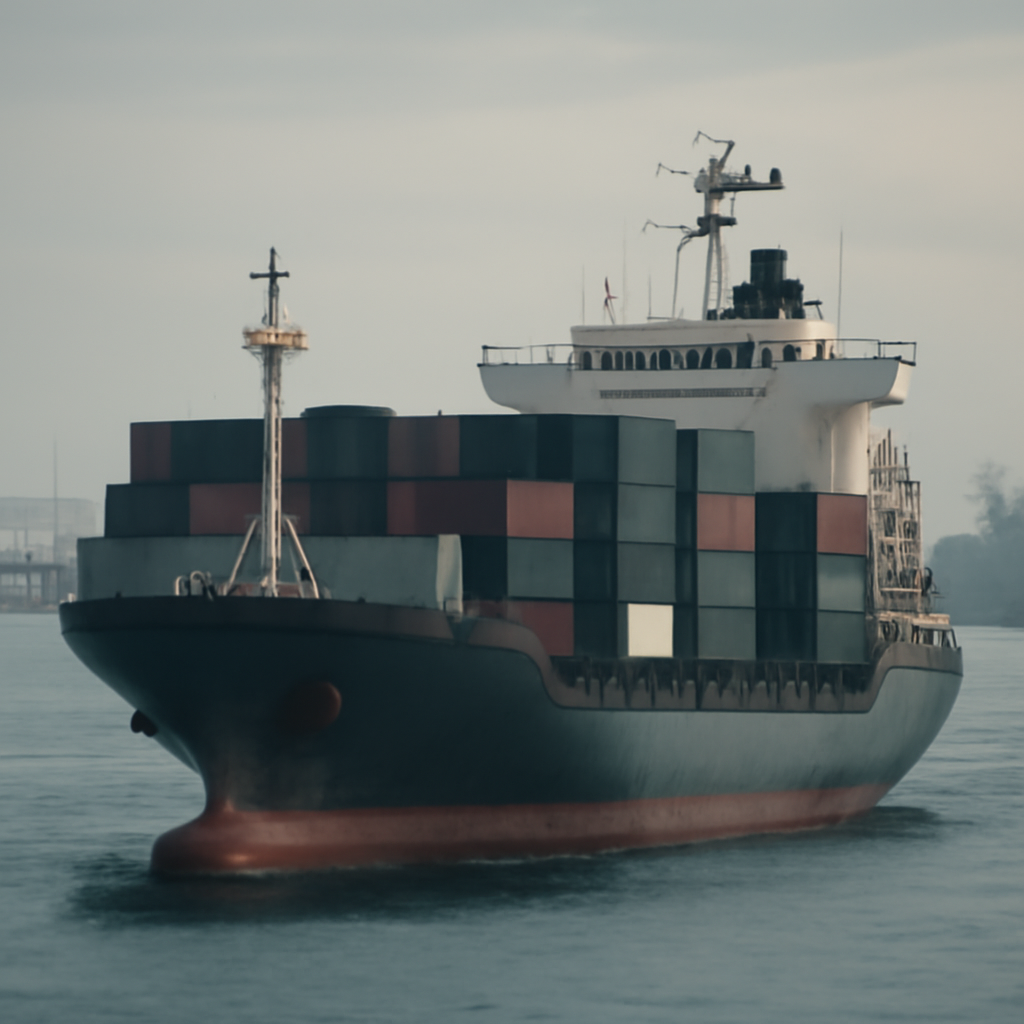
"The arrangement allows China to collect communication signals from vessels and aircraft operating across Europe, North America and Asia," Reuters reported, quoting two unnamed officials within President Donald Trump's administration.
Allegations against COSCO and the reported priorities
Reuters, citing two anonymous U.S. administration officials, reported that Chinese state-run shipping company COSCO has for decades collaborated with Beijing to use commercial vessels as discrete signals-intelligence collection platforms. The officials told Reuters the arrangement enables collection of communications signals from ships and aircraft across Europe, North America and Asia, and that the advanced equipment aboard the ships is intended to enable China to gather information about "military communications technologies and encryption developments." The Chinese Embassy in Washington, D.C., denied the assertions, according to the report.
China's 2017 National Intelligence Law as context
The reporting notes a relevant legal backdrop inside China: the National Intelligence Law, enacted in 2017, which includes a provision requiring "all organizations and citizens within the country to support state intelligence work as required" and obliges the state to protect entities that do so. The law is cited in the report as part of the institutional context for how civilian enterprises could be drawn into intelligence activity.

Audit-ready is a season. It shouldn't be.
Evidence in spreadsheets, controls drifting between audits, frameworks multiplying on flat headcount. Nubivance runs continuous compliance on Rapid7 Cyber GRC - SOC 2, HIPAA, ISO 27001, PCI, CMMC.
End the scrambleHow cargo ships could be used as signals-intelligence platforms
The story describes several technical and operational methods by which commercial vessels could collect and exfiltrate electronic intelligence. Purpose-built signals suites can be small or elaborate and readily hidden amid the many antennas on modern ships. Collected data could be recorded onboard and later transmitted or physically removed; basic passive suites can run autonomously or be operated remotely over satellite communications (SATCOM). Personnel embarked on a vessel could operate and even process receptions, and ships could be equipped with datalinks to transmit collections in near-real-time to other nodes, including ones back in China, the report says. The account also highlights that radar emissions and communications chatter can reveal system characteristics and operational practices, and that fused with other information such collections help build "electronic orders of battle" about forces, air defenses and command-and-control networks.
Historical parallels: maritime militia, M/V Bass Strait, and the Russian shadow fleet
The Reuters sources pointed to prior analysis, including a report published last year by the China Maritime Studies Institute at the U.S. Naval War College that examined China's maritime militia. That institute described maritime-militia "information personnel" who operate aboard ostensibly civilian fishing vessels and may tally catches, handle interactions with foreign officials, and also collect and report military and political intelligence while overseas. The report suggested similar processes "may already be in place in the commercial shipping industry" and noted recruitment of maritime intelligence specialists from marine shipping personnel.
The account also recalls an earlier U.S. investigation: in 2019, amid unexplained drone swarms off southern California, U.S. authorities explored whether the Hong Kong‑flagged bulk carrier M/V Bass Strait might have been a launch point. A US Navy briefing slide, released via FOIA and cited in the reporting, assessed the Bass Strait was "likely using UAVs to conduct surveillance on US Naval Forces" while transiting to Long Beach on July 15, 2019. Separately, the article notes recent reporting about Russia using a "shadow fleet" of tankers in intelligence roles and cites the French Navy boarding the Comoros‑flagged tanker Grinch in January 2026 as part of that wider pattern of dual-use commercial activity.
What this means for technologists, policymakers, and maritime operators
- Technologists and security teams: Watch for covert installations and atypical antenna arrays aboard commercial vessels, and consider chains of custody for collected electromagnetic data—whether recorded onboard for later removal or sent via SATCOM or datalinks to remote analysis nodes, as the report describes.
- Policymakers and regulators: The Pentagon added COSCO to its list of companies linked to China’s military in January 2025, a designation that carries procurement bans and reputational costs, though the report notes it "does not entail formal sanctions." The legal context provided by China's 2017 National Intelligence Law and reports of port‑side facilities near naval bases—such as COSCO's facility in Belgium’s Port of Zeebrugge cited in a 2021 NGA Tearline Project report—are concrete policy inputs described in the record.
- Maritime operators and naval forces: The reporting emphasizes that routine shipping routes and proximity to coastal radar sites, military exercises and naval bases provide low‑risk opportunities for intelligence collection. Whether through embarked personnel, concealed hardware, or remote control via SATCOM, the mechanisms outlined create operational concerns for forces and commercial operators transiting contested or sensitive waters.
Taken together, the reporting synthesizes a string of related observations: anonymous U.S. officials' current assessment of COSCO activity; the 2017 Chinese legal obligation to support intelligence work; prior academic and government work on maritime militia; the 2019 Bass Strait inquiry; and wider attention to dual‑use commercial fleets. The piece notes that "no hard evidence has yet been provided" publicly, while also saying that the use of commercial ships as discreet signals-collection assets is "very plausible" and an issue that warrants serious attention. How governments and industry will respond remains the next act of this unfolding story.