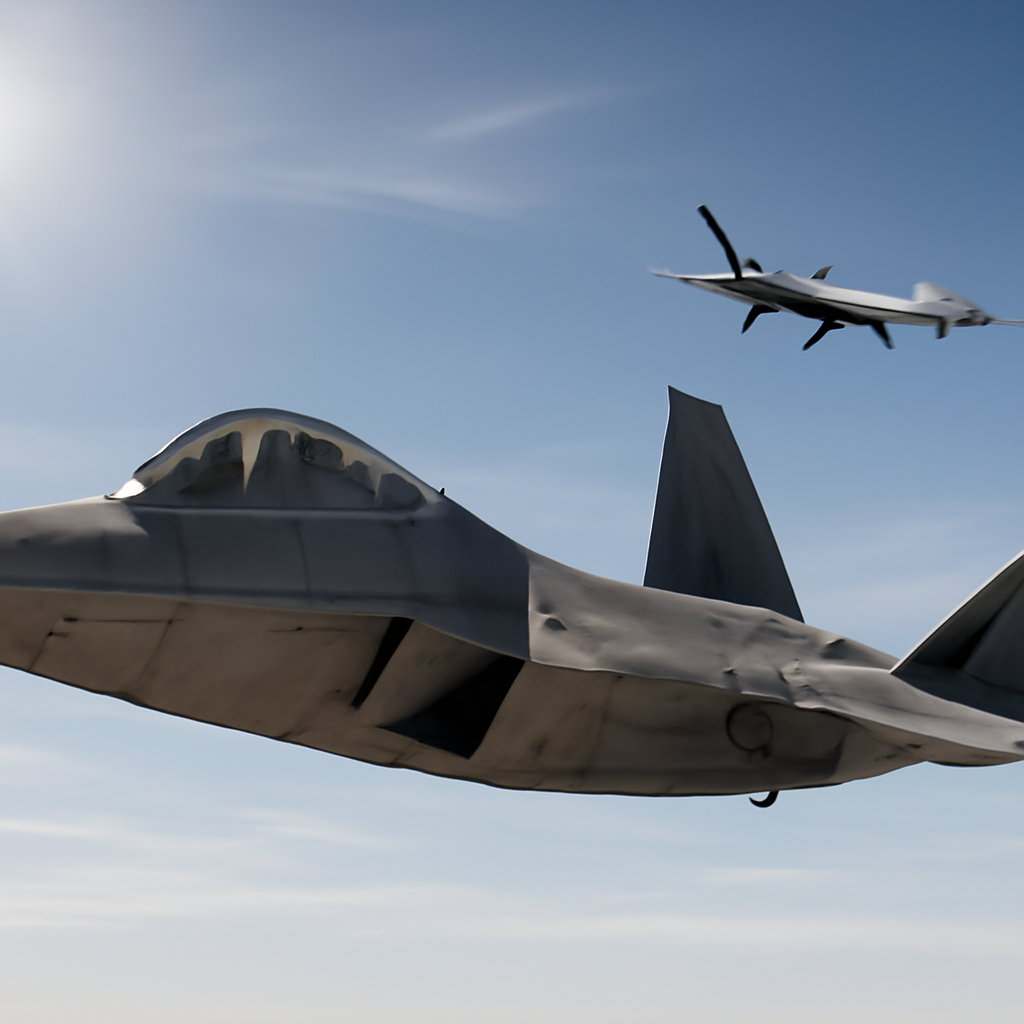
China "secretly trained about 200 Russian military personnel in China late last year," according to a 19 May Reuters report citing three European intelligence agencies.
Reuters details: training in Beijing and Nanjing under a July 2025 agreement
The Reuters account, cited in the source material, says the training took place in Beijing and Nanjing and involved roughly 200 Russian military personnel. The training is reported to have been carried out under an agreement signed in July 2025. The reporting has prompted no single world leader or government to publicly condemn the activity, and German Chancellor Friedrich Merz has continued to answer questions by reiterating a hope dating to 2022 that President Xi Jinping might "urge President [Vladimir] Putin to end this war in Ukraine."
Chinese public statements: declarations of neutrality and limits
Chinese Foreign Minister Wang Yi has repeatedly framed Beijing’s public posture as neutral. At the Munich Security Conference in February 2024, Wang said Beijing was not a party to the Ukraine war and that "all efforts conducive to a peaceful settlement of the crisis should be supported." In a July 2025 press briefing alongside German Foreign Minister Johann David Wadephul, Wang reiterated that China’s position "includes promoting peace talks, not providing lethal weapons to parties in the conflict, and strictly controlling the export of dual-use articles, including drones."

Your town's IT department is one person. Maybe.
Ransomware crews target small municipalities because nobody's watching. Nubivance gives Maine and New Hampshire towns a security program sized to a town budget.
Protect the town officeTrade and technology: reported flows of dual‑use goods and components
The source traces a pattern of Chinese exports that have supported Russian military capability short of direct battlefield involvement. A Wall Street Journal report from July 2022 is cited as showing that, in the first five months after the 2022 invasion, exports to Russia had "more than doubled to about [US]$50 million" and that shipments of aluminium oxide — an important precursor in weapons production and aerospace — increased by 400 times. A March 2026 report by The Insider identified Chinese companies as the largest group among some 6,000 entities exporting restricted dual‑use goods to Russian companies and defence contractors, including small turbojet engines that generate 800 newtons (80 kg‑force) of thrust, potentially for use in large military drones. The source also reports Russian receipt of chemical precursors such as ammonium perchlorate, which can be used in high‑performance solid rocket propellants. The Mercator Institute for China Studies is cited for a policy dashboard detailing China’s exports of dual‑use technologies with military applications; the EU Institute for Security Studies (EUISS) is cited for identifying specific Russian dependencies that have been rising in recent years.
Defence cooperation: the "no‑limits" partnership and growing exercises
The source describes the China–Russia relationship as a "no‑limits partnership" that was signed immediately before Russia’s full‑scale invasion of Ukraine in 2022 and says the two regimes have been "in lockstep from day one." A March 2026 report from the Australian Strategic Policy Institute (ASPI) is cited as documenting growing defence cooperation, noting that military exercises have increased in number and complexity, with a spike after the 2022 invasion. The reported training of Russian troops in Chinese facilities is presented in the source as a new activity but consistent with that deeper strategic cooperation. By contrast, the source notes, North Korea has sent soldiers to the front — an example of different forms of direct involvement.
What this means for German leaders, EU institutions, and defence planners
- German leaders: The source shows German officials continuing to voice the hope that President Xi might press President Putin to end the war; those officials will face the diplomatic and political implications of reporting that Chinese training of Russian personnel occurred under a July 2025 agreement.
- EU institutions and policy researchers: The European Union Institute for Security Studies and the Mercator Institute for China Studies are already compiling dashboards and dependency analyses; those tools are cited in the source as mapping the specific dual‑use exports and Russian dependencies that have increased in recent years.
- Defence planners and procurement monitors: Reporting from The Insider and the Wall Street Journal, cited in the source, draws attention to concrete items — microchips and other electronic components, aluminium oxide, small turbojet engines, and ammonium perchlorate — that have been exported and that have potential military application, creating vectors planners and monitors will have to track.
The reporting assembled in the source paints a consistent picture: public Chinese declarations of neutrality sit alongside documented trade flows of dual‑use goods, a growing pattern of exercises and cooperation described by ASPI, and now reporting that some Russian personnel received training in China under a July 2025 agreement. The result, according to the source, is a world that has largely watched passively because of deep economic dependencies — a dynamic that, the source argues, has allowed China to remain a principal enabler of Russia’s war effort without crossing the line of direct battlefield involvement.
Source: The West indulges China in its backing for Russia against Ukraine — ASPI Strategist