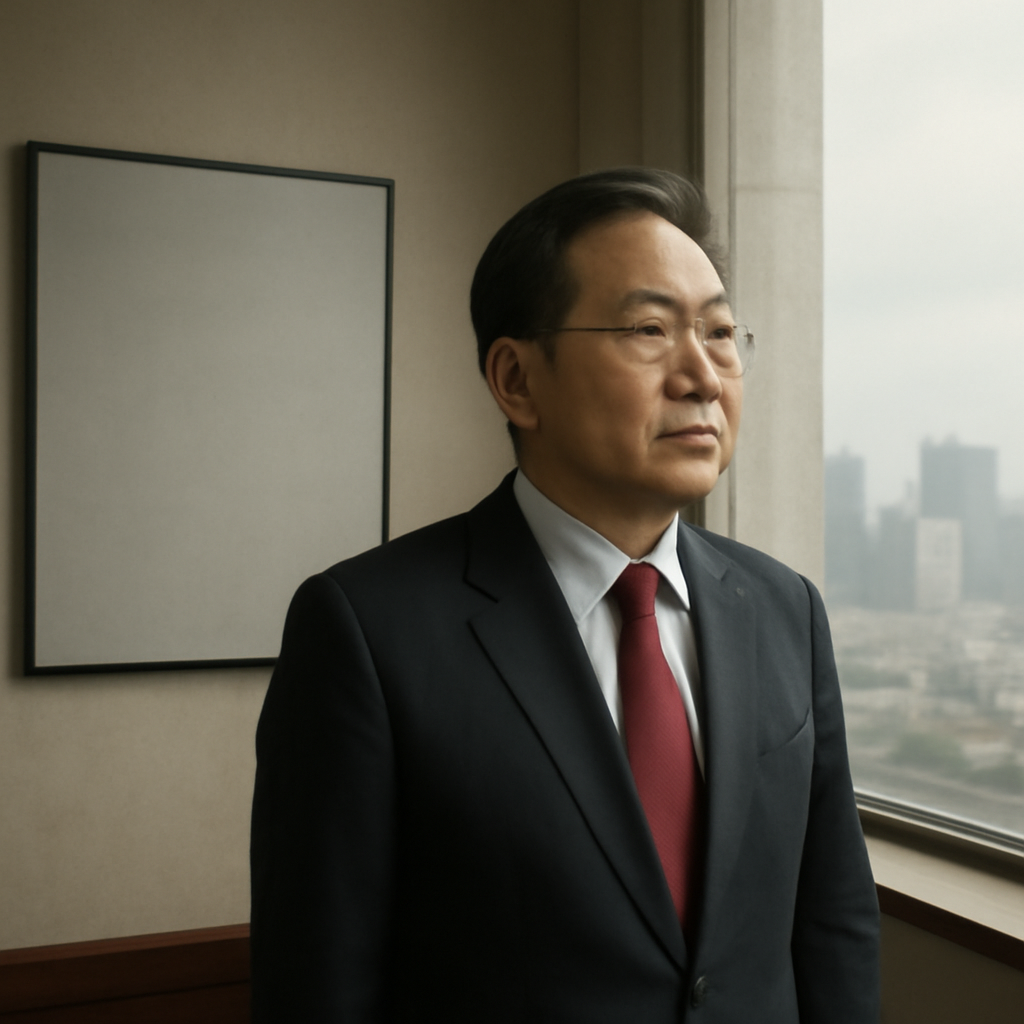
"The field of AI has become the main battleground for global technological competition and a new arena for strategic rivalry among major powers," wrote Chen Yixin, setting a high-stakes frame for Beijing's AI policy choices.
Chen Yixin frames AI as a strategic national-security battleground
Chen Yixin, party secretary and minister for State Security, used a piece in China Cyberspace Magazine to cast artificial intelligence not merely as a dual-use technology but as a primary theater of geopolitical competition. That framing tied AI concerns explicitly to the survival and governance responsibilities of the ruling Communist Party: Chen argued the technology brings "a large number of uncertainties to social governance and public order" and warned that algorithmic opacity and data manipulation could "amplify existing social biases" and trigger "a crisis of user trust." He also raised the problem of attributing responsibility when systems make automatic decisions.
Technical risks called out: OpenClaw, remote control, and data leakage
Chen singled out practical technical and operational vulnerabilities. He said software such as OpenClaw and "similar products" have "structural problems such as remote control of device management permissions and leakage of sensitive user information." He also warned of AI being used to "detect and exploit software vulnerabilities and then to attack important infrastructure, or to steal industrial and state secrets."
The minister flagged a human-factor dimension as well: "Some domestic users lack sufficient security awareness, using foreign AI products to process sensitive information and export data overseas, resulting in large-scale data leaks from within the country." The article appended the acronym PEBCAK — "Problem Exists Between Chair And Keyboard" — to underline that user behavior is a component of the risk picture Chen describes.

The cyber insurance questionnaire just landed. Now what?
SOC 2, HIPAA, insurance renewals - someone has to own security strategy. Nubivance provides fractional CISO leadership without the full-time salary.
Get a security leadLegal and institutional remedies Chen proposes: sovereignty, laws, and standards
Chen recommended a suite of policy responses. He invoked President Xi Jinping's instruction to "modernize China’s national security system and capabilities" so they are prepared for AI, and argued China must "ensure the independent control of key core technologies, firmly grasp technological sovereignty." He urged "special laws and regulations targeting the research, development, application, and supervision of artificial intelligence technology" and improvements to standards and laws "covering the entire chain of technology research and development, application implementation, risk prevention and control, and accountability."
The minister said these measures should focus on "prominent issues such as algorithm security, data protection, ethical norms, and privacy rights," tying technical controls to legal and ethical frameworks.
Cyberspace Administration of China publishes AI Safety Governance Framework v3.0
The day after Chen’s article ran, the Cyberspace Administration of China released version 3.0 of the nation's AI Safety Governance Framework. The framework calls for "actively employ[ing] risk-controllable institutional mechanisms such as regulatory sandboxes to make room for error and correction in the development of new technologies and new applications."
It also commits China to "make every effort to ensure AI safety" and to "take timely measures to address any risks that infringe upon the legitimate rights and interests of individuals, harm public interests, threaten national security, and endanger human survival and development." Taken together with Chen’s article, the moves tie rhetorical emphasis on sovereignty and control to concrete regulatory instruments.
What this means for Nvidia, AMD, Chinese regulators, and domestic users
- Nvidia and AMD: The source notes that Chen’s stance "rather suggests Nvidia isn't going to get back into China anytime soon, and AMD can probably write off its prospects of selling many GPUs there too." That is the article’s explicit reading of how Beijing’s emphasis on independent control and technological sovereignty might affect specific foreign hardware vendors.
- Chinese regulators: The Cyberspace Administration’s version 3.0 framework signals an appetite for active intervention — from sandboxes to timely risk-mitigation measures — and aligns regulatory instruments with Chen’s call for special laws and standards.
- Chinese users and technologists: Chen’s warning about insufficient security awareness among domestic users, and his concern about foreign AI products exporting sensitive data overseas, points to likely increased scrutiny of software provenance, data flows, and user practices inside China.
Chen’s essay, followed immediately by an updated national governance framework, puts the focus on sovereign control, legal instruments, and operational countermeasures. It contrasts sharply with the public posture attributed in the same source to the US president, who was quoted as labeling concerns about AI safety a "hoax" and saying, "The only control or 'guardrails' that AI needs is a STRONG AND SMART (High IQ!) PRESIDENT, and the U.S.A. has that, in spades!" The sequence raises a clear, documented question: will China convert its expressed priorities — technological sovereignty, new laws, and regulatory sandboxes — into enforcement actions that reshape where and how advanced AI hardware and software are bought, sold, and developed?
Original story: The Register — The latest AI doomsayer is China’s intelligence boss